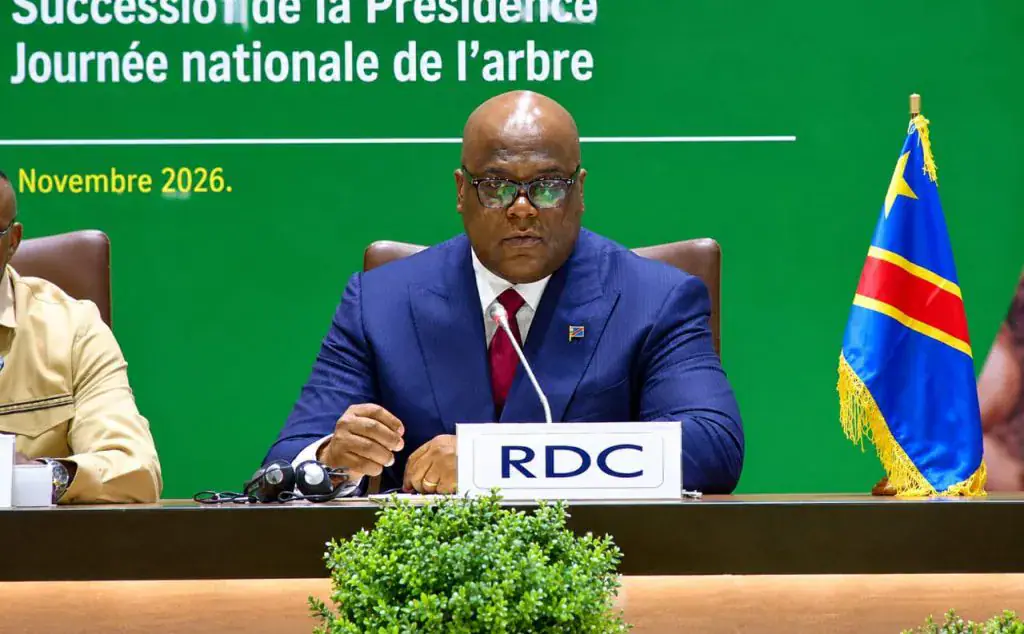
President Félix Tshisekedi of the Democratic Republic of the Congo has proposed a three-pronged strategy to combat deforestation in his country. Speaking at a mini-summit on the environment in Brazzaville, Tshisekedi emphasized the need to balance forest preservation with the needs of local populations for agricultural land, firewood, and energy. He identified two main causes of deforestation: "itinerant agriculture on burned land" and "exploitation of wood energy".
Tshisekedi's strategy includes promoting sedentary agriculture by improving already cultivated land and developing sustainable agroforestry to increase yields without clearing new areas. He also advocates for accelerating access to electricity and alternative energy sources to reduce firewood consumption. Additionally, he proposes intensifying afforestation and reforestation efforts, including the national program "La forêt, c'est nous", which aims to establish energy-producing forest plantations.
The president's initiative is part of a larger project, "couloir vert Kivu-Kinshasa", which aims to promote conservation of biodiversity, sustainable agriculture, clean energy, job creation, and poverty reduction. Tshisekedi also welcomed the United Nations' decade of afforestation and reforestation, which he sees as an opportunity for nations to strengthen local efforts and enhance regional commitments.
The mini-summit on the environment was held on the sidelines of the 40th edition of the National Tree Day. Several high-ranking personalities attended the event, including Burundian President Évariste Ndayishimiye and Central African President Faustin-Archange Touadéra. Tshisekedi also participated in a tree-planting ceremony and was set to speak at an environmental forum focused on protecting and valorizing forest resources.
The DR Congo has a significant forest heritage, which is a major component of the Congo Basin, the second-largest tropical forest massif in the world. The country aims to make forest protection a lever for development without compromising the livelihoods of local communities. This ambition is in line with the country's participation in the 31st United Nations Climate Change Conference (COP31) in Turkey.
The environmental challenges facing the DR Congo are significant, with the country's population growth and increasing household needs putting pressure on the forest ecosystem. Tshisekedi's strategy aims to address these challenges while promoting sustainable development. The president's initiative has been welcomed by regional leaders, who see it as an important step towards protecting the environment and promoting economic development.
The DR Congo's efforts to combat deforestation and promote sustainable development are being closely watched by the international community. The country's experience in managing its forest resources will be crucial in addressing global environmental challenges. With its rich forest heritage, the DR Congo has a critical role to play in preserving the world's biodiversity and mitigating the effects of climate change.
Key points
- President Tshisekedi proposes a three-pronged strategy to combat deforestation, including promoting sedentary agriculture, accelerating access to electricity, and intensifying afforestation and reforestation efforts.