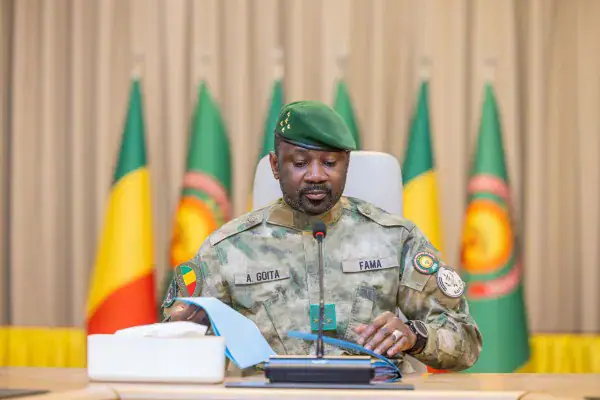
The Council of Ministers of Mali, under the presidency of General Assimi Goita, has adopted new texts aimed at strengthening the country's border management. These texts focus on enhancing the organization and missions of the National Directorate of Borders and the National Border Commission. The reforms aim to address identified shortcomings in managing border issues, particularly in strategic planning, coordination among stakeholders, and resource mobilization.
The new texts for the National Directorate of Borders provide a framework for defining personnel needs for the next five years, enabling it to effectively carry out its missions. This development is crucial as the Directorate, established in 1999, is responsible for contributing to the elaboration of national border policy and coordinating its implementation. The changes are also expected to align with recommendations from the National Assemblies of Refoundation and Inter-Malian Dialogue for Peace and National Reconciliation.
The decree adopted for the National Border Commission expands its composition to include other concerned stakeholders and strengthens its attributions. Established in 2003, the Commission assists the minister responsible for borders in applying national border policy. This evolution reflects efforts to enhance coordination and effectiveness in border management, incorporating diverse perspectives and expertise.
The adoption of these texts is part of a broader effort to improve governance and security in Mali. Recently, the Council of Ministers also approved the opening of additional credits worth 125 billion FCFA in the 2026 state budget, aimed at financing priority projects, including hospital construction. Furthermore, the government has been addressing various challenges, such as managing the influx of artisanal miners from Guinea and enhancing the protection of the country's territory.
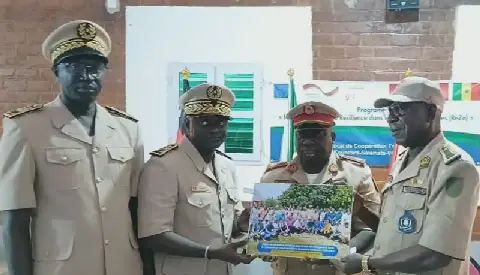
The security and protection of Mali's borders have been a focal point for the government, with recent efforts including the distribution of vehicles to defense and security forces. This move is intended to bolster their capabilities in maintaining territorial integrity and security. The government's proactive approach to border management and overall security reflects its commitment to addressing pressing national challenges.
Mali's efforts to enhance its border management and security are also part of its engagement with international partners. For instance, Russia has discussed potential investment projects worth several billion dollars in Mali, Burkina Faso, and Niger. Such collaborations could potentially support Mali's development initiatives, including those related to border management and infrastructure.
The ongoing reforms in Mali's border management are expected to contribute to the country's stability and development. By addressing strategic, coordination, and resource mobilization challenges, the new texts aim to create a more effective and sustainable border management system. This, in turn, could have positive implications for Mali's security, economy, and international relations.
Key points
- The new texts adopted by Mali's Council of Ministers aim to enhance the country's border management by addressing strategic planning, coordination, and resource mobilization challenges.