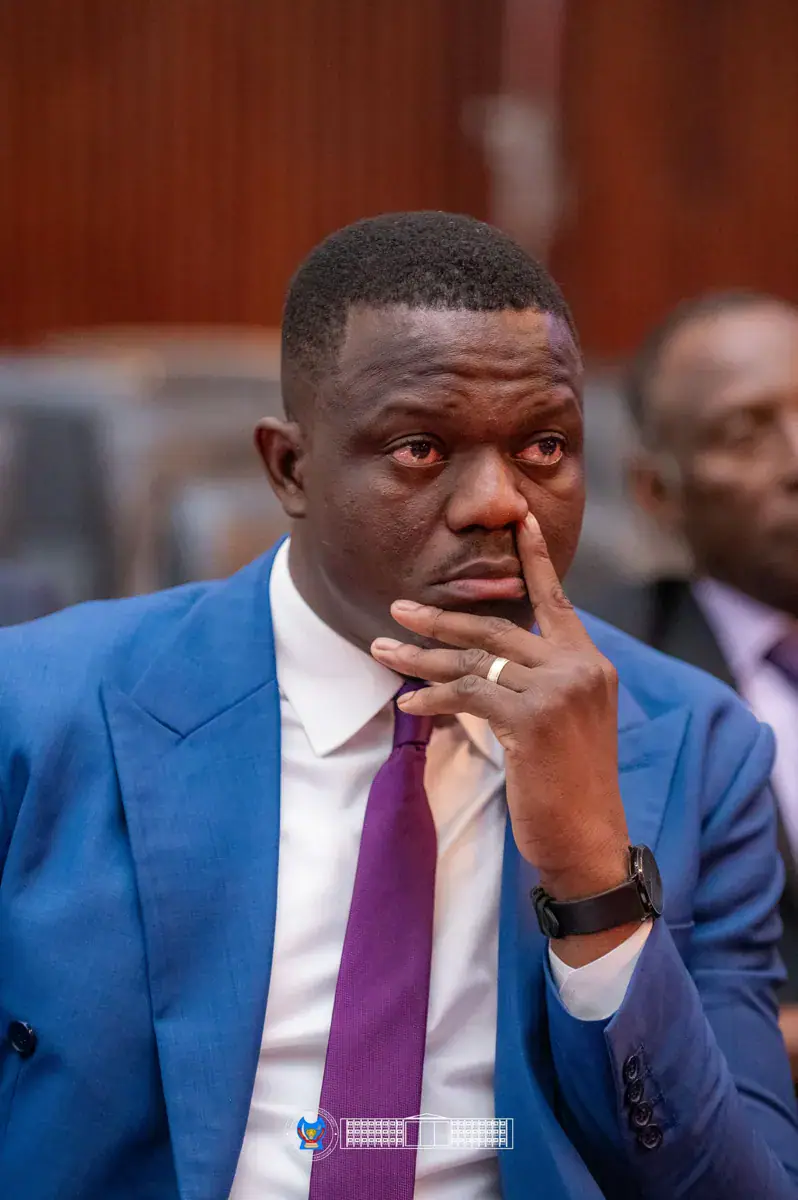
The C64 coalition's recent statement, released after a conclave in Rome, has sparked reactions within the Congolese political class. Joseph Nkoy, a national deputy and rapporteur adjoint of the National Assembly's Defense and Security commission, expressed criticism of the coalition's stance, deeming it "complacent" towards those responsible for violence in the country's east. Nkoy's comments were made in an interview with Radio Okapi.
Nkoy specifically criticized the C64 coalition for not explicitly mentioning Rwanda or former President Joseph Kabila as actors allegedly involved in violence, massacres, and natural resource exploitation in the east. He argued that the coalition limited itself to condemning the use of force without identifying the perpetrators. Nkoy stated that the C64 coalition abstained from citing Rwanda and Kabila as main perpetrators of massacres, natural resource pillage, and attempts to balkanize the country.
The C64 coalition, comprising notable figures such as Moïse Katumbi, Martin Fayulu, and Delly Sesanga, reaffirmed its opposition to constitutional changes, a third presidential term, and election postponements. The coalition called for an inclusive national dialogue to address the country's ongoing political and security crisis. Nkoy's comments highlight divergent views on the coalition's stance within the Congolese political class.
Nkoy expressed disappointment that the C64 coalition criticized President Félix Tshisekedi for allegedly attempting to undermine constitutional provisions while remaining silent on armed groups and their supporters. He argued that this omission demonstrates a lack of consideration for victims of eastern violence. Nkoy stated that if the C64 coalition can repeatedly mention Tshisekedi's name to denounce alleged constitutional coup attempts, it should also do so for those responsible for killing thousands of Congolese.
The C64 coalition's statement and Nkoy's criticism reflect the complex and contentious nature of DR Congo's ongoing crisis. The eastern region has experienced persistent violence, with various armed groups and foreign actors implicated. The situation has led to significant humanitarian and economic challenges for the country.
Nkoy's criticism of the C64 coalition also underscores the sensitivity of the country's politics, particularly regarding issues of national sovereignty and security. The DR Congo has faced numerous challenges in maintaining stability and security, particularly in the eastern regions.
The reactions to the C64 coalition's statement highlight the need for a comprehensive and inclusive approach to addressing the country's crisis. The situation requires engagement from various stakeholders, including politicians, civil society, and the international community, to find a lasting solution to the country's challenges.
Key points
- Joseph Nkoy criticizes C64 coalition for perceived leniency towards 'aggressors' in eastern DR Congo violence.