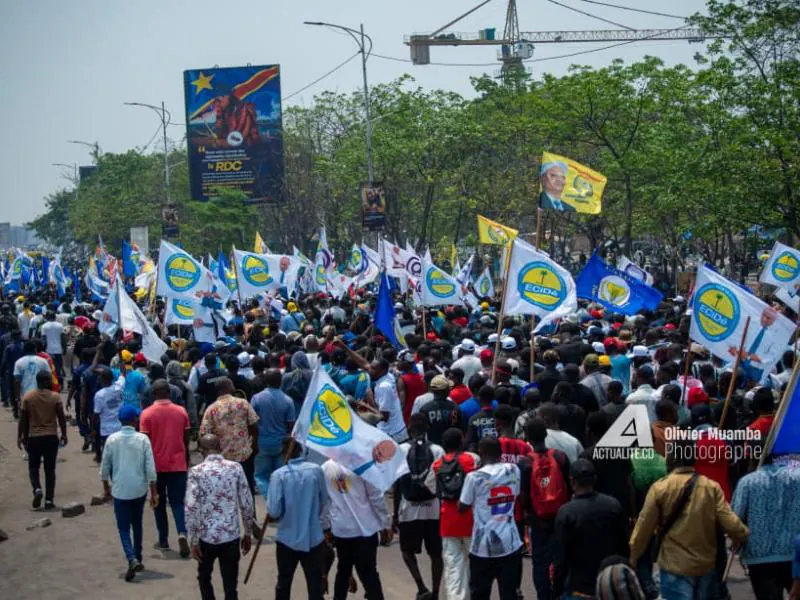
The Democratic Republic of Congo's Minister of State for Justice, Guillaume Ngefa, has ordered a judicial inquiry into the violence and incidents reported during opposition protests on September 15th in Kinshasa and other cities. The inquiry aims to determine the circumstances surrounding the incidents and establish potential responsibilities based on collected evidence. The probe will cover all alleged penal infractions, including acts of violence, injuries, destruction of property, reported deaths, and arrests.
The opposition, led by the Coalition Article 64 (C64), had called for protests against the government's alleged plans to change the Constitution, allowing President Felix Tshisekedi to run for a third term. The demonstrations began peacefully but later turned violent. The opposition accuses the government of organizing a "trap" and collaborating with the Force du progres militia and security forces. However, the government denies these allegations, citing the opposition's inability to mobilize the population.
The inquiry, ordered on September 22nd, will investigate the events and establish the facts, circumstances, and potential responsibilities in accordance with the law. The Ministry of Justice emphasizes that the inquiry's opening does not imply guilt for those potentially involved. All individuals arrested or implicated will benefit from constitutional and legal guarantees, including the presumption of innocence and respect for defense rights.
The protests were sparked by the opposition's concerns over the government's alleged plans to change the Constitution. C64 had urged Congolese citizens to mobilize against the proposed constitutional changes and to pressure lawmakers to abandon the referendum bill. The bill was sent back to Parliament for re-examination after the Constitutional Court's ruling.
Different accounts of the incidents have emerged, with the opposition reporting at least one death and the government not mentioning any fatalities. The National Human Rights Commission (CNDH) reported the presence of individuals armed with bladed weapons who hindered the march's progress in certain areas of Kinshasa.
The judicial inquiry will help competent authorities establish the facts, determine the circumstances, and potentially identify responsibilities in accordance with the law. The opposition and government have presented conflicting accounts of the events, highlighting persistent divisions between the parties.
The inquiry's findings are expected to shed light on the incidents and potentially lead to accountability for those responsible. The government's decision to order a judicial inquiry demonstrates its commitment to investigating the events and establishing the truth.
Key points
- DR Congo's Justice Minister orders judicial inquiry into violent protests
- Inquiry aims to determine circumstances surrounding incidents and establish potential responsibilities
- Protests were sparked by opposition concerns over government's alleged plans to change the Constitution