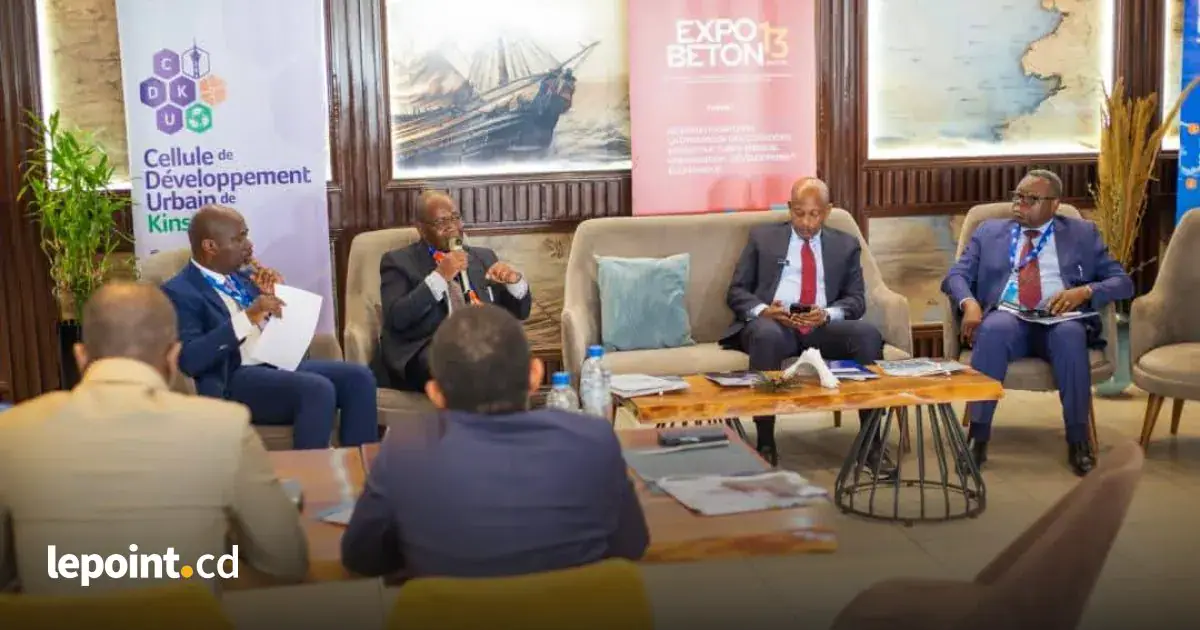
Democratic Republic of the Congo's Minister of State for Urbanism and Housing, Alexis Gisaro Muvunyi, has called for the institutionalization of investments made in the Kin-Elenda project. Speaking at a debate organized by the Club BTP & CMA in Kinshasa, Gisaro emphasized the need to sustain the project's achievements and replicate its model in other cities. The Kin-Elenda project, approved by the World Bank in March 2021, aims to enhance Kinshasa's resilience to floods and erosion, improve access to water and electricity, and strengthen urban management.
The Kin-Elenda project, valued at $500 million, consists of a $250 million credit and a $250 million grant from the International Development Association. The project targets several areas in Kinshasa, including Kisenso, N'Djili, Matete, and Lemba. According to Gisaro, the project's success depends not only on infrastructure development but also on solid institutions, planning, and a legal framework that governs urban growth. To achieve this, his ministry has prepared a draft law on urban planning and housing, which is currently under review by the government.
The proposed law aims to make urban planning documents mandatory and has been updated to align with laws adopted in 2025 on territorial planning and land reform. The project has also funded several planning tools for Kinshasa, including local development plans, particular development plans for the N'Djili river basin and the Maluku special economic zone, and a sustainable urban mobility plan. These tools were developed by a consortium of Urbaplan, Artelia, and Transitec.
One of the notable achievements of the Kin-Elenda project is the modernization of land management in Kinshasa. The project has enabled the digitization of 19,248 plots and the deployment of the Kinshasa Geoportal, a first in the country. This tool improves access to land information for construction companies and reduces the risk of conflicts and overlapping plots. Gisaro also highlighted the replication of the Kin-Elenda model in other cities, starting with the Kananga Urban Resilience Project.
The Kananga Urban Resilience Project, funded by the World Bank to the tune of $100 million, combines urban planning, drainage, erosion control, and road rehabilitation. President Félix Tshisekedi launched the anti-erosion works in Kananga in January 2026. Gisaro emphasized the importance of respecting construction standards and called on companies to prioritize resilient construction in their bids and projects.
Reflecting on the Kin-Elenda project, Gisaro identified the quality of preliminary studies as an area for improvement. He urged companies to make adherence to resilient construction norms a requirement in their tenders and on construction sites. The minister's push for urban planning reforms is seen as a crucial step towards ensuring the long-term sustainability of development projects in the DRC.
The proposed urban planning code is expected to provide a framework for sustainable urban development in the DRC. With the government's support, the code could be adopted soon, enabling the country to better manage its urban growth and development. The success of the Kin-Elenda project and the proposed reforms will be closely watched by stakeholders, including the World Bank, which has invested heavily in the country's development.
Key points
- DR Congo's Urbanism Minister Alexis Gisaro is pushing for the institutionalization of gains from the Kin-Elenda project.
- The project aims to enhance Kinshasa's resilience to floods and erosion, improve access to water and electricity, and strengthen urban management.
- A proposed urban planning code is under review, aiming to make urban planning documents mandatory and provide a framework for sustainable urban development.