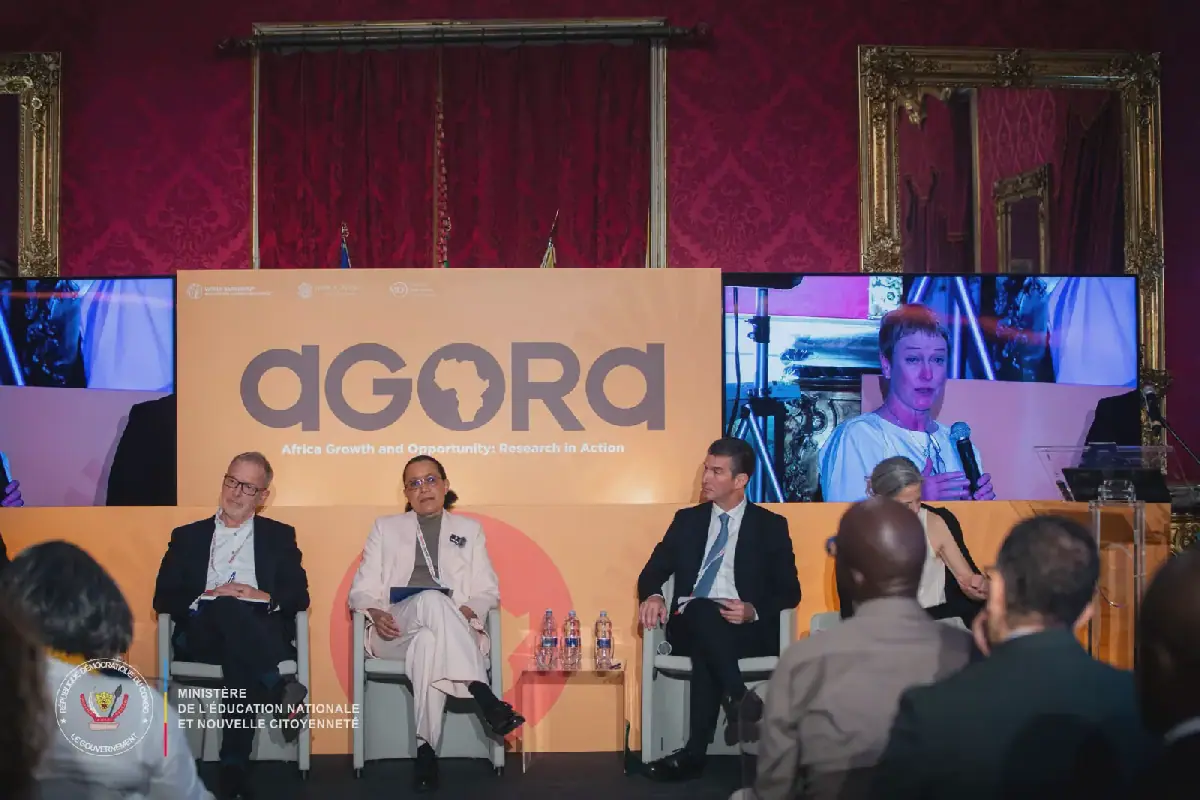
Democratic Republic of the Congo's Minister of National Education and New Citizenship, Raïssa Malu, recently attended the AGORA conference in Sicily, Italy, where she emphasized the need for joint investments in education and energy. The conference, held on October 26-27, brought together decision-makers and experts to discuss development, energy, and education in Africa. Malu highlighted the importance of access to electricity in improving learning conditions in the DRC.
The DRC's education system is vast, with nearly 30 million students enrolled in around 124,000 schools across the country. Malu stressed that investing in the energy sector is crucial to supporting education efforts. She believes that access to electricity can improve learning conditions, facilitate the use of digital tools, and enhance the capacity of schools. By linking education and energy development, the DRC can promote economic and social progress.
Malu's advocacy for joint investments in education and energy is built on the understanding that these two sectors are interdependent. She argued that the development of the education system and the expansion of access to energy must be considered as closely linked issues. This approach can help address the challenges facing the education sector, including inadequate infrastructure and limited resources.
The AGORA conference was organized under the Mission 300 initiative, which brings together international partners, including the World Bank, the Italian Bank, and the Italian Ministry of Economy and Finance. The conference provided a platform for stakeholders to discuss innovative solutions to development challenges in Africa. Malu's participation in the conference underscores the DRC's commitment to improving education and energy outcomes.
Malu's call for joint investments in education and energy is not new. The DRC government has been working to improve access to education and energy, particularly in rural areas. The government has launched several initiatives aimed at increasing access to electricity and improving the quality of education. However, more needs to be done to address the scale of the challenges facing the education sector.
The DRC's education sector faces several challenges, including inadequate infrastructure, limited resources, and a shortage of qualified teachers. The lack of access to electricity is a significant obstacle to improving learning conditions. Malu's advocacy for joint investments in education and energy highlights the need for a comprehensive approach to addressing these challenges.
The outcome of the AGORA conference and Malu's advocacy for joint investments in education and energy remain to be seen. However, it is clear that the DRC needs innovative solutions to address the challenges facing its education sector. By prioritizing investments in education and energy, the DRC can promote economic and social progress and improve the lives of its citizens.
Key points
- DR Congo's Education Minister Raïssa Malu calls for simultaneous investments in education and energy to improve learning conditions.