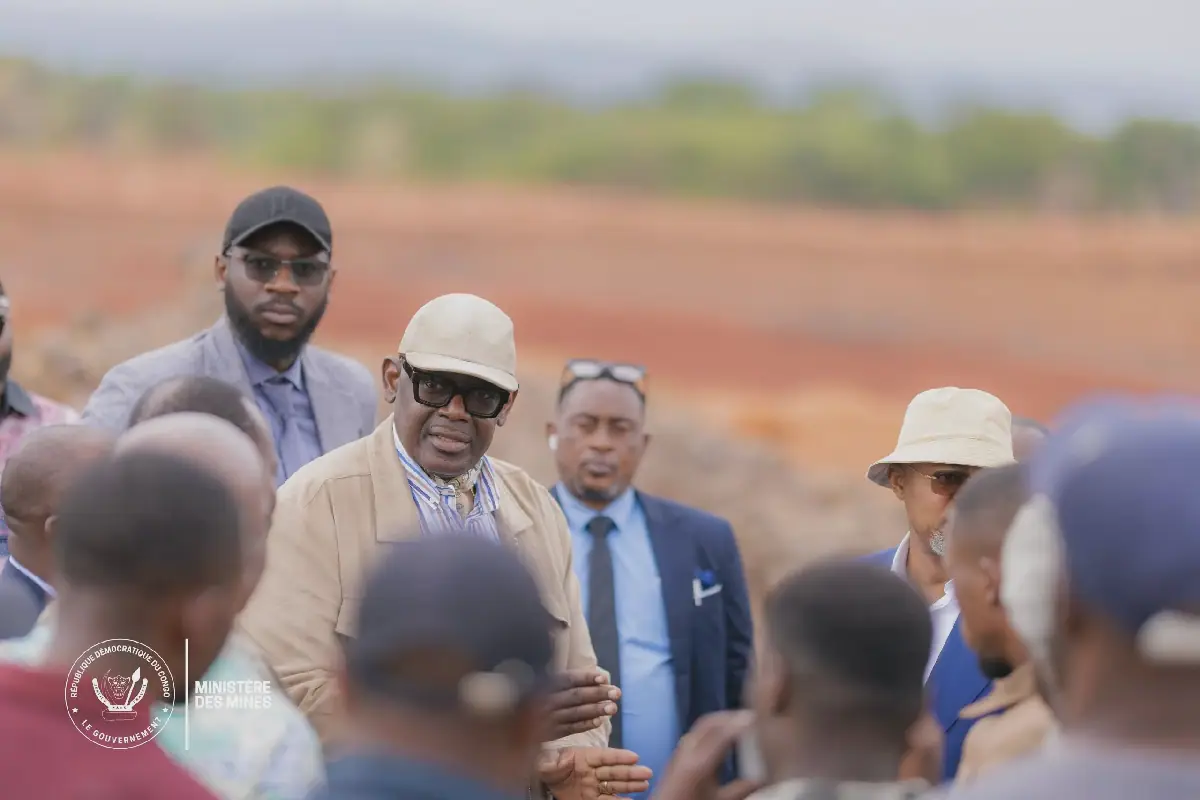
The Democratic Republic of Congo's Minister of Mines, Louis Watum Kabamba, has concluded a 10-day mission to Lualaba province, aimed at restructuring the mining sector. The mission, which took place from October 25 to November 3, 2026, involved inspections, consultations with industrial operators, and discussions with representatives of mining cooperatives. The primary objectives were to restore state control mechanisms, accelerate the formalization of artisanal mining, and increase Congolese participation in the valuation of natural resources.
The mission began with an inspection of the Musompo Negotiation Centre, a critical infrastructure for the commercialization of minerals from artisanal mining. Minister Watum Kabamba examined the facilities of the Evaluation, Expertise, and Certification Centre (CEEC), including weighbridges and laboratories. These equipment, which had been out of service for a long time, are gradually being reactivated. A first truck has already been weighed, and mineral sampling and analysis operations have commenced.
The goal of reactivating these installations extends beyond mere rehabilitation. It aims to reestablish a credible control chain, ensuring the quality, quantity, and traceability of commercialized minerals. For the Congolese authorities, controlling these operations is a crucial lever in the fight against informal circuits and practices that may deprive the public treasury of revenue. The restart of these installations is also expected to contribute to better valorization of artisanal mining products and their by-products.
The issue of Congolese participation in the capital of mining companies was another key aspect of the mission. During discussions with industrial operators, the Minister emphasized the effective application of the revised Mining Code of 2018, particularly the provisions that enshrine national participation in the extractive sector. The ambition is to go beyond limiting the benefits of mining exploitation to fiscal revenues and investments from multinationals.
Discussions also focused on the framework for artisanal mining, the responsibilities of industrial operators, and the respect of environmental norms. The government seeks to find a balance between the attractiveness of the mining sector, the protection of national interests, and the respect of legal obligations. This orientation aligns with the vision of President Félix-Antoine Tshisekedi Tshilombo, who aims to make natural resources an instrument of economic sovereignty and development.
A significant announcement during the mission was the allocation of 33 new artisanal exploitation zones in Lualaba province. This brings the total number of zones to 114. The announcement was made after discussions with representatives of mining cooperatives, whose concerns include access to exploitation perimeters, working conditions, and the securitization of their activities. The allocation process for cooperatives has already begun.
The mission also achieved a significant social breakthrough in Mulondo, where over 25,000 artisanal miners can now look forward to resuming activities. Following negotiations, the company PAJECLEM agreed to allocate two mining squares to the COMIKAN cooperative, paving the way for coexistence between artisanal and industrial mining. This development comes nearly a year after a tragic incident in November 2025, which claimed the lives of several artisanal miners.
Key points
- The DR Congo government aims to increase Congolese participation in the mining sector and enhance state control over mining activities.
- The reactivation of the Musompo Negotiation Centre is expected to improve the traceability and quality of minerals from artisanal mining.
- The allocation of new artisanal exploitation zones in Lualaba province seeks to formalize and regulate artisanal mining activities.