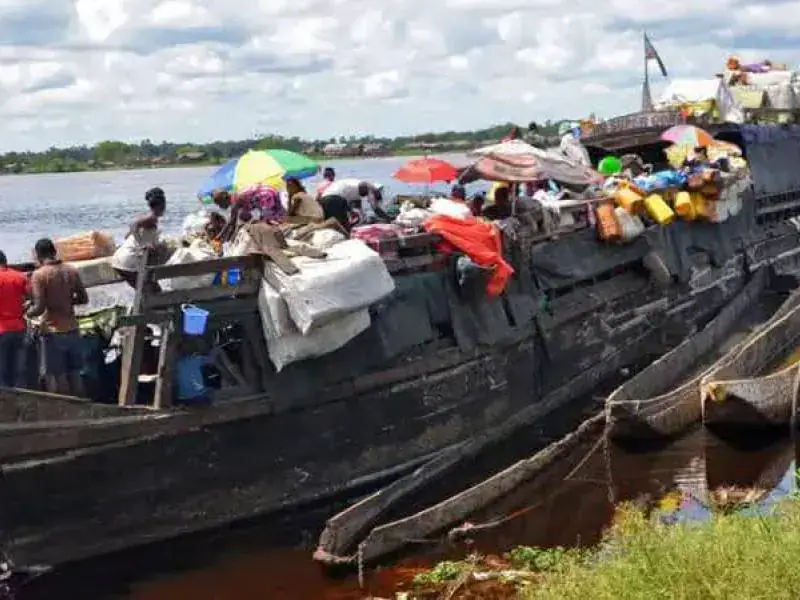
The Democratic Republic of Congo has granted a three-month moratorium to wooden boats, allowing them to navigate on the Congo River under certain conditions. This decision was made by Vice-Premier Minister and Minister of Transport, Jean-Pierre Bemba. The moratorium aims to preserve essential local services, ensuring the mobility of populations while adhering to safety requirements.
The wooden boats, also known as baleinières, are permitted to operate in a cargo format with no more than 10 crew members. They are only allowed to navigate between 6 am and 6 pm. Additionally, crew members and passengers must wear life jackets, and the boats must adhere to the maximum authorized tonnage. These conditions are part of an effort to ensure safe navigation.
The decision to grant a moratorium was made in response to concerns from local populations and boat operators. Earlier, Bemba had issued a decree prohibiting the navigation of wooden boats on the Congo River. However, following protests from various provinces, he introduced exceptional measures. The initial decree allowed wooden boats to operate only on internal rivers for short intra-provincial trips.
The new moratorium has been welcomed by local communities who rely heavily on the Congo River for transportation and access to essential goods. The river plays a vital role in the country's transportation network, particularly in areas where road infrastructure is limited. By allowing wooden boats to continue operating, the government aims to mitigate the risk of shortages and economic disruptions.
The move has also been influenced by the slow deployment of metal boats, which are considered safer and more durable. The government is working to replace wooden boats with metal ones to enhance safety on the Congo River. However, the transition process is ongoing, and the moratorium provides temporary relief to communities dependent on wooden boats.
Local stakeholders have been actively involved in discussions surrounding the navigation of wooden boats. Provincial actors had warned of potential shortages and economic hardship if the boats were completely banned. The three-month moratorium offers a temporary solution, allowing for the continued transportation of goods and people while the government works on implementing safer alternatives.
The decision reflects the government's efforts to balance safety concerns with the practical needs of local populations. By setting specific conditions for the operation of wooden boats, the authorities aim to minimize risks while ensuring that essential services continue uninterrupted. The moratorium will be closely monitored to assess its impact and determine the next steps in the transition to safer navigation options.
Key points
- The DR Congo government has granted a three-month moratorium to wooden boats on the Congo River, allowing them to operate under specific conditions.
- The moratorium was granted to preserve essential local services and ensure the mobility of populations while adhering to safety requirements.
- The government aims to replace wooden boats with metal ones to enhance safety on the Congo River.