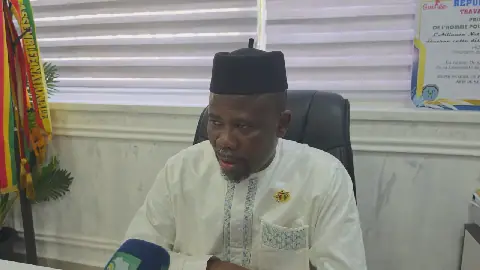
The Democratic Republic of Congo's government has issued a stern warning to politicians against engaging in secret dealings with enemy forces. Vice-Premier Minister of the Interior, Jacquemain Shabani, emphasized that any attempts to meet with aggressors without institutional authorization will be met with severe consequences. This warning comes as the country grapples with over three years of armed aggression from Rwanda and its affiliates in the eastern provinces of North and South Kivu.
The warning was triggered by a recent declaration from opposition leader Moïse Katumbi, announcing that the C64 coalition was offering its mediation services to resolve the country's ongoing political and security crisis. Shabani stressed that all efforts towards peace, including mediation initiatives, must adhere to the country's laws and institutions. He cited Article 192 of the Congolese Penal Code, which prescribes penalties of one to five years for individuals who, during wartime, maintain correspondence or relations with enemy nationals or agents without prior government authorization.
The government's stance is aimed at maintaining strict control over diplomatic and political initiatives related to the security crisis. The conflict in eastern DRC has resulted in significant humanitarian and economic challenges, with the government prioritizing the restoration of peace. Shabani's warning serves as a reminder to political actors of their obligations under the law and the need to prioritize national loyalty.
The current context is marked by reports of informal contacts and negotiation attempts by certain opposition figures and civil society groups. By invoking specific legal provisions, the authorities aim to distinguish between legitimate peace initiatives and actions that could be seen as collaboration with the enemy. This differentiation is crucial in preventing any actions that might legitimize the occupation of parts of the national territory.
The government's firm stance reflects its commitment to addressing the security situation through institutional channels. The conflict with Rwanda and the AFC-M23 has had devastating effects on the local population, with many calling for a peaceful resolution. However, any efforts towards peace must, according to the government, be conducted within the framework of national laws and institutions.
In a related development, the government has taken steps to address social welfare concerns. A recent allocation of $35 million to settle arrears for 4,212 retired employees of the Office National des Transports (ONATRA) demonstrates the government's commitment to addressing social and economic challenges. This move aims to provide relief to affected individuals and their families.
The situation in DRC remains complex, with ongoing security challenges and efforts to address social and economic concerns. The government's warning to politicians underscores its commitment to maintaining national stability and security through institutional means. As the situation evolves, the international community continues to monitor developments in the region.
Key points
- The DRC government warns politicians against secret dealings with enemy forces.
- The warning aims to maintain control over diplomatic and political initiatives related to the security crisis.
- The government prioritizes peace restoration and adherence to national laws and institutions.