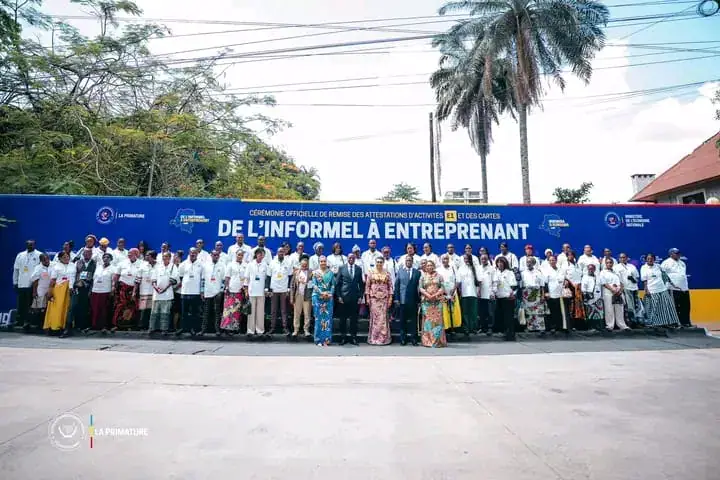
The government of the Democratic Republic of the Congo, led by Prime Minister Judith Suminwa Tuluka, has taken a significant step towards formalizing the country's informal economy. On November 12, 2026, the Prime Minister presided over a ceremony at the Kinshasa Financial Center, where over 200,000 economic actors were issued official activity certificates (E1) and entrepreneur cards. This move aims to recognize the activities of small traders, artisans, and micro-entrepreneurs.
The formalization process, which has already identified over 200,000 economic actors, seeks to provide them with access to health coverage, financing mechanisms, and entrepreneurial support. The initiative also aims to simplify administrative procedures, reduce bureaucratic hurdles, and encourage job creation. By integrating informal actors into the formal economy, the government hopes to promote economic growth and social inclusion.
According to Prime Minister Tuluka, the formalization process is designed to accompany and support informal economy actors, offering them new opportunities and access to development. The initiative aligns with President Félix-Antoine Tshisekedi Tshilombo's vision of promoting economic and social inclusion. The government has been working to implement reforms that foster economic growth and reduce poverty.
The ceremony was attended by Vice Prime Minister and Minister of National Economy, Daniel Mukoko Samba. The government's efforts to formalize the informal economy have been ongoing, with the goal of creating a more inclusive and sustainable economic environment. The informal economy is a significant sector in the DR Congo, employing a large portion of the workforce.
The formalization process is expected to have a positive impact on the lives of informal economy actors, providing them with greater security and access to essential services. The initiative also aims to increase government revenue and promote economic growth. By recognizing the activities of informal economy actors, the government can better regulate and support their businesses.
The DR Congo's government has been working to address the challenges facing the informal economy, including limited access to finance, healthcare, and social services. The formalization process is a key step towards addressing these challenges and promoting economic inclusion. The government has expressed its commitment to supporting informal economy actors and promoting their integration into the formal economy.
The formalization of 200,000 informal economy actors is a significant milestone in the DR Congo's efforts to promote economic inclusion and growth. The initiative is expected to have a positive impact on the lives of thousands of people, providing them with greater security and access to essential services. The government will continue to work towards promoting economic growth and reducing poverty.
Key points
- The DR Congo's government has formalized 200,000 informal economy actors, providing them with official activity certificates and entrepreneur cards.
Reporting sources
- RDC : plus de 200.000 acteurs économiques ciblés par la réforme de formalisation de l’économie informelle · Radio-Télévision nationale congolaise