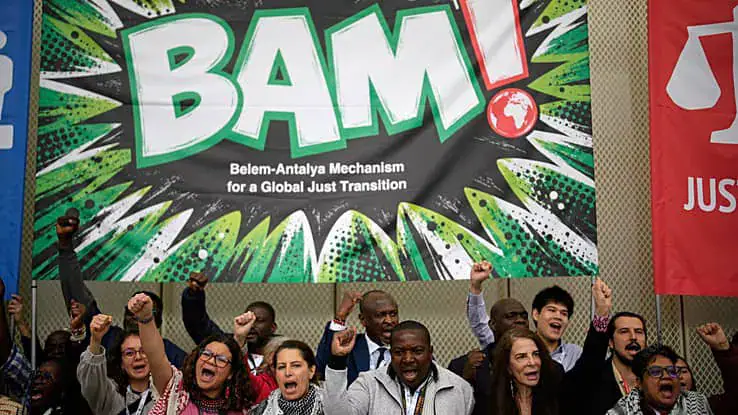
The Climate Action Network-International Africa (CAN Africa) has urged for climate financing that meets the specific needs of the African continent at the ongoing COP31 conference in Antalya, Turkey. According to Baboucarr Nyang, regional coordinator of CAN Africa, the current financing for adaptation efforts is insufficient. He emphasized that the organization is pushing for financing based on actual needs, particularly in the context of the United Nations Framework Convention on Climate Change (UNFCCC) negotiations.
The COP31 conference, co-organized by Turkey and Australia, brings together world leaders, delegates, and climate activists to discuss ways to mitigate climate change. The conference follows a year marked by record-high temperatures and deadly heatwaves in Europe and other parts of the world. Despite the urgency of the issue, Nyang expressed disappointment that global leaders have not shown a strong commitment to providing adequate financing for adaptation efforts in African countries and other developing nations.
The underfinancing of adaptation efforts is a pressing concern for African countries, which are disproportionately affected by climate change. Rising temperatures, droughts, and floods have severe impacts on communities and populations, making it essential to have sufficient financing to support adaptation and resilience-building efforts. CAN Africa's demand for needs-based financing aims to address these challenges and ensure that communities have the necessary resources to cope with climate-related disasters.
The co-hosting of COP31 by Turkey and Australia has been met with criticism, given the two countries' significant reliance on coal. The Turkish government has faced scrutiny for its environmental policies, while Australia has been criticized for its continued support of the coal industry. The joint hosting arrangement was agreed upon after a dispute between the two countries over who would host the conference.
The negotiations at COP31 are taking place against a backdrop of growing concern about the impacts of climate change. The conference aims to accelerate progress on reducing greenhouse gas emissions and promoting sustainable development. However, the lack of commitment to climate financing from developed countries has been a major point of contention, with many developing countries arguing that they need more support to address the challenges posed by climate change.
According to CAN Africa, the current financing for adaptation efforts is not only insufficient but also not aligned with the needs of African countries. The organization is calling for a more equitable distribution of climate financing, with a focus on supporting vulnerable communities and promoting sustainable development. This includes investing in climate-resilient infrastructure, supporting climate-smart agriculture, and promoting early warning systems for climate-related disasters.
The outcome of the COP31 conference will have significant implications for the future of climate action. As the conference continues, activists and negotiators will be closely watching for signs of progress on climate financing and other key issues. The call for needs-based financing from African countries and other developing nations is likely to remain a major point of discussion, with many hoping that the conference will yield concrete commitments to support climate action.
Key points
- CAN Africa is demanding climate financing that meets the specific needs of African countries, citing underfunding of adaptation efforts.
Reporting sources
- COP31 : des militants réclament un financement adapté à l’Afrique. · L'Autre Regard