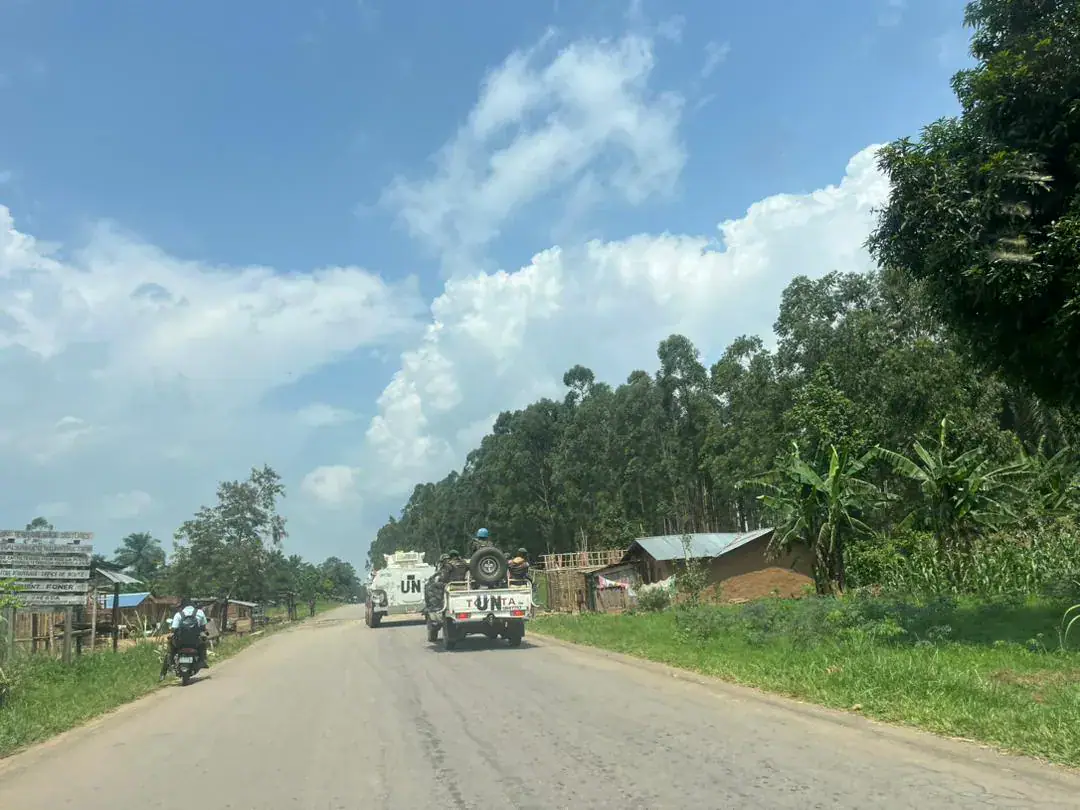
The Democratic Republic of Congo's military, FARDC, and the United Nations peacekeeping mission, MONUSCO, have stepped up joint patrols in the Djugu territory of Ituri province. This move aims to enhance protection for civilians and secure the strategic Route nationale n°27 (RN27). The decision was made during a recent security coordination meeting between FARDC and MONUSCO military leaders. The increased patrols are a response to growing insecurity in the area, marked by recurrent attacks and threats from armed groups.
The security situation in Djugu remains a concern, with several localities experiencing attacks and threats from various armed groups, including the Convention pour la révolution populaire (CRP). The RN27, a vital axis for commercial exchanges and population movement, has become increasingly vulnerable to security risks. The CRP's suspected movements, particularly on the Tcha-Liko-Gina axis, have contributed to the insecurity, causing population displacements and affecting socio-economic activities.
The presence of suspected CRP members in certain internally displaced persons' sites, such as Kpawa, Toba, Lokpa I, and Lokpa II, has been reported. In response, FARDC and MONUSCO will focus on securing the RN27 and vulnerable internally displaced persons' sites. The two forces will also prioritize dialogue with local authorities and community leaders to facilitate rapid alerts and reporting of suspicious movements.
The joint patrols aim to improve the protection of civilians and their property. Enhanced coordination and information sharing between FARDC and MONUSCO are expected to improve the effectiveness of their interventions and response to threats against civilians. The efforts seek to address the persistent insecurity in Djugu, which has led to population displacements and impacted socio-economic activities.
According to Radio Okapi, the situation on the ground remains volatile, with the threat of armed groups affecting the local population. The decision to boost joint patrols is seen as a crucial step towards mitigating these threats. The FARDC and MONUSCO have previously collaborated on operations against armed groups, including the FRPI and ADF.
The renewed commitment to joint patrols and coordination between FARDC and MONUSCO reflects the ongoing efforts to stabilize the region. The two forces have acknowledged the importance of working together to address the complex security challenges in Ituri. Their collaboration aims to create a more secure environment for civilians and facilitate the delivery of humanitarian assistance.
The situation in Ituri remains a concern, with continued efforts needed to address the root causes of insecurity and protect civilians. The joint patrols by FARDC and MONUSCO are a key component of these efforts, demonstrating a commitment to enhancing security and stability in the region.
Key points
- The FARDC and MONUSCO have increased joint patrols in Djugu, Ituri, to protect civilians and secure the national route RN27 amid rising insecurity.