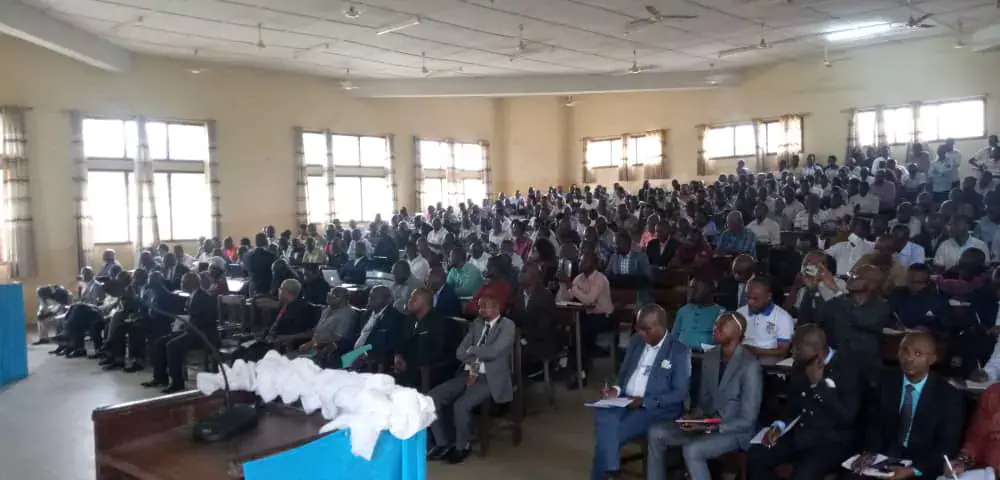
The Democratic Republic of Congo's higher education sector has convened in Boma to evaluate the implementation of the Licence-Master-Doctorat (LMD) system, five years after its introduction. The gathering, which took place from October 26 to 28, brought together stakeholders to discuss the progress made and challenges faced since the LMD system came into effect in the 2021-2022 academic year. The meeting was held following the official opening of the 2026-2027 academic year.
The LMD system aims to align the country's higher education with international standards and focus on competency-based learning. According to Professor Sangabau Raymond, academic advisor to the Minister of Higher Education, Research, Science, and Innovation, some lecturers continue to use traditional teaching methods, which are not in line with the LMD's student-centered approach. He emphasized the need for lecturers to adapt their teaching methods to meet the new requirements.
One of the challenges identified is the need for greater mobility of students between higher education institutions. Under the LMD system, students can now take courses at different institutions and have their grades transferred to their home institution. This is expected to provide students with more flexibility and opportunities to acquire a broader range of skills and knowledge.
Professor Érick Kisonga Manuku from the University of Kinshasa noted that the LMD system is designed to meet the needs of the job market by emphasizing competency-based learning. He argued that employers are looking for graduates who can integrate quickly into the professional world, rather than those with only theoretical knowledge. The LMD system aims to bridge the gap between university education and the job market.
The stakeholders at the meeting agreed that the success of the LMD system depends on its effective implementation in higher education institutions. They stressed the need for institutions to produce graduates with a combination of solid academic knowledge and practical skills, in line with the objectives of the reform. The meeting's outcome is expected to inform policy decisions and improve the implementation of the LMD system.
The evaluation of the LMD system's implementation is a significant step towards ensuring that DR Congo's higher education sector is aligned with international standards. The country's higher education sector has faced several challenges in recent years, including a shortage of qualified lecturers and inadequate infrastructure. The LMD system is expected to address some of these challenges and improve the quality of education.
The meeting's recommendations are expected to be implemented in the coming months, with a focus on improving the quality of education and aligning the sector with international standards. The stakeholders are expected to continue working together to address the challenges facing the sector and ensure the success of the LMD system.
Key points
- The LMD system aims to align DR Congo's higher education with international standards and focus on competency-based learning.
- Stakeholders have identified challenges, including the need for lecturers to adapt their teaching methods and improve student mobility.
- The success of the LMD system depends on its effective implementation in higher education institutions.