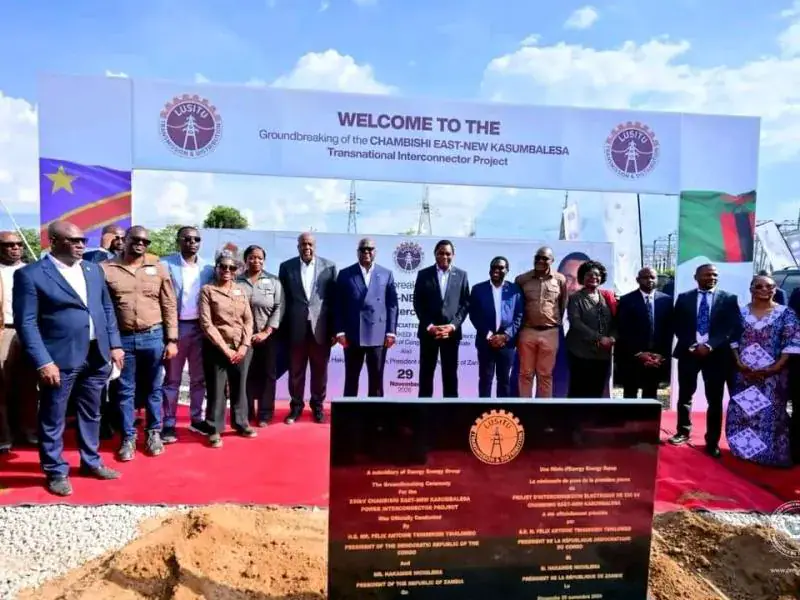
On November 29, 2026, in Ndola, Zambia, Presidents Félix Tshisekedi of the Democratic Republic of Congo and Hakainde Hichilema of Zambia initiated the construction of a high-voltage power line. This project aims to connect the Zambian border to the Karavia, Panda, and Fungurume substations in the Democratic Republic of Congo. The goal is to enhance energy cooperation between the two countries and address the energy deficit in the Copperbelt region.
The Copperbelt region is characterized by substantial mining and industrial activities, yet it faces significant challenges in accessing electricity. The new power line is expected to not only supply mining companies but also promote industrialization, support local mineral processing, and improve electricity services for households. President Tshisekedi highlighted the paradox of a country rich in essential minerals for the global energy transition struggling with electricity access within its own borders.
During the launch event, President Tshisekedi emphasized the need to end this paradox. He stated that a nation contributing to the global energy transition cannot remain in darkness itself. The two power lines, he noted, will directly contribute to resolving this issue. He also stressed the importance of directly benefiting local populations from this project, including connecting households, schools, hospitals, and local workshops.
President Tshisekedi called on the government and the Société nationale d'électricité (SNEL) to ensure the rapid execution of the project. He expressed his ambition that no locality crossed by these power lines should remain without electricity. Furthermore, he reiterated his commitment to achieving a 62% electrification rate in the Democratic Republic of Congo by 2030, in line with the objectives of the National Energy Compact.
The president views this interconnection as a strategic opportunity to strengthen cooperation between Kinshasa and Lusaka. He noted that while copper has always been shared under their feet, electricity above their heads will now also be shared. This project is expected to enhance the Democratic Republic of Congo's ability to valorize its mining and energy potential.
By improving access to electricity, the project aims to drive industrial development and improve living conditions in the Grand Katanga region. The initiative represents a significant step towards addressing the region's energy challenges and supporting economic growth. The project is also seen as a means to consolidate the sovereignty and cooperation between the two nations.
The launch of this high-voltage power line marks a crucial milestone in the energy sector for both countries. It underscores their commitment to enhancing regional cooperation and addressing the pressing issue of energy access in the Grand Katanga region. The project's success is anticipated to have a positive impact on the lives of local populations and the overall economic development of the area.
Key points
- The project aims to increase the electrification rate in the Democratic Republic of Congo to 62% by 2030.