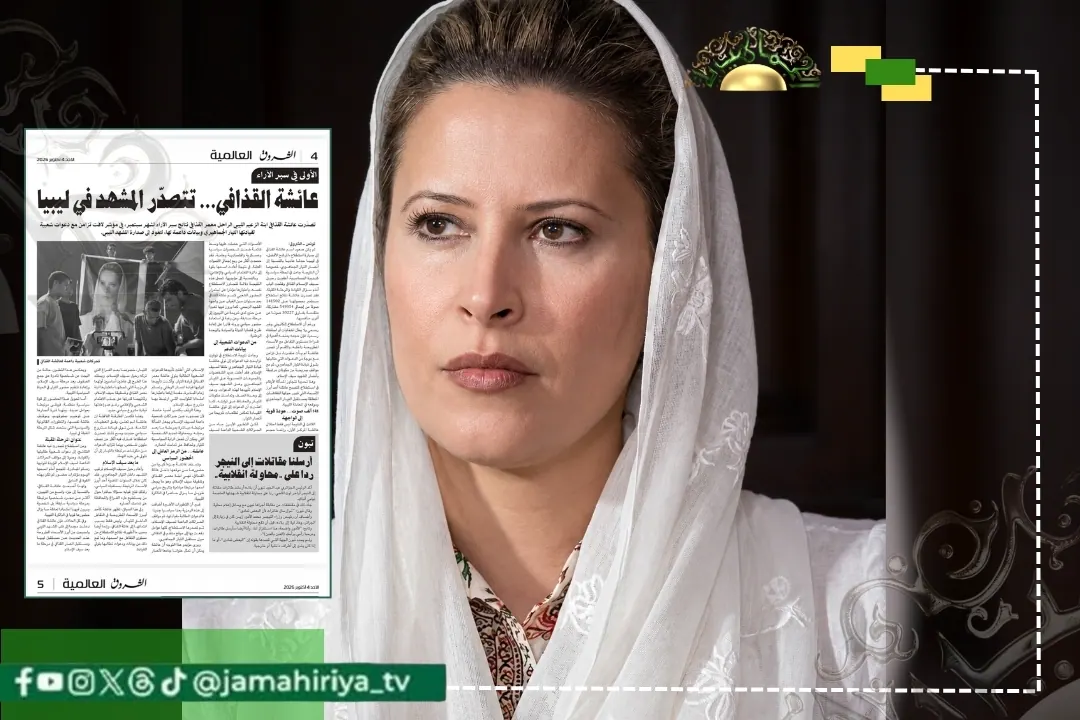
According to a report by the Tunisian newspaper Al-Shorouk, Dr. Ayesha Gaddafi, daughter of the late Libyan leader Muammar Gaddafi, has emerged as the leading candidate in the "Best Candidate" poll for September, securing 141,502 votes. This significant lead of 30,227 votes over her closest competitor has generated considerable attention, particularly among supporters of the Jamahiriya movement. The poll, conducted electronically, is not an official election or referendum but provides insight into the level of engagement with the candidates listed.
The rise of Dr. Ayesha Gaddafi to the top of the poll is seen as a notable event, especially given the sensitive political climate in Libya following the departure of Dr. Saif Islam Gaddafi. This development has sparked discussions about leadership and the future of the Jamahiriya movement. Despite the informal nature of the poll, its results are considered significant in assessing public interest in the candidates. Dr. Ayesha's lead is viewed as an indicator of her growing popularity and potential influence within Libyan politics.
The poll results coincide with increased calls for Dr. Ayesha Gaddafi to assume leadership of the Jamahiriya movement. Various political figures and groups have expressed support for her candidacy, emphasizing the need for unity and cohesion within the movement. These developments suggest that Dr. Ayesha Gaddafi is becoming a central figure in discussions about the future of the Jamahiriya movement and its role in Libya's political landscape.
The "Best Candidate" poll, which includes a range of political, military, economic, and public figures, highlights Dr. Ayesha Gaddafi's broad appeal. With over a quarter of the total votes cast, her results demonstrate significant public support. This outcome is seen as a reflection of the enduring popularity of the Gaddafi family and the nostalgia for a previous era among some segments of the Libyan population.
Analysts view Dr. Ayesha Gaddafi's poll results as an expression of the public's desire for a return to a political landscape that prioritizes state sovereignty and national unity. Her potential leadership of the Jamahiriya movement is seen as a means of reviving a sense of political stability and coherence. As Libya continues to navigate its complex political situation, Dr. Ayesha Gaddafi's rising profile is likely to remain a topic of discussion.
The calls for Dr. Ayesha Gaddafi to lead the Jamahiriya movement have been accompanied by statements from various political and social groups, emphasizing the importance of unity and adherence to the movement's principles. These developments indicate a growing momentum behind Dr. Ayesha Gaddafi's potential candidacy and suggest that her leadership could play a significant role in shaping Libya's future.
As the situation in Libya continues to evolve, Dr. Ayesha Gaddafi's position at the forefront of the "Best Candidate" poll, combined with the increasing calls for her leadership, underscores her growing influence in Libyan politics. The implications of her potential leadership for the Jamahiriya movement and the broader political landscape remain to be seen.
Key points
- Dr. Ayesha Gaddafi leads in Libya's "Best Candidate" poll with 141,502 votes.
- Her potential leadership of the Jamahiriya movement has sparked discussions about Libya's future.
- Various groups have expressed support for her candidacy, emphasizing unity and adherence to the movement's principles.