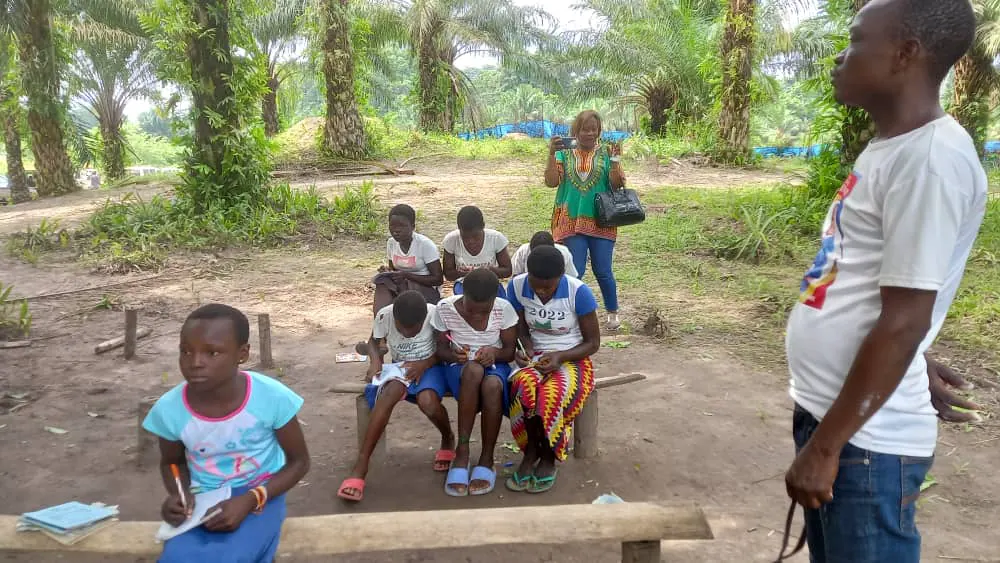
A significant number of children in the localities of Kahunga and Karama, in the Bukoma group, Rutshuru territory, North Kivu, have dropped out of school after completing their second year of primary education. The primary school in Kahunga Village, an extension of EP Kahunga based in Kiwanja, has only two classrooms, forcing students who wish to continue their education to travel several kilometers to Kiwanja. According to local educational authorities, this situation has led to a substantial number of school dropouts.
The Kahunga Village primary school has been operating for about ten years with just two classrooms built through local resources. This year, the school has 70 students from Kahunga and Karama. Kambale Sikuli Justin, the teacher in charge of the school, stated that after the second year of primary education, students must attend other schools to continue their studies. Students from Kahunga have to walk about five kilometers, while those from Karama have to cover up to ten kilometers daily.
The long distance to schools has become a significant obstacle for many families. Some parents prefer to keep their children at home due to the risks associated with daily commutes. Kambale Sikuli Justin called for the construction of new classrooms and the deployment of a state-funded teacher. He emphasized the need for assistance from partners to build classrooms and for the government to provide a state-funded teacher.
Kavusa Hilaire, president of the parents' committee, expressed concern about the long distances students have to travel. He urged the authorities to intervene and allow children from Kahunga and Karama to continue their education closer to their homes. The situation highlights the challenges faced by families in accessing quality education in Rutshuru.
The lack of infrastructure has resulted in a significant number of school dropouts in the region. Local educational authorities and parents are calling for urgent intervention to address the issue. The construction of new classrooms and deployment of more teachers are seen as essential steps to resolving the problem.
Kambale Sikuli Justin appealed for support from educational authorities and partners to strengthen school infrastructure in the area. The situation in Rutshuru underscores the need for increased investment in education infrastructure to ensure that children have access to quality education.
The issue of school dropouts in Rutshuru has raised concerns among local stakeholders, who are advocating for a collaborative effort to address the challenges faced by students in the region.
Key points
- The primary school in Kahunga Village has only two classrooms for 70 students.
- Students from Kahunga and Karama have to travel long distances to continue their education after the second year of primary school.
- Local authorities and parents are calling for the construction of new classrooms and deployment of state-funded teachers to address the issue of school dropouts.