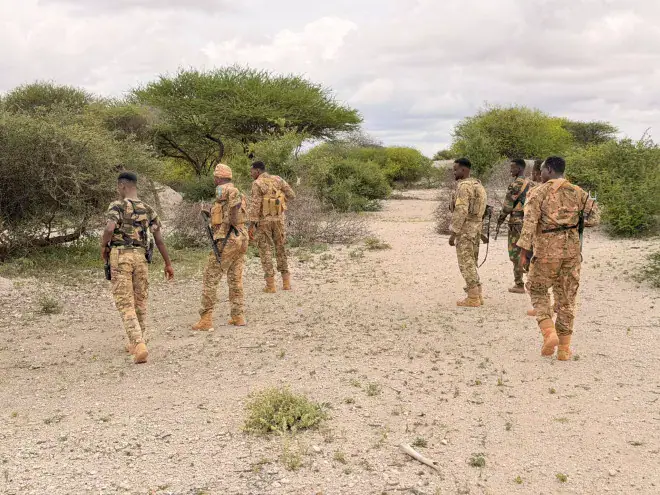
Clashes between Somali government forces and Al-Shabab militants on Monday resulted in significant casualties, according to reports from both sides. The Al-Qaeda-linked group has been fighting the government for two decades and still controls large areas of central Somalia. Despite a massive international operation against it, Al-Shabab remains a formidable force in the region. The group's continued presence is a major challenge to the Somali government's efforts to establish stability and security.
According to Al-Shabab, it launched an attack on Turkish-trained government troops and an allied militia in the Lower Shabelle region on Monday afternoon. The group claimed that the attack resulted in the deaths of 321 troops. However, the Somali defense ministry provided a significantly different account of the incident. The ministry stated that federal troops killed 75 Al-Shabab militants and wounded 56 others during the assault, which took place near the city of Leego.
The defense ministry described the operation as "Operation Banooda," a major assault that lasted several hours on October 26 against Al-Shabab positions in Jameeca. The ministry confirmed that the militants used explosives-laden vehicles in the attack, which damaged some military vehicles. The conflicting accounts from both sides highlight the challenges of verifying information in conflict zones, where propaganda and misinformation can spread quickly.
Al-Shabab also claimed to have seized prisoners, weapons, and vehicles during the three-hour ambush. The group's ability to carry out such attacks raises concerns about the effectiveness of the Somali government's counter-insurgency efforts. Despite international support, the government has struggled to defeat Al-Shabab, which has been responsible for numerous attacks on civilians and military targets.
The Somali government has called an emergency meeting of the cabinet to discuss the "heavy casualties and substantial military equipment losses during intense fighting with Al-Shabab militants near Leego." The meeting is likely to focus on the government's response to the attack and efforts to prevent similar incidents in the future. Turkey has emerged as a key backer of the Somali government, providing significant support to the country's military.
The United States and other key donors have been pulling back from supporting the counter-insurgency efforts in Somalia. Washington has stopped funding the vital United Nations logistics mission that supplies combat operations in the country, citing the government's failure to make progress in uniting the country and tackling the insurgent threat. The reduced international support has created challenges for the Somali government, which is struggling to address the security situation.
The clashes between the Somali army and Al-Shabab militants are a reminder of the ongoing security challenges in the region. The incident highlights the need for the Somali government to develop effective strategies to counter the insurgency and establish stability in the country. The government will need to work with international partners to address the security situation and prevent further attacks on civilians and military targets.
Key points
- The clashes resulted in significant casualties, with Al-Shabab claiming 321 government troops killed and the defense ministry reporting 75 militants killed.
- The Somali government has called an emergency meeting of the cabinet to discuss the "heavy casualties and substantial military equipment losses" during the fighting.
- Turkey has emerged as a key backer of the Somali government, providing significant support to the country's military.