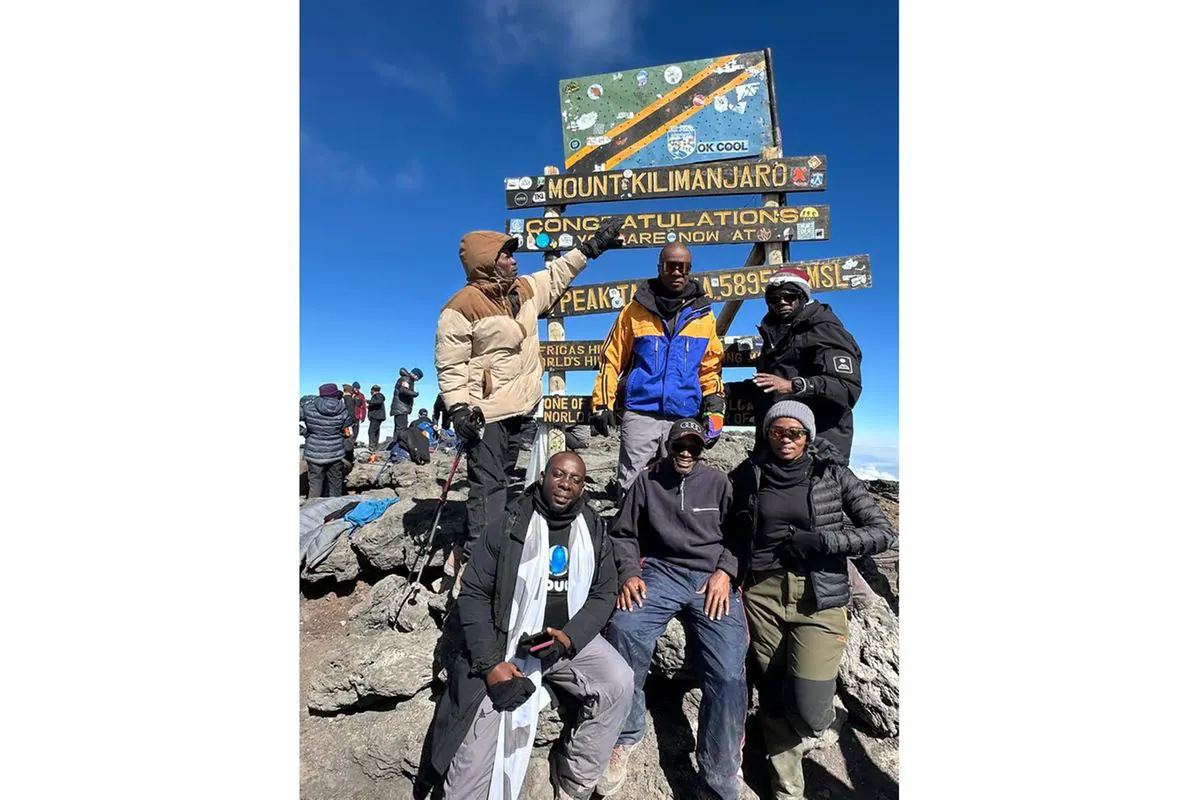
Peter Ulanga, an eleven-time Kilimanjaro summiteer, inspired a Tanzanian businessman to climb Africa's highest mountain two years ago. Despite being a marathon runner, the businessman found that his fitness was not his greatest asset on the mountain. The pair initially planned to take the Northern Circuit route but switched to Machame due to fires on the mountain. This change of plans was the first lesson: prepare carefully, but do not become emotionally attached to your plan.
The businessman and his group faced a delay in the KINAPA permit system, which led to a late start at Machame Gate. They climbed 11 kilometres through the rainforest by headlamp, reaching Machame Camp at 10 pm. This experience taught him that adventure can be about arriving late, cold, and hungry. The group had to adapt to basic living conditions, with no showers for seven days, but they found that small disciplines, such as waking up, packing correctly, and eating breakfast, were crucial to their success.
On the second day, the group covered six kilometres in six hours while climbing over rocks to Shira Camp at 3,900 meters. This slow pace was a far cry from the businessman's normal running pace, but he learned that "polepole" - a Swahili term meaning slowly and steadily - was the modus operandi on Kilimanjaro. The mountain taught him that progress is not always about moving faster, but about pausing, breathing, and continuing.
The group followed a pattern of climbing high and sleeping low to acclimatize to the high altitude. On the third day, they climbed to Lava Tower at 4,600 meters and then descended to Barranco Camp at 4,000 meters. This oscillation between ascent and descent was a valuable lesson in preparing the body and mind to go higher. The group also encountered the challenging Barranco Wall, which required them to climb with their hands and feet.
The businessman credits the success of their climb to teamwork and leadership. Their group leader, Leonard Kitoka, a seven-time summiteer, played a crucial role in keeping the group motivated and moving together. The guides and porters also provided essential support, carrying equipment and preparing camps. Music played by one of the guides, Latifa, helped to lift the group's spirits and keep them moving.
The summit attempt began at midnight from Kosovo Camp, at about 4,900 meters. The group faced temperatures well below freezing and a long, silent procession up the mountain. After eight and a half hours, they reached Stella Point, where they witnessed a breathtaking sunrise. The businessman notes that the experience was deeply personal, as Rombo, where his roots are, is near the summit.
The businessman reflects on the experience, noting that the mountain changes one's perspective on progress, discomfort, teamwork, and what can be achieved. He also observes that Tanzanians make up a small percentage of climbers on Kilimanjaro, estimating that they were fewer than 10 percent of the climbers they met. He encourages more Tanzanians to train and take up the challenge of climbing the mountain, making it part of their national imagination.
Key points
- The mountain teaches valuable lessons about teamwork, leadership, and adapting to challenges.
- The experience changes one's perspective on progress, discomfort, and what can be achieved.
- More Tanzanians should be encouraged to climb Kilimanjaro and make it part of their national imagination.