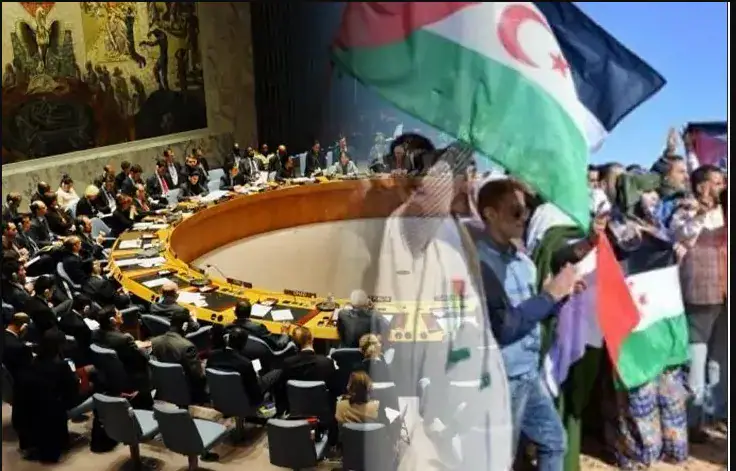
The question of whether the UN Security Council has the authority to determine the final status of Western Sahara raises fundamental concerns about the balance between the Council's primary responsibility for maintaining international peace and security and the principles of self-determination and decolonization. This issue is particularly relevant in the context of Western Sahara, a non-self-governing territory with a long-standing dispute over its status.
The UN Security Council's powers are outlined in the UN Charter, specifically in Article 24, which grants the Council primary responsibility for maintaining international peace and security. However, this responsibility is not absolute and must be exercised in accordance with the purposes and principles of the UN, including respect for the right of peoples to self-determination. The Council's authority is also subject to the constraints of international law, including the principles of decolonization and the rights of indigenous peoples.
The right to self-determination is enshrined in Article 1(2) of the UN Charter, which sets out the purposes of the UN, including promoting friendly relations among nations based on respect for the principle of equal rights and self-determination of peoples. This principle is further reinforced by the International Court of Justice's advisory opinion on Western Sahara, which emphasized the importance of self-determination in determining the territory's status.
The UN Security Council has a significant role in maintaining international peace and security, but its authority is not unlimited. The Council's powers are subject to the constraints of international law, including the principles of self-determination and decolonization. In the case of Western Sahara, the Council's role is to facilitate a peaceful resolution to the dispute, while respecting the right of the Sahrawi people to self-determination.
The relationship between the UN Security Council and the General Assembly is also relevant in this context. While the Council has primary responsibility for maintaining international peace and security, the General Assembly has a significant role in promoting the principles of self-determination and decolonization. The Assembly has repeatedly called for a peaceful resolution to the Western Sahara conflict, based on the principles of self-determination and the rights of the Sahrawi people.
The UN Security Council's resolution on Western Sahara, adopted in 2003, established a framework for a peaceful resolution to the conflict, including a referendum on the territory's status. However, the implementation of this resolution has been delayed, and the Council's role in determining the final status of Western Sahara remains a contentious issue. The African Union has also played a significant role in promoting a peaceful resolution to the conflict, based on the principles of self-determination and African solidarity.
In conclusion, the UN Security Council's authority to determine the final status of Western Sahara is limited by the principles of self-determination and decolonization. The Council's role is to facilitate a peaceful resolution to the dispute, while respecting the right of the Sahrawi people to self-determination. The international community, including the African Union and the UN General Assembly, has a significant role to play in promoting a peaceful resolution to the conflict, based on the principles of self-determination and the rights of the Sahrawi people.
Key points
- The UN Security Council's authority to determine the final status of Western Sahara is limited by the principles of self-determination and decolonization.
- The Council's role is to facilitate a peaceful resolution to the dispute, while respecting the right of the Sahrawi people to self-determination.
- The international community, including the African Union and the UN General Assembly, has a significant role to play in promoting a peaceful resolution to the conflict.