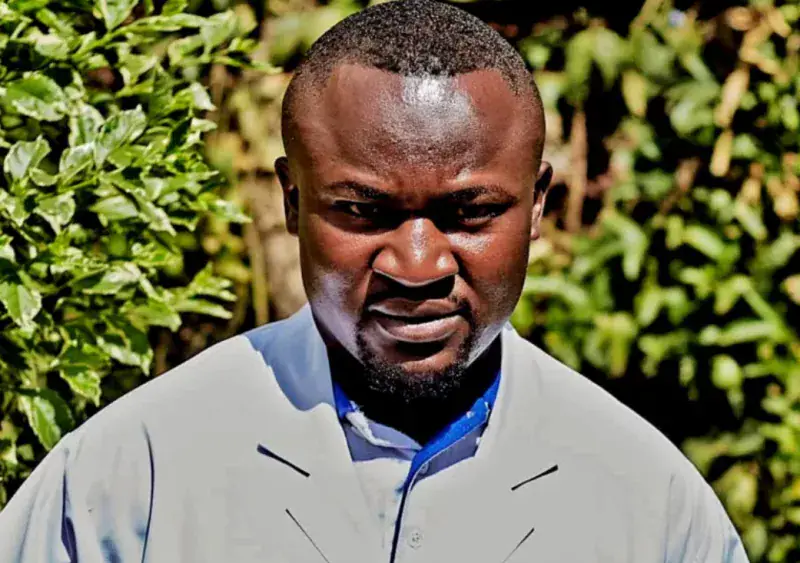
Dr Raymond Kasereka Kamwanga, a 30-year-old medic, contracted Ebola while working at Butembo's Katwa Hospital in eastern Democratic Republic of Congo. He suspected he had the disease and decided to go to a treatment centre, despite his family's concerns. His mother, Masika Ndungo, pleaded with him not to go, fearing he would die. Dr Kamwanga knew that if he stayed at home, his chances of survival would be low.
The Ebola outbreak in DR Congo was declared a public health emergency of international concern by the World Health Organization (WHO) in July. Since then, 5,400 people have died and 11,000 have been infected, making it the second-most deadly outbreak ever recorded. Butembo is in North Kivu province, the epicentre of the crisis, with the highest number of reported cases. Dr Kamwanga is one of 3,031 people who have survived Ebola.
Dr Kamwanga's symptoms appeared gradually, starting with a bitter taste in his mouth, headaches, and a general feeling of malaise. He contacted the Ebola response team and was tested, but his condition did not improve. He had to travel 54km to the city of Beni for a diagnosis, which took between 48 and 72 hours due to poor road conditions. His condition worsened, and he was eventually admitted to the Ebola treatment centre.
At the treatment centre, Dr Kamwanga received symptomatic treatment for severe vomiting and diarrhoea. He lost a lot of fluid and struggled to stay hydrated, but tried to stay positive by watching movies and reading. After 13 days, he learned he had recovered and felt immense relief. However, even a certificate showing he was Ebola-free did not initially dispel the unease those around him felt.
Dr Kamwanga's family and neighbours were initially afraid of him, fearing he was still contagious. He lived separately from his family for 21 days, the incubation period of the virus. He would only see them from afar when he went to pick up his meal. His mother, Masika Ndungo, says that witnessing Ebola first-hand helped to dispel some of the misinformation about the disease.
After his recovery, Dr Kamwanga threw himself into community outreach, sharing his story to combat rumours and mistrust. He started writing a book about his experience and distributes photos taken while he was sick to convince residents that Ebola is real. However, his mission remains difficult in Butembo, where some people view awareness campaigns as a way for humanitarian organisations to profit from donor funding.
Dr Kamwanga's efforts to spread awareness about Ebola come with risks, and he reports receiving death threats on his phone. Some residents accuse him of being paid to spread information about Ebola. He also reports that outreach workers have been attacked by members of the community. Despite these challenges, Dr Kamwanga remains committed to sharing his story and helping to stop the spread of Ebola.
Key points
- Dr Raymond Kasereka Kamwanga, a 30-year-old medic, survived Ebola and is now sharing his story to combat rumours and mistrust about the disease in DR Congo.