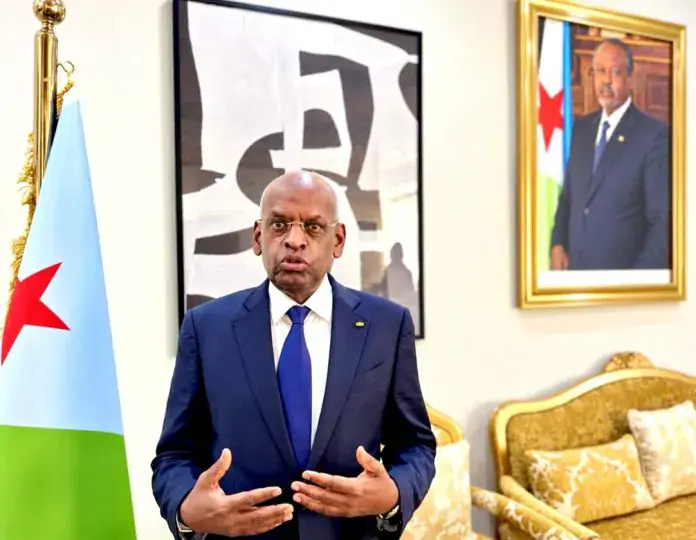
In a recent interview with French magazine Le Point, Djibouti's Prime Minister Abdoulkader Kamil Mohamed emphasized his country's determination to preserve the Bab el-Mandeb strait as a secure and open international shipping lane. The strait, located near the entrance to the Red Sea, is a critical waterway for global trade. With the ongoing conflict in Yemen, there are concerns about the safety of ships passing through the area. The Prime Minister stressed that Djibouti will not allow the strait to be controlled or restricted by any single entity.
Djibouti's strategic location at the intersection of East Africa, the Arab world, and major international shipping routes makes it a crucial player in regional stability. The Prime Minister highlighted the country's commitment to maintaining a balance between its geographic position and its responsibilities to ensure the free flow of goods. He noted that Djibouti has a long history of cooperation with various countries and has established strong relationships with nations in the region. This approach, he believes, will enable Djibouti to navigate the complex web of regional tensions.
The conflict in Yemen has had a significant impact on Djibouti, with thousands of people fleeing the fighting and seeking refuge in the country. The Prime Minister revealed that Djibouti has spent approximately $1.7 million on food, medicine, and healthcare for the displaced persons. He also mentioned that the country has set up a center in Obock to provide shelter, food, and medical care to those in need. The refugees include women, children, and people with medical conditions, and Djibouti is working to ensure their well-being.
The Prime Minister distinguished between refugees and combatants, stating that no Houthi fighters have been identified among those seeking refuge in Djibouti. However, he confirmed that around 10-17 Yemeni government fighters are being held in a separate military camp and have been granted temporary legal status. Regarding the designation of the Houthis as a terrorist organization, the Prime Minister declined to comment, citing Djibouti's close ties with Yemen and the United Nations' position on the matter.
Djibouti's defense agreement with France, renewed in 2024 for 20 years, provides a framework for cooperation on security issues. The Prime Minister emphasized that the agreement is based on mutual interests and allows for French support in case of need. He also acknowledged the presence of US military forces in Djibouti, stating that their presence is part of a broader international effort to maintain stability in the region. The Prime Minister stressed that Djibouti's goal is to maintain a balance between its relationships with various countries and ensure the country's security.
The Prime Minister acknowledged that some shipping companies have opted to route their vessels around the African continent rather than risk passing through the Bab el-Mandeb strait. However, he noted that many ships continue to use the strait, and Djibouti is committed to ensuring their safety. He emphasized that the country's approach is based on dialogue and cooperation, rather than taking sides in regional conflicts. This approach, he believes, will help maintain stability and ensure the continued flow of trade through the strait.
As the conflict in Yemen continues to affect the region, Djibouti remains committed to its role as a stable and secure partner. The Prime Minister's statements reflect the country's determination to protect its interests while maintaining a delicate balance between its relationships with various countries. With its strategic location and commitment to international cooperation, Djibouti aims to play a key role in maintaining regional stability and ensuring the free flow of trade through the Bab el-Mandeb strait.
Key points
- Djibouti's Prime Minister Abdoulkader Kamil Mohamed emphasizes the country's commitment to preserving the Bab el-Mandeb strait as a secure and open international shipping lane.