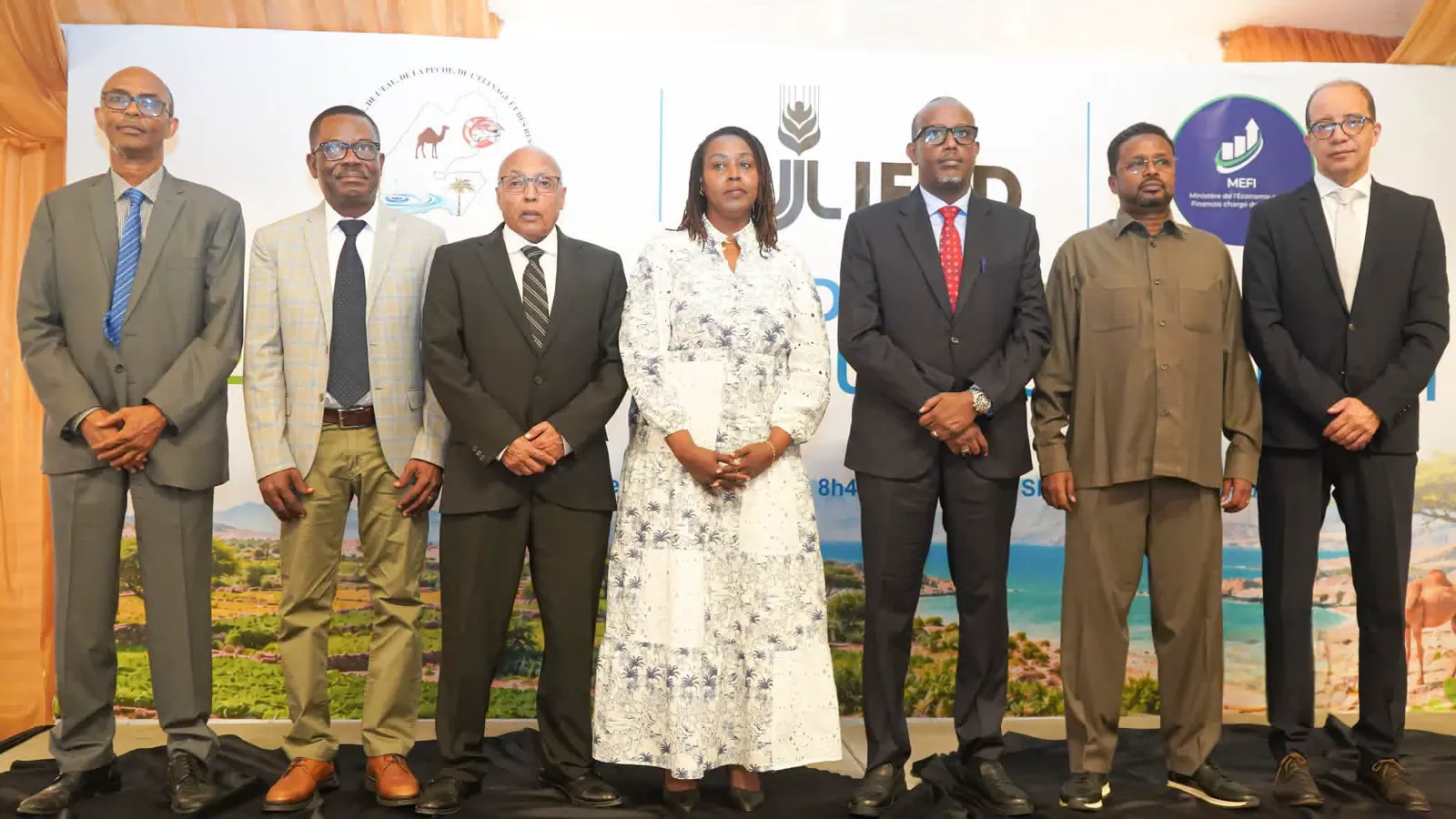
Djibouti has initiated the validation process for its new Country Strategic Opportunities Programme (COSOP) 2026-2031 with the International Fund for Agricultural Development (IFAD). The programme sets the framework for cooperation in agriculture, fisheries, livestock, and water management for the next five years. The validation workshop was held at the Sheraton Hotel, presided over by the Minister of Agriculture, Water, Fisheries, Livestock, and Halieutic Resources, Radwan Abdillahi Bahdon.
The COSOP programme succeeds the 2019-2025 programme, which underwent an independent evaluation. The IFAD Country Director highlighted the lessons learned from the previous cycle, while the Director of the Near East, North Africa, Europe, and Central Asia Division of IFAD, Naoufel Telahigue, commended the work done with the government. He emphasized that food security and poverty reduction are primary objectives and national priorities.
The representative of the Food and Agriculture Organization (FAO) in Djibouti praised the complementarity of the two institutions. The FAO contributes to technical innovation, value chain development, and mobilizing additional climate financing, while IFAD brings expertise in rural investments and development financing. The Secretary General of the Ministry of Economy and Finance, Abdourazak Ahmed Idriss, contextualized the exercise within the country's economic dynamics.
According to the Secretary General, Djibouti's sustained economic growth, driven by its port and logistics infrastructure, must benefit the territory more. The programme will focus on resilient food systems, inclusive value chains, private sector involvement, and strengthening rural institutions. Special attention will be given to small producers, herders, fishing communities, women, and young people.
The Minister of Agriculture, Water, Fisheries, Livestock, and Halieutic Resources, Radwan Abdillahi Bahdon, outlined the country's constraints, including recurrent droughts, degraded grazing lands, fragile livestock, scarce arable land, and heavy dependence on food imports. He stated the ambition to build a more resilient, productive, inclusive, and job-creating rural Djibouti.
The Minister emphasized the importance of water, citing the President's statement that "without water, there is no productive agriculture, no food security." He highlighted projects such as Progrès and PGIRE, implemented with IFAD, which have made progress in water mobilization, rural infrastructure, and agropastoral activities. He stressed the need to ensure the sustainability of infrastructure and strengthen its maintenance.
The validation workshop was attended by government officials, representatives from the FAO, technical and financial partners, civil society, and the rural world. The programme aims to address the country's challenges and create a more resilient and productive rural sector. The participants will work towards finalizing the COSOP programme, which will guide the country's agricultural development for the next five years.
Key points
- The new COSOP programme focuses on resilient food systems, inclusive value chains, and strengthening rural institutions.
- The programme prioritizes the needs of small producers, herders, fishing communities, women, and young people.
- The programme aims to address the country's constraints, including recurrent droughts, degraded grazing lands, and heavy dependence on food imports.


