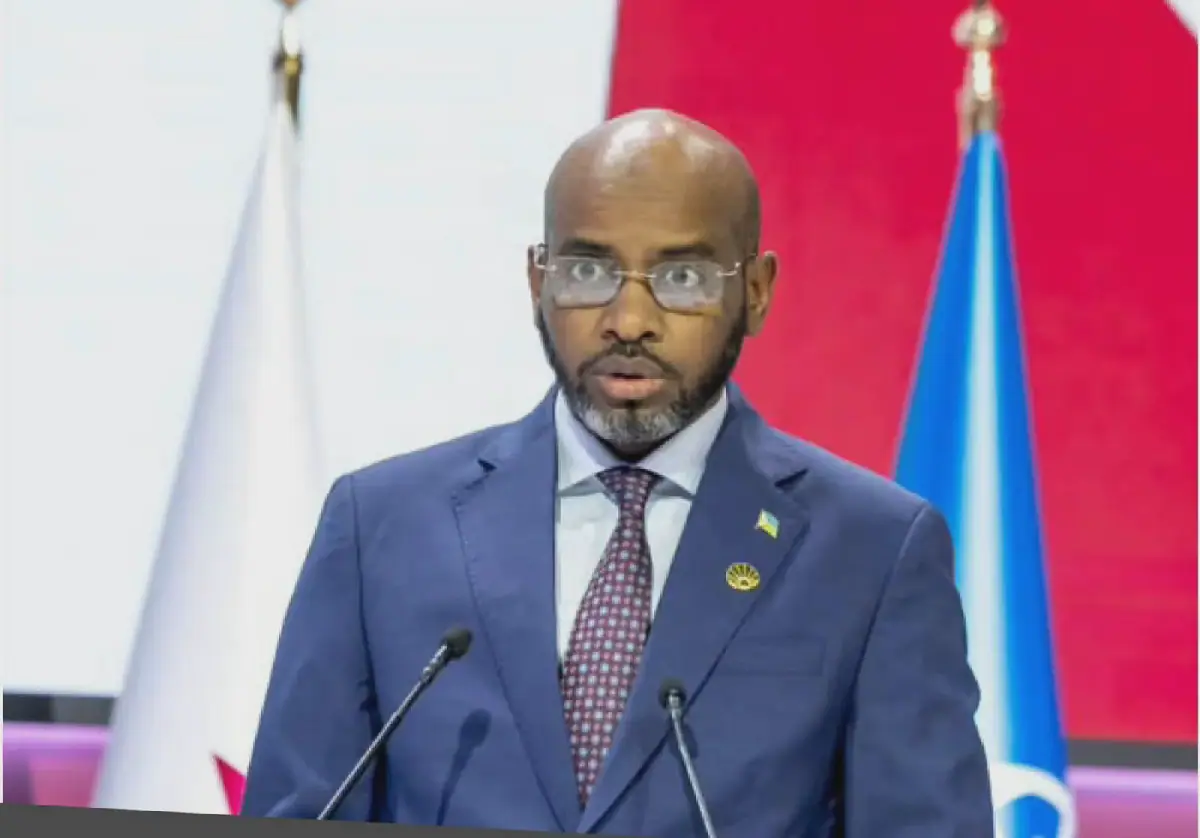
Djibouti has made significant strides in its digital development, with nearly 70% of its population now connected to the internet. The country's minister of communication, Mohamed Abdoulkader Moussa, presented these achievements at the ITU's Conference of Plenipotentiaries in Doha. He emphasized the importance of telecommunications as a strategic lever for development and independence. The minister highlighted Djibouti's Vision 2035 and national digital transformation strategy.
The country's digital infrastructure is expanding rapidly, with 350 kilometres of fibre optic cable being deployed across the country. This rollout is part of the East Africa Regional Digital Integration Project (EARDIP), which aims to enhance regional interconnectivity. The extension of fibre and 4G/LTE networks has contributed to the high internet penetration rate. However, the minister acknowledged that challenges persist, particularly in reducing territorial disparities and ensuring access in remote areas.
Mobile coverage in Djibouti has reached 95%, with the government working to improve services. The country has adopted a National Emergency Telecommunications Plan (NETP) to ensure continuity of communications during crises. Djibouti is also focusing on protecting its critical infrastructure, including undersea cables, data centres, and satellite systems. The minister stressed that connectivity must be secure and resilient.
The government has established a National Digital Council to promote responsible approaches to artificial intelligence and data governance. This council aims to balance innovation with ethics, security, and rights protection. Djibouti is committed to multilateralism and views the ITU as essential for equitable spectrum allocation, international standardization, and support for developing countries.
The ITU conference, which takes place every four years, sets the organization's direction and elects its leaders. Djibouti's participation in the conference reflects its commitment to global cooperation in telecommunications. The country's minister emphasized the need for enhanced cooperation, technology transfer, and financing, particularly for Africa and the Arab world.
Djibouti's strategic location, at the crossroads of Africa and the Arabian Peninsula, makes it an important hub for telecommunications. The country is connected to several major undersea cable systems and aims to leverage this advantage for regional integration. The government has also adopted a digital code, which regulates electronic communications, data protection, and cybersecurity.
The country's progress in digital development has been recognized, and its commitment to international cooperation has been reaffirmed. As the ITU conference concludes, Djibouti's achievements and challenges serve as a reminder of the importance of continued investment in digital infrastructure and cooperation. The country's vision for a more inclusive and connected future remains a priority.
Key points
- Djibouti has achieved 70% internet penetration and 95% mobile coverage.
- The country is rolling out 350 kilometres of fibre optic cable.
- Djibouti emphasizes the importance of secure and resilient connectivity.
Reporting sources
- 70 % d’internautes, 350 km de fibre, 95 % de couverture mobile : Djibouti met ses chiffres sur la table à l'UIT · agence djiboutienne d'information