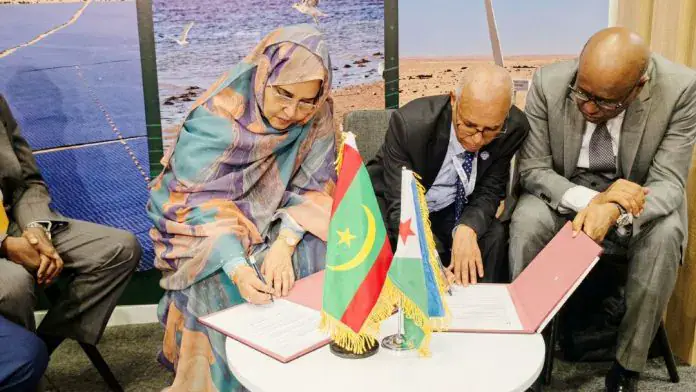
Djibouti has taken a significant step forward in promoting its Sovereign Carbon Initiative (SCI) at the 31st United Nations Climate Change Conference (COP31) in Antalya. The country signed three cooperation agreements with Mauritania, Côte d'Ivoire, and Guinea to promote sovereign carbon initiatives and strengthen African cooperation in mobilizing resources to combat climate change. These agreements were signed by Djibouti's Minister of Environment and Sustainable Development, Mohamed Ahmed Awaleh, with his counterparts from the three countries.
The SCI, launched in 2023 under the leadership of Djibouti's President Ismaïl Omar Guelleh, aims to valorize the country's carbon heritage and develop climate financing mechanisms under its sovereignty. The initiative is based on the polluter-pays principle and targets major emitters, particularly in the maritime and aviation sectors, to finance climate adaptation and transition energy actions. Djibouti's model has sparked interest in other African countries, with Gabon and Liberia already engaging in similar initiatives.
The agreements signed with Mauritania, Côte d'Ivoire, and Guinea have distinct areas of cooperation tailored to each partner's priorities. With Mauritania, the focus is on South-South cooperation, experience sharing, and institutional capacity building. The partnership with Côte d'Ivoire aims to foster an African coalition around sovereign climate financing mechanisms. In Guinea, the cooperation focuses on expertise transfer, carbon market development, and national potential valorization.
The Africa Sovereign Carbon Registry Foundation (ASCRF) supports the promotion of a harmonized framework for deploying sovereign carbon initiatives, contributing to this continental approach. The agreements reflect a shared ambition to enable African states to better valorize their carbon heritage and develop climate financing mechanisms under their sovereignty. This development is seen as a crucial step towards constructing a common technical framework that respects the sovereignty and economic and environmental specificities of each state.
The next significant event for this initiative is the 32nd Conference of the Parties (COP32) scheduled for 2027 in Addis Abeba. The agreements concluded in Antalya are expected to further structure this cooperation and promote an African approach to climate financing. Djibouti's initiative, launched under President Ismaïl Omar Guelleh's impetus, aims to make carbon valorization an instrument of cooperation, climate justice, and resource mobilization for the continent's sustainable development.
The Sovereign Carbon Initiative has been gaining momentum in Africa, with several countries expressing interest in Djibouti's model. The initiative's focus on sovereignty and climate justice resonates with many African nations seeking to take control of their carbon resources and develop sustainable financing mechanisms. As the continent continues to grapple with the challenges of climate change, initiatives like Djibouti's SCI are seen as crucial for mobilizing resources and promoting sustainable development.
The international community has been closely watching Djibouti's SCI, with many experts hailing it as a innovative approach to climate financing. As the world continues to navigate the complexities of climate change, initiatives like Djibouti's SCI are likely to play an increasingly important role in promoting sustainable development and climate justice. With its focus on sovereignty, cooperation, and climate justice, Djibouti's SCI is poised to make a significant impact on the continent.
Key points
- Djibouti's Sovereign Carbon Initiative aims to valorize the country's carbon heritage and develop climate financing mechanisms under its sovereignty.