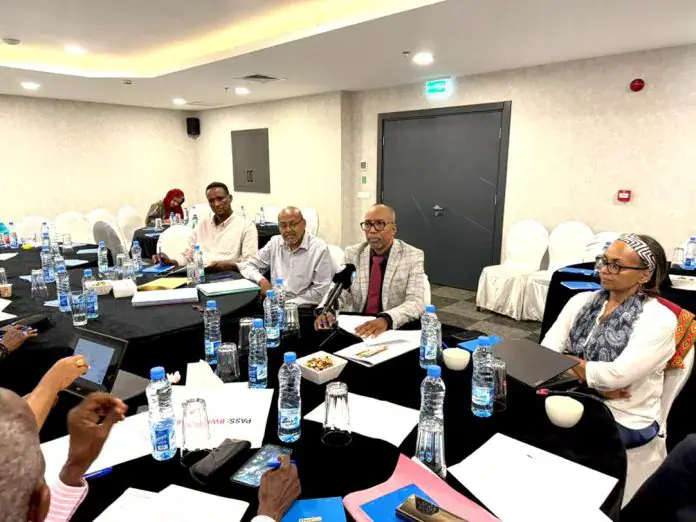
The National Assembly of Djibouti and the Commission nationale des droits de l'Homme (CNDH) recently convened their third meeting to strengthen their cooperation and enhance the country's legislative framework. The meeting, held at the Best Western Premier hotel, aimed to build on the momentum of their previous discussions and focus on translating international human rights commitments into tangible legislative progress.
The meeting brought together members of the National Assembly's Commission des lois, de la législation et des droits de l'Homme, led by Kaltoun Farah Saïd, and representatives of the CNDH, headed by Ali Soubaneh Atteyeh. The discussions centered on ways to improve the protection of vulnerable populations, enhance the state civil registry, and combat gender-based violence.
The CNDH president emphasized that the partnership between the two institutions is crucial in promoting and protecting human rights in Djibouti. He stressed that their collaboration should go beyond mere dialogue and result in concrete, measurable initiatives that benefit citizens. The president also highlighted the importance of implementing international human rights standards into national legislation.
The meeting identified four priority areas for action: strengthening the legal framework related to the CNDH, improving legislation on the rights of people with disabilities, addressing birth registration and access to birth certificates, and enhancing laws against gender-based violence. These areas were chosen for their direct impact on the enjoyment of fundamental rights and the protection of vulnerable populations.
The discussions also focused on the importance of exchanging information and expertise, incorporating international norms into legislative drafting, and organizing training and awareness-raising activities for parliamentarians and institutional actors. The follow-up to recommendations from international human rights mechanisms, including the Examen périodique universel (EPU), was also highlighted as a priority.
The CNDH president expressed his institution's willingness to share its expertise and observations with the National Assembly, while respecting the independence and competencies of each institution. He emphasized that close cooperation between the two institutions is essential for strengthening public policies, promoting rights-respecting legislation, and consolidating citizens' trust in institutions.
The third meeting aimed to move beyond institutional dialogue and focus on concrete achievements. The next step will be to transform the agreed-upon orientations into tangible progress, ultimately enhancing the national legislative framework's ability to protect human rights.
Key points
- The National Assembly and CNDH of Djibouti are working together to translate international human rights commitments into concrete legislative advancements.