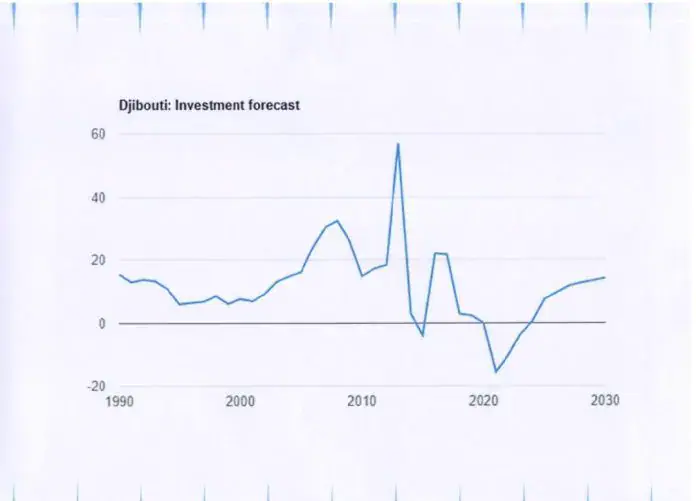
The Republic of Djibouti is on track to achieve its economic development goals by 2030, driven by a promising investment dynamic. Located in the Horn of Africa, the country aims to become a major economic, logistical, and commercial hub. According to data from theglobaleconomic.com, Djibouti's investment forecast has shown significant growth, with a notable peak in 2013. This upward trend reflects the country's strategic ambitions and attractiveness to investors.
Djibouti has undergone a significant economic transformation since the 2000s, driven by infrastructure modernization and its strategic geographical location. The country's port infrastructure, transportation networks, and logistics platforms form the backbone of its regional economic influence. The substantial increase in investment indicators in the 2000s, followed by a record high of nearly 57 points in 2013, demonstrates the country's growth momentum. This progress aligns with Djibouti's national ambition to become a preferred entry point to African markets and a strategic partner in international trade.
Despite fluctuations in the last decade, Djibouti's economy remains resilient and promising. The country's ability to withstand external shocks, including the pandemic, has been notable. According to projections, Djibouti's economy is expected to recover gradually after a contraction in the early 2020s, with a positive growth trajectory until 2030. This outlook is encouraging for investors and economic stakeholders, highlighting the country's potential for sustainable growth.
To achieve its 2030 goals, Djibouti must diversify its investments and enhance their contribution to national development. Key sectors for growth include renewable energy, industry, infrastructure, digital economy, and entrepreneurship. Encouraging private investment, developing national skills, and creating employment opportunities are crucial for inclusive growth. By leveraging its geographical advantages, infrastructure, and modernization ambitions, Djibouti can build a more competitive, resilient, and prosperous economy.
Djibouti's investment landscape has shown remarkable resilience, with a capacity to adapt to changing economic conditions. The country's strategic location at the intersection of major international shipping routes provides a significant competitive advantage. As the country continues to implement its development plans, it is likely to attract more investors and strengthen its position in the regional economy.
The government's vision for Djibouti's economic development is centered on creating a favorable business environment and promoting sustainable growth. By investing in key sectors and developing its human capital, the country can unlock its full potential and achieve its development objectives. With a strong focus on investment and innovation, Djibouti is poised to become a major player in the regional economy.
As Djibouti looks to the future, its economic prospects appear promising, driven by a combination of strategic planning, investment, and resilience. With a clear vision for development and a commitment to sustainable growth, the country is well-positioned to achieve its 2030 goals and become a major economic hub in the region.
Key points
- Djibouti aims to become a major economic, logistical, and commercial hub by 2030.