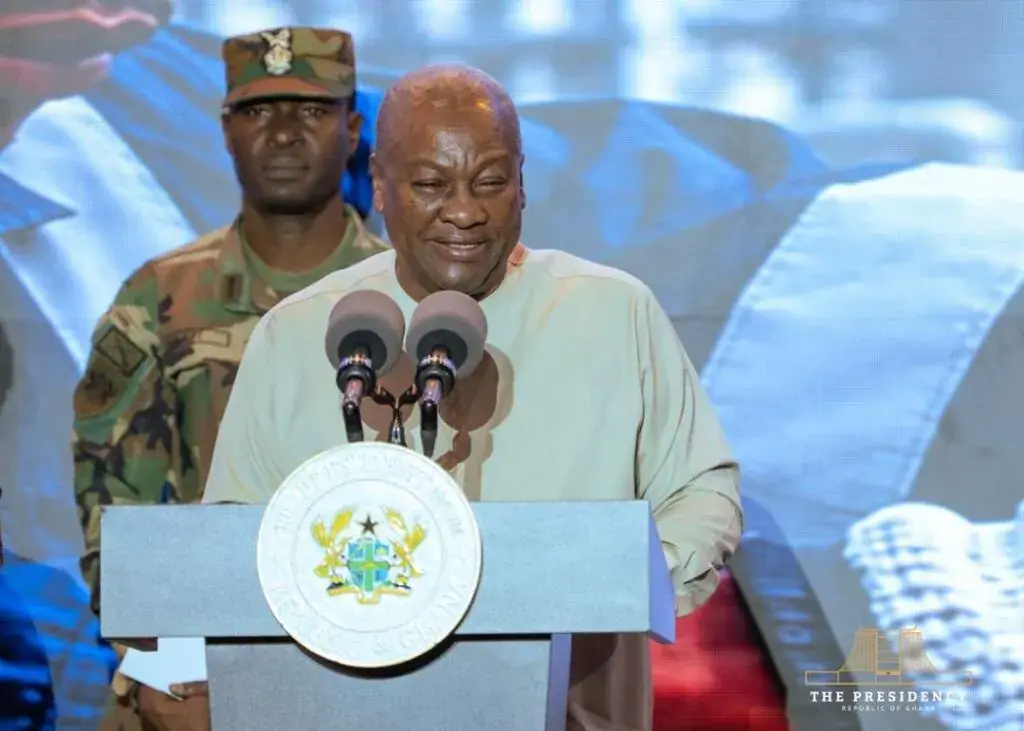
President John Mahama announced that construction has begun on a second gas processing plant, GPP II, in the Western Region of Ghana. The facility, located at Anochi, is a joint project between the Ministry of Energy and Green Transitions and the Ministry of Finance. Mahama stated that the plant will help reduce Ghana's dependence on imported liquid fuels for power generation and could save the country as much as $1 billion annually.
The new gas processing plant is an expansion of Ghana's existing gas processing capacity, which currently stands at 120 million standard cubic feet per day at the Atuabo Gas Processing Plant. GPP II aims to increase domestically produced gas for use in thermal plants, reducing the need for costlier imported fuel oil or diesel. This move is expected to bring significant savings to the country, which currently spends a substantial amount on importing fuel for electricity generation.
During the 2026 Petroleum Commission Local Content Conference and Exhibition, Mahama emphasized the importance of securing further upstream gas investments to guarantee a reliable, long-term domestic gas supply. He also stressed the need for greater Ghanaian participation in the oil and gas sector, encouraging operators to give qualified local suppliers early notice of upcoming contracts and to invest in training and technology transfer.
Mahama called on banks and financial institutions to support local suppliers who face financing constraints, and asked universities and technical institutions to align their training programs with industry needs. The government plans to maintain a stable and predictable investment climate, while the Petroleum Commission will enforce standards on safety, environmental protection, and local participation among operators and contractors.
The announcement on GPP II comes amid ongoing debate over Ghana's stake in its oil fields. The Ministry of Energy's push to expand local capacity follows separate proposals this year, including one from Jinapor to cut GNPC's oil stake from 15% to 10%. GNPC has also expressed ambitions to become an operator rather than a junior partner in the country's oil fields.
While Mahama did not provide a timeline for the completion of GPP II or its construction cost, the project is expected to have a significant impact on Ghana's energy sector. The plant will not only increase the country's gas processing capacity but also create opportunities for local businesses and skilled workers.
As Ghana continues to develop its oil and gas sector, the government faces challenges in balancing local participation with international investment. The construction of GPP II marks a significant step towards reducing the country's reliance on imported fuels and increasing its energy self-sufficiency. Key stakeholders will be watching closely as the project progresses and its impact on the country's energy landscape unfolds.
Key points
- The new gas processing plant could save Ghana $1 billion annually by reducing reliance on imported fuel for electricity generation.