The Republic of Djibouti is steadily progressing towards its goal of becoming a prominent economic, logistical, and commercial hub in the Horn of Africa. With a strategic location at the intersection of major international shipping routes, Djibouti has been leveraging its geographical advantage to drive growth. The country's economic transformation is marked by significant investments in infrastructure, including modernized ports, transportation networks, and logistics platforms. These developments have contributed to Djibouti's ambition to become a gateway to African markets and a strategic partner in international trade.
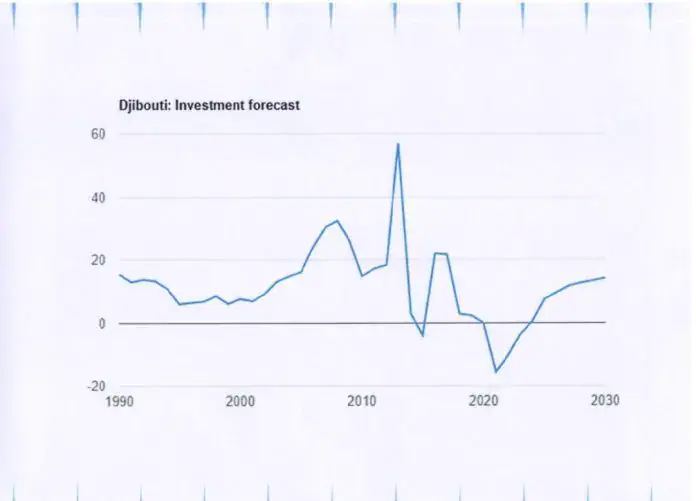
Djibouti's investment landscape has experienced notable fluctuations between 1990 and 2030, with a remarkable peak in 2013. According to data from theglobaleconomic.com, the country's investment indicator surged to nearly 57 points in 2013, reflecting the government's strategic vision and attractiveness to investors. This momentum is expected to continue, with projections indicating a positive and upward trend until 2030. The growth trajectory is driven by Djibouti's resilience in the face of global economic challenges, including the COVID-19 pandemic and international trade tensions.
The government's vision for 2030 focuses on diversifying investments and enhancing their contribution to national development. Key sectors driving growth include renewable energy, industry, infrastructure, digital economy, and entrepreneurship. Encouraging private investment, developing national skills, and creating employment opportunities are crucial to achieving these goals. By 2030, Djibouti aims to consolidate its position in the regional economy, leveraging its competitive advantages to build a more resilient and prosperous economy.
Djibouti's economic growth is underpinned by its strategic location, modern infrastructure, and ambitious development plans. The country's ports, transportation networks, and logistics platforms form the backbone of its economic expansion. With a focus on sustainable development, Djibouti is poised to become a major player in the regional economy. The government's commitment to investment and growth is reflected in its efforts to create a favorable business environment and attract foreign investment.
Despite global economic challenges, Djibouti's economy has shown remarkable resilience. The country's ability to adapt to changing circumstances and navigate turbulent times has been demonstrated by its response to the COVID-19 pandemic. With a renewed focus on growth and development, Djibouti is well-positioned to achieve its 2030 goals. The government's strategic vision and investment plans are expected to drive sustainable growth and create new opportunities for the country's citizens.
The investment forecast for Djibouti indicates a positive trend, with growth expected to continue until 2030. This momentum is driven by the country's strategic advantages, including its location, infrastructure, and business-friendly environment. As Djibouti continues to implement its development plans, the country is likely to attract increased investment and become a major economic hub in the region.
Djibouti's progress towards its 2030 goals is a testament to the government's commitment to sustainable development and economic growth. With a focus on diversification, innovation, and investment, the country is poised to achieve its ambitions and become a leading economy in the Horn of Africa. As the country looks to the future, its strategic vision and resilience will be crucial in driving growth and prosperity for its citizens.
Key points
- Djibouti's economic growth trajectory shows resilience and potential for sustainable development by 2030.