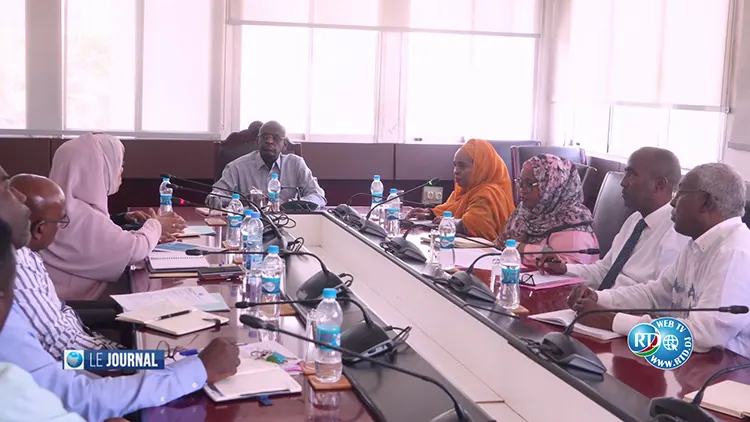
On September 20, 2026, Djibouti's Prime Minister, Abdoulkader Kamil Mohamed, chaired a coordination meeting at the Prime Minister's office to discuss the situation of Yemeni refugees arriving in the Obock region. The meeting brought together ministers responsible for Interior, Defense, Health, Social Affairs, and Solidarity, as well as representatives from the National Office for the Refugee and Asylum Seekers (ONARS), the National Union of Djiboutian Women (UNFD), and the Solidarity Directorate.
The meeting assessed the current state of the Markazi reception center, established in 2015 to accommodate populations fleeing the conflict in Yemen. The center's capacity and services were reviewed, particularly in light of the increasing arrivals in Obock, Godoria, Moulhoulé, and surrounding areas. The discussion highlighted the need for enhanced shelter, sanitation, and essential supplies, including tents, kits, clothing, and equipment.
To address these needs, the Prime Minister requested the acceleration of refugee registration by ONARS and the strengthening of assistance organization, including the implementation of identification systems for equitable distribution of food aid. The meeting also explored the possibility of transferring equipment from Ali-Addeh to Markazi to support the growing refugee population.
Health concerns were also a major topic of discussion, with a focus on preventing diarrheal diseases and addressing the vulnerability of pregnant women and unvaccinated children. A medical caravan is being organized, and the World Health Organization (WHO) is providing support, including screening tools, to protect both refugees and local populations.
In addition to addressing immediate needs, the government plans to work with regional operators to ensure a daily distribution of hot meals on the site. The Prime Minister emphasized the importance of close coordination among government agencies, as well as with partners such as the UN High Commissioner for Refugees (UNHCR), the International Committee of the Red Cross (ICRC), the International Organization for Migration (IOM), and Qatar Charity.
The meeting concluded with a commitment to maintain a cohesive and coordinated response to the refugee crisis, adapting to the evolving situation. The government's efforts aim to provide adequate support to the growing number of Yemeni refugees arriving in Djibouti.
As the situation continues to unfold, the Djiboutian government remains focused on addressing the humanitarian needs of the refugees, while also ensuring the well-being of local communities. The response efforts will continue to be guided by the principles of coordination, cooperation, and compassion.
Key points
- The Djiboutian government is working to enhance the capacity of the Markazi reception center to accommodate the growing number of Yemeni refugees.
- The Prime Minister has requested the acceleration of refugee registration and the strengthening of assistance organization to ensure equitable distribution of aid.
- The government is working with regional operators to ensure a daily distribution of hot meals on the site and to address health concerns, including the prevention of diarrheal diseases.