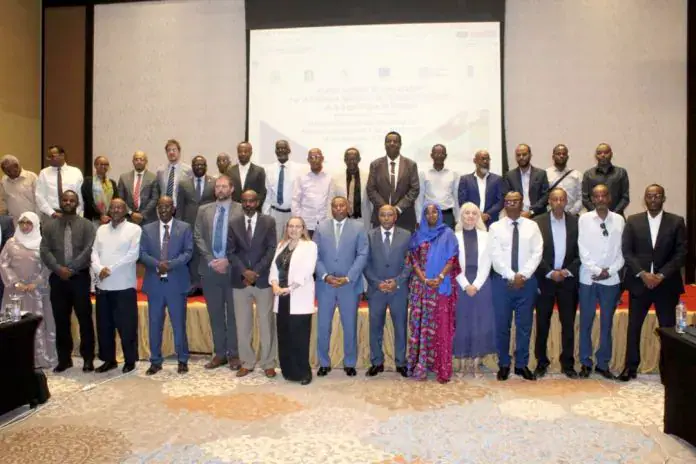
The government of Djibouti has initiated a three-day national consultation to develop its 2027-2037 employment policy. The consultation, launched at the Kempinski Palace, brings together public authorities, social partners, and development partners. The goal is to create a national employment policy that addresses decent employment, youth professional integration, and human capital development. This policy aims to align with Djibouti's economic transformation and infrastructure growth.
The consultation is led by the Ministry of Labor, Formalization, and Social Protection, with the participation of various stakeholders, including the International Organization for Migration (IOM), the United Nations Development Programme (UNDP), and the European Union. Djibouti's Minister of Labor, Yonis Ali Guedi, emphasized the importance of translating economic progress into job opportunities for citizens. The policy will focus on aligning youth skills with market demands and promoting local employability.
The representative of the Intergovernmental Authority on Development (IGAD) highlighted the regional significance of this consultation, which aligns with IGAD's 2050 Agenda and the revised IGAD Treaty that came into effect on November 16, 2026. The UNDP resident representative noted the organization's long-standing partnership with Djibouti since 1979 and emphasized the need for the employment policy to drive shared prosperity.
The consultation will address Djibouti's current employment landscape, previous experiences, and international labor standards. Participants will examine the national employment diagnosis and consultations conducted with various stakeholders. The policy aims to create decent and productive jobs, particularly for vulnerable groups such as young people without diplomas, women, and people with disabilities.
The new employment policy will build on the 2014 National Employment Policy, which promoted employment, entrepreneurship, and labor market governance. The policy will also align with the International Labour Organization's (ILO) Convention 122, which focuses on full, productive, and freely chosen employment.
Key stakeholders, including Minister of Decentralization Omar Houssein Omar, emphasized the importance of involving local authorities in the policy development process and promoting employability at the local level. The policy is expected to provide a framework for job creation and youth integration, aligning with Djibouti's National Development Plan (ADEG 2025-2030).
The three-day consultation aims to conclude with a comprehensive policy framework that addresses the country's employment challenges and promotes sustainable development. The policy will focus on enhancing employability, promoting decent work, and fostering partnerships between public and private sectors to create job opportunities for all Djiboutians.
Key points
- The new policy aims to create decent and productive jobs, particularly for vulnerable groups such as young people without diplomas, women, and people with disabilities.