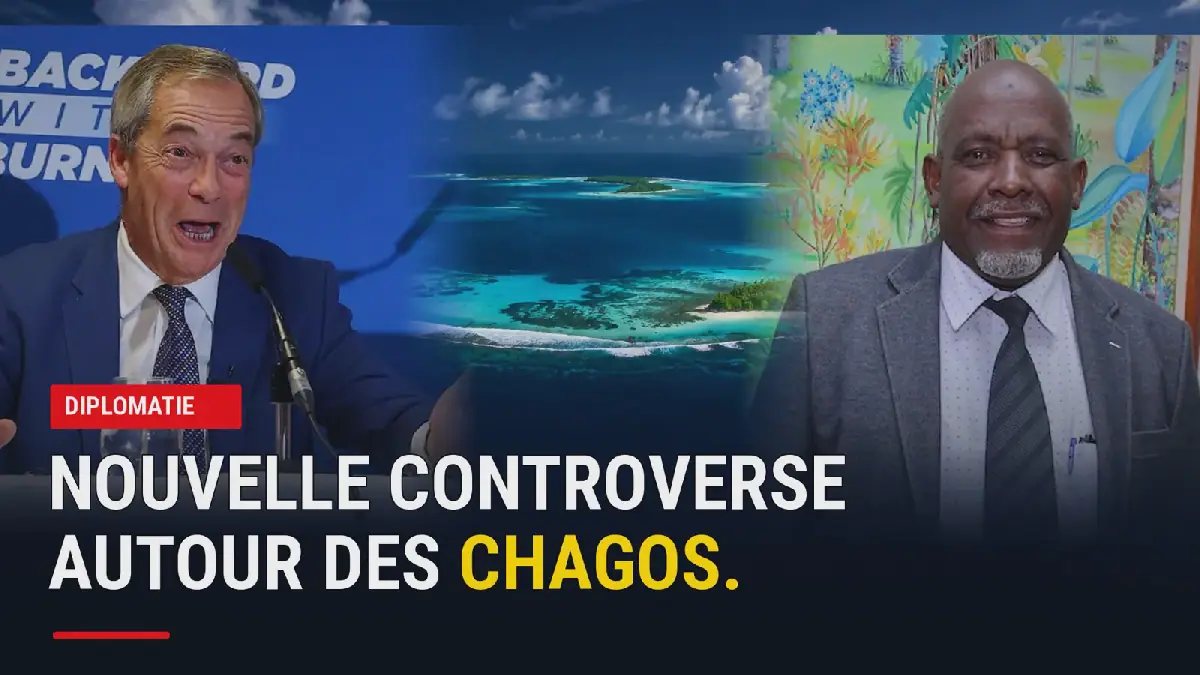
A heated dispute over the sovereignty of the Chagos archipelago has erupted between Olivier Bancoult, president of the Chagos Refugees Group (GRC), and Nigel Farage, a British politician. Bancoult has publicly challenged Farage's views on the history and sovereignty of the archipelago, stating that Farage lacks sufficient knowledge on the matter. This exchange is the latest development in a longstanding diplomatic and judicial dispute.
The controversy centers on the historical ties between the Chagos archipelago and Mauritius before it was detached by the UK in 1965. The disagreement is part of a broader debate on the archipelago's future, including issues of sovereignty, military presence at Diego Garcia, and the rights of the Chagossian people. Bancoult's reaction adds a new layer of complexity to the discussion, highlighting the political stakes involved.
The dispute is taking place within a complex diplomatic and judicial context. The UK and Mauritius have been negotiating an agreement on the Chagos archipelago, but the process is ongoing, and several key issues remain unresolved. These include the rights of return for Chagossians, their legal status, and their participation in decision-making processes that affect their future.
For the Chagossian community, the debate is not just about abstract claims of sovereignty but also about concrete issues that affect their daily lives. The community is seeking recognition of their rights, including the right to return to their ancestral homeland and to participate in decisions that impact their future. The next steps in the process will depend on the relevant authorities and ongoing judicial procedures.
The reaction from Bancoult and the response from Farage highlight the deep-seated differences in perspective on the Chagos archipelago's sovereignty. While Farage has made public statements on the issue, Bancoult's response underscores the need for a nuanced understanding of the complex historical and legal context surrounding the archipelago.
The dispute is also taking place against the backdrop of a broader debate on colonial legacy and the rights of indigenous peoples. The Chagossian community has faced significant challenges in its struggle for recognition and rights, including forced displacement and marginalization. The current dispute highlights the ongoing relevance of these issues.
As the debate continues, the international community is watching closely, aware that the outcome will have significant implications for the Chagossian people and the broader region. The dispute is a reminder of the complex and often contentious nature of sovereignty claims and the need for careful consideration of historical, legal, and cultural factors.
Key points
- The dispute over the Chagos archipelago's sovereignty is a complex issue involving historical, legal, and cultural factors.
- The Chagossian community is seeking recognition of their rights, including the right to return to their ancestral homeland.
- The next steps in the process will depend on the relevant authorities and ongoing judicial procedures.