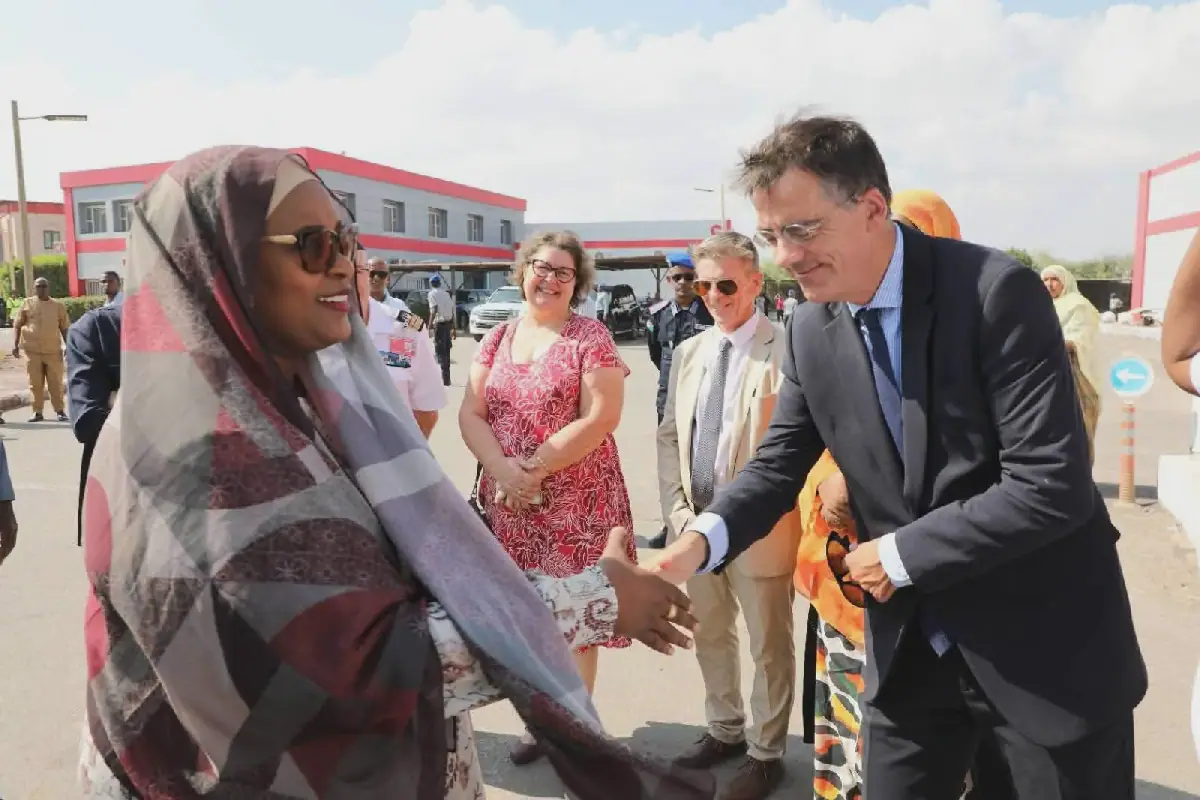
The government of Djibouti, in collaboration with various stakeholders, including the French Embassy, conducted a large-scale simulation exercise at the Djibouti Military Hospital on November 6, 2026. The exercise marked the official launch of the country's future Emergency Medical Service (SAMU). The simulation involved various emergency response teams, including the army, police, gendarmerie, coast guard, and civil protection units. The exercise aimed to test the country's preparedness in responding to medical emergencies.
The simulation exercise replicated a medical regulation operation, followed by on-site interventions. The country's main hospital, the CHU, and the National Social Security Fund also participated in the exercise. The military hospital presented its plan for preparing for mass influxes of victims. The Minister of Health, Mouna Osman Aden, presided over the ceremony, which was attended by several government members and the French Ambassador to Djibouti, Jérôme Bresson.
The Minister of Health outlined the ambitions of the SAMU system, which aims to provide emergency medical services to patients in need. The system will rely on medical regulation, mobile teams, and adapted transportation. The minister emphasized that the SAMU will ensure continuity, resilience in the face of disasters, and territorial equity. The goal is to provide equal access to emergency medical services for all Djiboutians, regardless of their location.
The launch of the SAMU follows a week-long training program conducted with the Hospices Civils de Lyon, focusing on medical regulation and hospital emergency plans. The minister expressed her gratitude to the French collaboration, which made the training possible. The SAMU system is expected to significantly improve the country's emergency healthcare response and save lives.
The simulation exercise demonstrated the country's commitment to strengthening its emergency healthcare system. The exercise involved various stakeholders, including emergency response teams, hospitals, and social security institutions. The goal is to ensure that emergency medical services are accessible to all Djiboutians, particularly those living in remote areas.
The SAMU system will play a critical role in responding to medical emergencies in Djibouti. The system will provide timely and effective medical interventions, reducing the risk of mortality and morbidity. The minister emphasized that no Djiboutian should be disadvantaged due to their location, and the SAMU system aims to address this challenge.
The launch of the SAMU marks a significant milestone in Djibouti's healthcare sector. The country's healthcare system is expected to benefit from the improved emergency medical services, which will enhance the overall quality of healthcare. The collaboration with French institutions has been instrumental in supporting the development of the SAMU system.
Key points
- The Djibouti government has launched a future Emergency Medical Service (SAMU) system, which aims to provide equal access to emergency medical services for all Djiboutians.
- The SAMU system will rely on medical regulation, mobile teams, and adapted transportation to respond to medical emergencies.
- The launch of the SAMU follows a week-long training program conducted with the Hospices Civils de Lyon, focusing on medical regulation and hospital emergency plans.