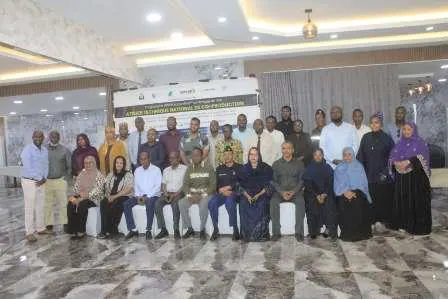
The National Meteorological Agency of Djibouti hosted a national technical workshop on developing impact-based forecasting for early climate disaster prediction. The workshop, which took place on September 20, 2026, at the Delight Premium Hotel in Hermos, aims to enhance the country's capacity for early warning and proactive response to climate-related risks. The event was attended by various stakeholders, including representatives from the British Meteorological Agency and the International Organization for Meteorology.
The workshop focuses on several key areas, including identifying and analyzing major climate and weather-related risks and their impacts. Participants will also discuss developing and using impact tables and procedures for various sectors, determining proactive measures, and defining the roles and responsibilities of different institutions. The goal is to establish a robust early warning system that enables decision-makers and critical sectors to take prompt action to protect lives and property.
In his opening speech, Mohammed Ismail Noor, Director-General of the National Meteorological Agency, welcomed the participants and expressed his gratitude to international organizations and partners for their continuous support. He highlighted that Djibouti is vulnerable to various climate-related risks, including heavy rainfall, flash floods, extreme heat, drought, and strong winds. These phenomena pose a direct threat to the population, infrastructure, and livelihoods.
Noor emphasized the need for a radical shift in dealing with weather conditions, moving from traditional broadcasting of weather forecasts to producing reliable, impact-based predictions. This approach will enable decision-makers and critical sectors to take early action and protect lives and property. He also explained the difference between impact-based forecasting, which monitors potential consequences of weather conditions, and action-based forecasting, which translates those impacts into agreed-upon proactive steps.
The workshop brings together experts and participants to analyze characteristics of rainfall, high temperatures, and strong winds. The goal is to develop a clear risk and impact matrix and establish standard operating procedures (SOPs) that define communication channels and institutional responsibilities. This will ensure effective and rapid response to climate-related risks.
The National Meteorological Agency's efforts to enhance early warning systems are crucial for Djibouti, given its geographical location and vulnerability to climate-related disasters. The agency's collaboration with international organizations and partners demonstrates its commitment to addressing these challenges. The workshop's outcomes are expected to contribute to the development of a robust early warning system that will help protect the country's population and infrastructure.
The two-day workshop provides a platform for participants to share experiences and propose practical solutions tailored to the local context. The ultimate goal is to translate weather data and information into decisions that contribute to protecting lives and property. The National Meteorological Agency's initiative is a significant step towards enhancing Djibouti's resilience to climate-related risks and promoting sustainable development.
Key points
- The workshop aims to develop impact-based forecasting for early climate disaster prediction in Djibouti.
- The event is attended by representatives from various national and international organizations.
- The workshop focuses on enhancing early warning systems and proactive response to climate-related risks.