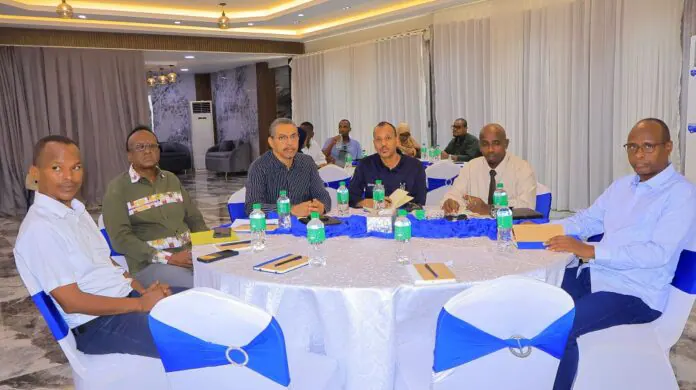
Djibouti is hosting a three-day national technical workshop focused on developing an Action-Based Forecasting (ABF) system. The workshop, held at the Delight Premium Hotel, brings together experts and representatives from various sectors. The primary goal is to strengthen the link between meteorological forecasts, potential impacts of hazardous phenomena, and proactive measures to better protect the population. The workshop is led by Mohamed Ismaël Nour, Director-General of the National Meteorological Agency (ANM), in collaboration with the Executive Secretariat for Risk and Disaster Management (SEGRC).
Djibouti faces significant challenges due to meteorological and climatic phenomena, including sudden floods, heavy rainfall, droughts, strong winds, sandstorms, heatwaves, and coastal and marine hazards. These events can impact populations, infrastructure, livelihoods, and essential services. Strengthening early warning systems is a priority, and the ABF approach aims to anticipate potential consequences and determine necessary measures in advance. This approach involves establishing a link between hazards, potential impacts, and anticipatory actions. For instance, heavy rainfall can cause flooding in certain areas, while extreme heat can lead to health risks.
The ANM has made progress in improving meteorological forecasts and early warning services. However, transforming technical information into operational decisions remains a significant challenge for risk management actors. One of the workshop's main objectives is to develop hazard-impact tables adapted to the Djiboutian context. These tools will enable the connection of different risk levels with their potential consequences and necessary measures. Participants are working on precipitation, temperature, heatwaves, winds, and droughts to identify relevant alert thresholds and define corresponding actions.
The workshop benefits from technical and financial support from the WISER ActionFirst program, the World Meteorological Organization (WMO), the UK Met Office, and the Foreign, Commonwealth & Development Office (FCDO). The WMO's developed methodologies serve as a reference for these works. However, adaptation to the national context must consider Djibouti's climatic characteristics, population vulnerabilities, institutional organization, and socio-economic realities. The success of this approach relies on close collaboration between different actors in the risk management chain.
The workshop brings together specialists from meteorology, risk and disaster management, public institutions, essential sectors, humanitarian organizations, media representatives, community leaders, and other stakeholders. This co-production approach allows for the confrontation of meteorological expertise with field realities. It aims to clarify each actor's responsibilities, coordination mechanisms, and alert transmission procedures. The objective is to progressively establish a common framework enabling concerned institutions to take coordinated measures before a hazardous phenomenon occurs.
The workshop's outcomes will include the development of provisional interinstitutional Standard Operating Procedures (SOPs). These documents will specify the roles and responsibilities of institutions, coordination mechanisms, communication protocols, and decision-making processes within the action-based forecasting framework. A roadmap will be established to further refine and validate the developed tools and procedures. National and subnational technical consultations will be necessary to adapt the tools to the realities of different areas in the country.
The initiative aligns with the "Early Warnings for All" (EW4All) effort, which aims to enhance access to alert systems allowing for rapid action against risks. The director of meteorology emphasizes the need for solutions tailored to the national context. Mohamed Ismaël Nour, Director-General of the ANM, highlighted Djibouti's exposure to various meteorological and climatic hazards and stressed the importance of transforming meteorological information into informed decisions and concrete anticipatory actions.
Key points
- Djibouti is enhancing its climate risk alert system through an action-based forecasting approach.
- The initiative aims to strengthen the link between meteorological forecasts, potential impacts, and proactive measures.
- The workshop brings together various stakeholders to develop hazard-impact tables and standard operating procedures.