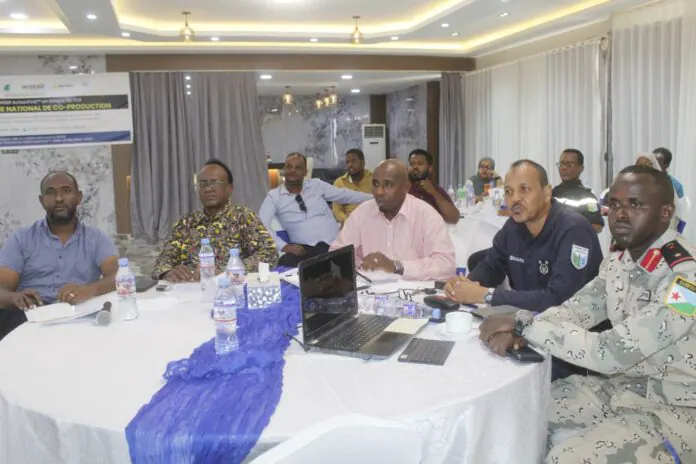
Djibouti recently hosted a national technical workshop focused on developing the foundations of Action-Based Forecasting (ABF). The three-day event, held at the Delight Premium Hotel, brought together various institutions and sectors concerned with managing meteorological and climate risks. The workshop aimed to strengthen the link between forecasts, expected impacts, and proactive measures. The closing ceremony was presided over by Mohamed Ismaël Nour, Director General of the National Meteorological Agency (ANM).
The workshop, organized under the WISER Action First program, marks a significant step towards implementing an approach that goes beyond predicting weather phenomena to anticipating their consequences and determining preventive measures. The discussions centered on three main hazards: floods, extreme temperatures, and strong winds. Their potential impacts were examined across various sectors, including health, agriculture, livestock, water, energy, transportation, infrastructure, education, and environment.
The objective of the workshop was to establish a more precise link between the intensity of a forecasted phenomenon and its potential consequences. Participants developed impact and action tables for different levels of severity to help concerned actors identify necessary measures before an event occurs. They also worked on standardized operational procedures to clarify responsibilities, coordination mechanisms, communication channels, and decision-making processes during alert periods.
The accessibility of weather information, particularly for vulnerable populations, was also addressed. Hawa Ibrahim Robleh, a disaster management coordinator, emphasized the need to "move from alert to action." She stressed that meteorological information must be accessible and understandable to enable authorities, field actors, and communities to know "what to do and when to act."
Ibrahim Djama Ismael, head of the Livestock Service at the Ministry of Agriculture, Water, Fisheries, and Halieutic Resources, noted a shift in perspective with the ABF approach. This approach allows for determining "who does what, within what timeframe, and based on what threshold" starting from the forecast. Sector-specific tables for agriculture, livestock, and water helped specify expected impacts of heatwaves, winds, and precipitation.
Rivo Randrianarison, an Action-Based Forecasting expert, highlighted the importance of aligning forecasts with ground realities. He emphasized that it's crucial to go beyond meteorological forecasting and consider the impacts on the ground and potential actions before an event occurs. This approach relies on close collaboration between meteorologists, forecasters, and sectoral actors who are best positioned to identify vulnerabilities and appropriate responses.
The next steps will involve documenting, consolidating, and validating the tools developed. Operational procedures will be finalized and tested through simulation exercises. The goal is to make weather forecasting a genuine decision-making tool capable of triggering timely actions to reduce the impacts of extreme events. Key points include:
Key points
- The workshop aimed to strengthen the link between forecasts, expected impacts, and proactive measures.
- The approach allows for determining "who does what, within what timeframe, and based on what threshold" starting from the forecast.
- The goal is to make weather forecasting a genuine decision-making tool capable of triggering timely actions to reduce the impacts of extreme events.