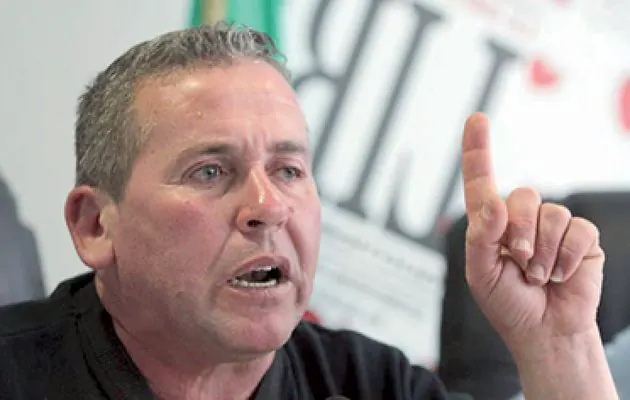
On a recent visit to the University of Béjaïa, Djamel Zenati, a prominent figure in the Berber movement and political activist, shared his insights on the Algerian political system and his vision for a transitional period. He emphasized the need for a structured popular movement and the establishment of a second republic. Zenati's conference was part of a larger discussion on the country's future, following widespread protests that began on February 22.
Zenati stressed that the popular movement, which has given a voice to various segments of society, now requires guidance and coordination. He argued that it is not the movement's responsibility to structure itself, but rather the role of political parties to provide a framework for its continuation. According to Zenati, the absence of political parties has led to a political vacuum that the movement must fill. He warned against potential deviations from the movement's goals and emphasized the importance of democratic processes.
To facilitate the emergence of a new Algeria, Zenati proposed several key changes. He advocated for breaking away from the revolutionary legitimacy of the past, separating religion and politics, and distinguishing between economics and politics. Additionally, he called for the dissolution of the National Liberation Front (FLN), the recovery of its assets, and their redistribution for the benefit of the people. These steps, he believes, are essential for creating a new, more democratic Algeria.
Zenati envisions a future Algeria with a decentralized state, based on democratic principles. He suggested transferring the powers of the walis (local governors) to the elected provincial assemblies (APW). According to Zenati, the walis embody the existing system, and it is time for them to step down, allowing the APW to take over the management of the wilayas (provinces). This change, he argues, will help bring about a more representative and participatory form of governance.
The activist also addressed the potential consequences of the movement's failure. He expressed concern that if the movement does not achieve its goals, the country may be forced to build democracy from scratch. Zenati emphasized the importance of the movement's success, as it carries the hopes and aspirations of many Algerians. He urged the economic community to begin thinking about the country's future, as citizens expect concrete results after a transition.
On economic matters, Zenati advocated for separating economics from politics and establishing autonomous regions that can set priorities and stimulate local economies. He argued that the state should not act as an economic agent and that the existing oligarchy has failed to develop the economy. According to Zenati, the creation of regional models can help drive economic growth and provide a more equitable distribution of resources.
Finally, Zenati called on the military institution to support and protect the popular revolution, while also advocating for the establishment of a transitional government composed of patriotic and democratically-minded individuals. He emphasized the need for a collective effort to bring about meaningful change and create a better future for Algeria. Zenati's proposals have sparked a renewed debate about the country's direction and the role of its various institutions.
Key points
- Djamel Zenati calls for a structured popular movement and a transition to a second republic in Algeria.
- Zenati advocates for separating economics and politics, and establishing autonomous regions.
- The activist urges the military to support and protect the popular revolution.