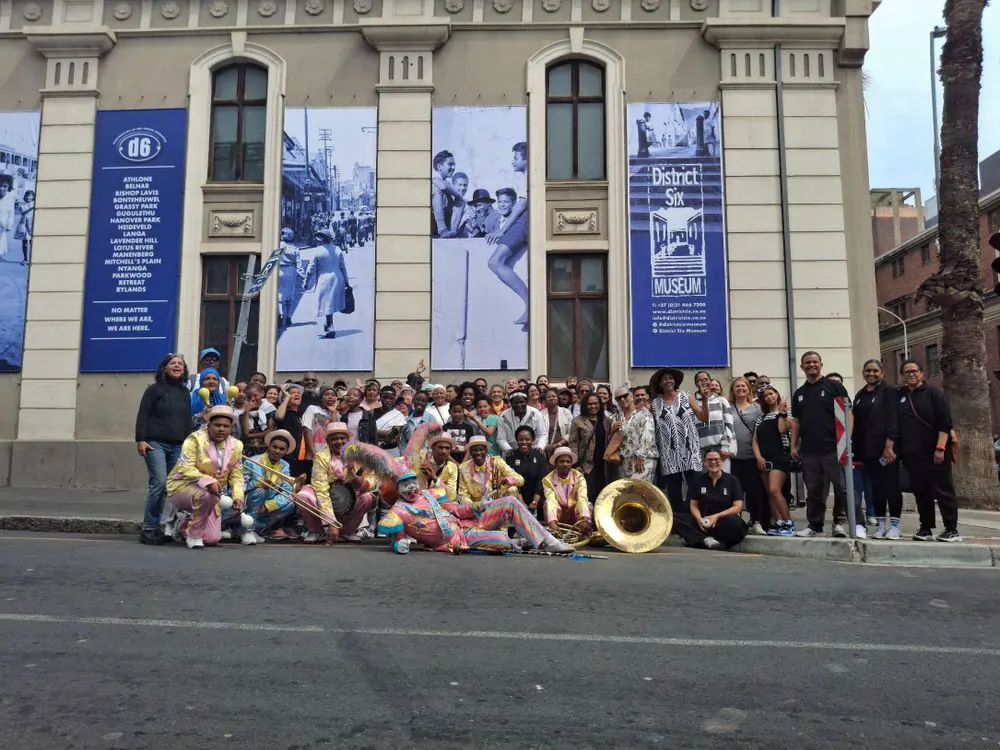
On September 24, the District Six Homecoming Centre in Cape Town, South Africa, hosted a Heritage Day celebration, bringing together former residents, descendants, community members, and youth. The event marked a significant milestone in a participatory process that began on February 11, 2026, when the District Six Museum lifted its famous painted floor map to create a space for active memorialisation. The centre's stage was decorated with memory stones and Cape Town Klopse imagery, setting the tone for a day of storytelling and remembrance.
During the event, attendees wrote their memories on stones, walls, and printed maps, recording family names and former addresses to preserve these lived accounts for future generations. The blue stones, symbolising displaced families and restitution, were then taken to the museum to be placed on the floor map of Salt, with the first batch of memory stones being preserved for 2027. This initiative allowed participants to contribute to the museum's archive, ensuring that their stories and experiences would not be forgotten.
Tina Smith, head of exhibitions at the District Six Museum, challenged the older generation to consider the importance of the legacy and heritage they are leaving behind for the next generation. She questioned, "How do we value our humanness? How do we value our heritage? We’re not going to be here forever, but we want to leave a legacy." Smith's words resonated with attendees, including Uncle Solly, one of the community's respected elders.
District Six Museum educator Mandy Sanger facilitated intimate, one-on-one conversations with attendees, guiding them in connecting their personal family histories to the broader narrative of District Six. This approach ensured that the weight of these memories is passed on to younger generations. One 86-year-old former resident shared a detailed account of her youth, recalling a thriving community and her experiences growing up in Springfield Terrace.
The event also featured a silo building structure, which served as an evolving canvas where handwritten notes were pinned to a detailed map of District Six. One participant wrote "Hope to return" on a yellow note, capturing a six-decade wait for restitution. Dozens of other participants' notes declared that District Six belonged to everyone who calls it home, bringing the national heritage debate into the lived experiences of families awaiting land restitution.
Attendees travelled from distant townships across the Cape Flats, including Hanover Park, Manenberg, and Mitchells Plain, to participate in the event. Education Assistant Ayanda Mpono, who has worked with the museum for over five years, asked attendees about their travel origins, highlighting the far-reaching connections to District Six. The gathering was a physical reunion of a fractured diaspora, with residents sharing stories and memories.
The District Six Museum is committed to preserving the lived accounts and memories shared during the event. Lisa Fredericks, Manager of Collections, Research, and Documentation, oversees the preservation of these accounts, building on her experience as a research assistant focusing on oral history interviewing and podcasts. The museum's efforts aim to honour the community's heritage and ensure that their stories are passed down to future generations.
Key points
- The District Six Museum's participatory process, which began in February 2026, allows community members to contribute to the museum's archive and preserve their stories and experiences.