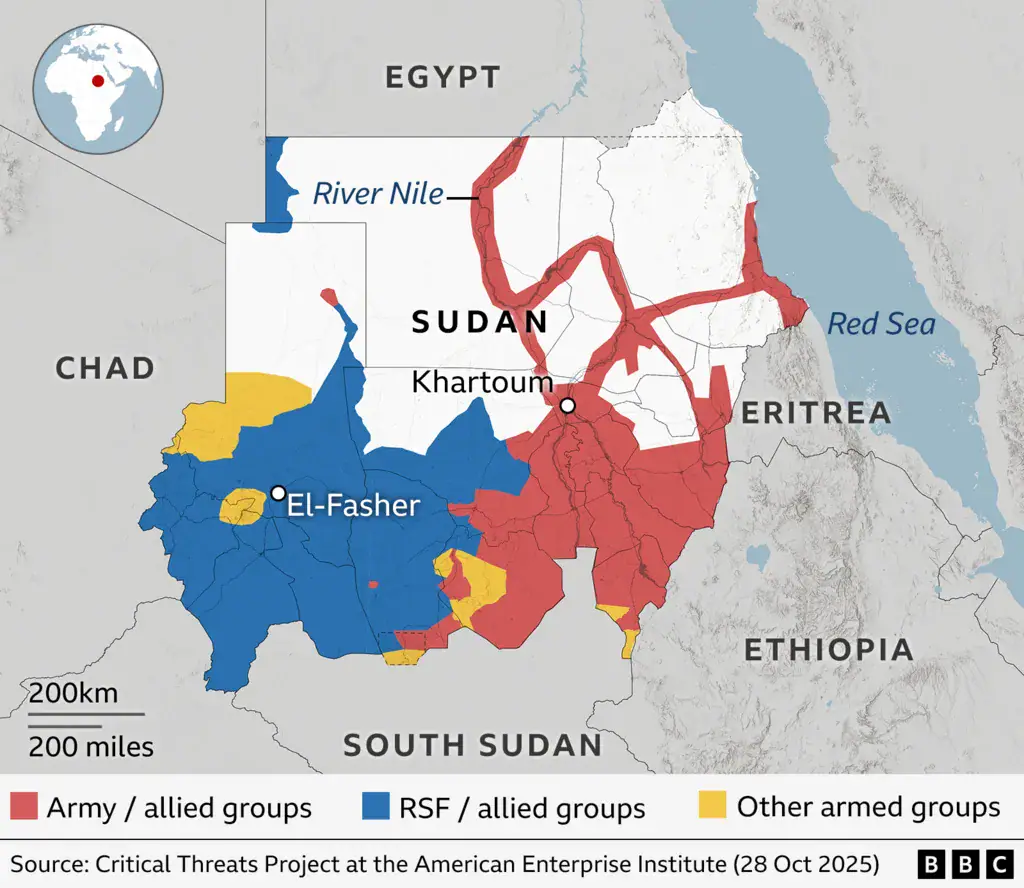
The head of the Presidential Council, General Mohamed Hamdan Dagalo, has revoked the Civilian Administration Charter and dissolved the administrations in RSF-controlled areas. This decision has been widely welcomed by several civilian administration leaders, who have praised the achievements of the civilian administration. The leaders acknowledged the contribution of the civilian administration in filling the administrative vacuum during the war between the Sudanese army and the Rapid Support Forces.
The civilian administration was established in 2024 when state governors moved to Port Sudan, creating an administrative vacuum. The idea of forming a civilian authority was considered following consultations among native administration leaders, young people, community initiatives, and the RSF. An agreement was reached on the appointment of heads of civilian administrations in the Darfur states and West Kordofan State. The civilian administration was responsible for providing basic services, maintaining security, reopening markets, and facilitating the delivery of humanitarian assistance.
According to Ibrahim Musa Hassan, a journalist, the decision to dissolve the civilian administrations had come at the right time to improve performance and complete the structures of the authority. He explained that the civilian administration was established to fill the administrative vacuum and that it had been responsible for providing basic services. Musa added that the civilian administration had played a crucial role in maintaining security and facilitating the delivery of humanitarian assistance.
The deputy chairperson of the East Darfur State Constituent Council noted that the civilian governments had been established under exceptional and highly complex circumstances. However, their executive, legislative, and judicial bodies had succeeded in carrying out state functions. Executive officials had worked to provide services, while legislators had drafted and passed laws and approved the annual budgets for 2025 and 2026.
Abdel-Nasser Adam Khamis, head of the Legal Committee of the South Darfur State Constituent Council, welcomed the revocation of the Civilian Administration Charter. He said the decision had come at an appropriate time and was intended to complete the structures of the authority, as stipulated in the Nairobi Declaration. Adam also acknowledged the ability of the civilian administrations to function by working to provide basic services, maintain security, and deliver humanitarian assistance to people affected by the conflict.
The dissolution of the civilian administration is expected to lead to the completion of the structures of the authority in Sudan. The decision has been seen as a step towards improving performance and governance in the country. The civilian administration had played a crucial role in maintaining stability and providing services in RSF-controlled areas.
The decision to dissolve the civilian administrations has been widely welcomed by leaders in Sudan. The civilian administration had been responsible for providing basic services, maintaining security, and facilitating the delivery of humanitarian assistance. The completion of the structures of the authority is expected to lead to improved governance and stability in the country.
Key points
- The decision to dissolve the civilian administrations was made to complete the structures of the authority in Sudan.
- The civilian administration had played a crucial role in filling the administrative vacuum during the war between the Sudanese army and the Rapid Support Forces.
- The dissolution of the civilian administration is expected to lead to improved performance and governance in Sudan.