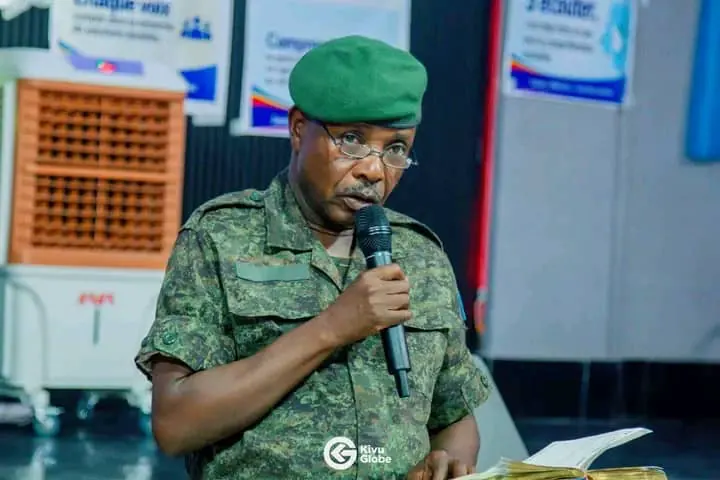
The Congolese government has initiated discussions with Wazalendo militants in Sud-Kivu province to better understand their role and restore state authority. The talks, which began on September 21, 2026, are being led by the Ministry of Interior. According to Willian Amuri Yakutumba, coordinator of Wazalendo in Sud-Kivu, not all armed individuals are Wazalendo. He emphasized the need to distinguish between Wazalendo and other armed groups operating in the province.
Yakutumba, a self-proclaimed general, welcomed the organization of the workshop, stating that it provides an opportunity for Wazalendo to express their position and contribute to restoring state authority. He also mentioned that efforts are being made to remove unauthorized roadblocks on the Uvira-Baraka-Fizi and Uvira-Plaine de la Ruzizi axes. Some roadblocks have already been removed, while others are being assessed for their legitimacy.
The restoration of state authority, according to Alexis Dunia, another Wazalendo coordinator, goes beyond securing territory. It also involves the return of state services, such as administration and public institutions. Dunia stressed that the presence of state services is essential for the well-being of citizens and the stability of the region.
The workshop, initiated by the Deputy Prime Minister and Minister of Interior, Jacquemin Shabani Lukoo, aims to bring together stakeholders to discuss the restoration of state authority in Sud-Kivu. The event, which started on September 21, is expected to conclude on September 23, 2026. The Ministry of Interior is working to ensure that the discussions lead to concrete actions that benefit the local population.
The situation in Sud-Kivu has been characterized by the presence of various armed groups, including Wazalendo. The group has been involved in local conflicts and has established its own structures, sometimes parallel to those of the state. The government's efforts to engage with Wazalendo and other armed groups are seen as a step towards stabilizing the region and promoting peace.
According to sources, the Uvira workshop is part of a broader strategy to address the security and humanitarian challenges in eastern Democratic Republic of Congo. The region has faced numerous challenges, including conflict, displacement, and human rights abuses. The government's engagement with Wazalendo and other stakeholders is expected to contribute to a more comprehensive approach to addressing these challenges.
The outcome of the discussions between the government and Wazalendo is expected to have significant implications for the region. A successful dialogue could lead to increased stability, improved security, and enhanced state authority in Sud-Kivu. The Congolese government has reiterated its commitment to restoring state authority and promoting peace in the region.
Key points
- The Congolese government has initiated discussions with Wazalendo militants to restore state authority in Sud-Kivu province.
- Not all armed individuals in Sud-Kivu are Wazalendo, according to Willian Amuri Yakutumba, coordinator of Wazalendo in the province.
- The restoration of state authority in Sud-Kivu requires a comprehensive approach, including the return of state services and the removal of unauthorized roadblocks.