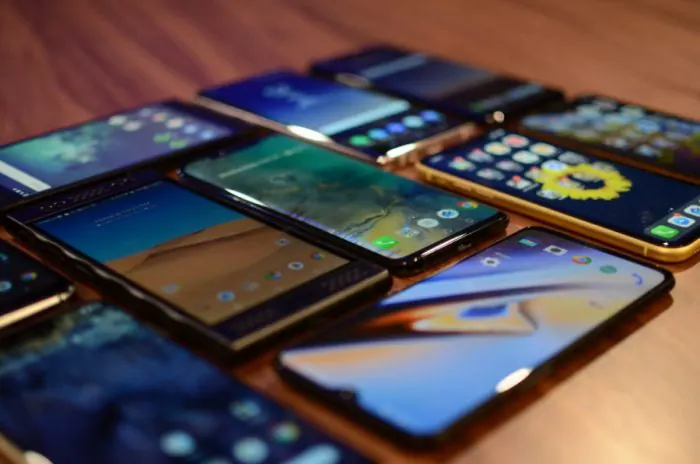
A recent report by KPMG, in partnership with Orange Group Nigeria, has found that smartphone ownership in Nigeria has increased to 75 percent. The Nigeria Smartphone Study, which surveyed 13,251 people across 12 major cities, revealed that the rise in smartphone ownership is contributing to increased use of digital applications in areas such as financial services, commerce, entertainment, education, and transportation. This growth is attributed to Nigeria's large and youthful population, improved internet connectivity, and the increasing affordability of smartphones.
The report noted that smartphone ownership increased from 64 percent in 2023 to 75 percent in 2025. This significant growth indicates a rapid shift towards digital services, with smartphones becoming essential tools for accessing services, running businesses, and participating in the digital economy. The study highlighted that smartphones are no longer used mainly for communication, but have become vital for various aspects of daily life.
Internet usage in Nigeria continues to grow, with data from the Nigerian Communications Commission (NCC) showing that the country had 157 million internet subscribers as of May 2026. Additionally, data consumption reached a record 1.5 million terabytes during the same month. These figures demonstrate the growing level of digital activity in Nigeria, as more people use mobile devices to access online services.
The rise in smartphone ownership has also led to increased use of digital applications across various sectors, including financial services, telecommunications, commerce, entertainment, education, and transportation. However, despite this growth, many Nigerians still face challenges accessing quality digital services. Lawrence Amadi, Partner and Head of Technology, Media, and Telecommunications at KPMG Africa, noted that more than one-third of mobile subscribers were still using 2G networks as of May 2026.
The report identified poor infrastructure, affordability challenges, limited digital skills, and cybersecurity concerns as factors that could slow the growth of digital access. It also noted that owning a smartphone does not automatically mean that users have full access to digital services, especially where network quality and affordability remain challenges.
Nigeria's growing smartphone ownership also comes amid a large mobile internet usage gap. According to data from the GSMA, about 140 million Nigerians were part of the mobile internet usage gap in 2025. These are people who live in areas covered by mobile broadband networks but do not use mobile internet services. This highlights the need for improved digital access and education.
Active mobile internet subscriptions rose from 154.3 million in April 2026 to 157 million in May 2026, while data consumption reached a record 1.5 million terabytes in May. These figures highlight the rapid growth of digital usage in Nigeria, while also showing that challenges around affordability, infrastructure, network technology, and digital skills remain.
Key points
- Smartphone ownership in Nigeria has increased to 75 percent, driven by improved internet connectivity and affordability.
- The growth in smartphone ownership has led to increased use of digital applications across various sectors.
- Challenges such as poor infrastructure, affordability, and limited digital skills remain, affecting digital access.