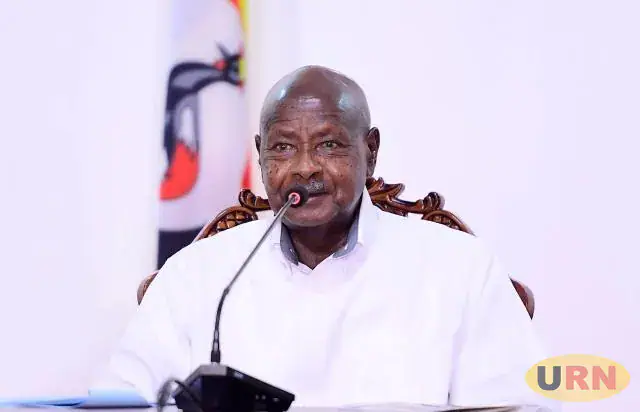
President Yoweri Museveni of Uganda has warned Members of Parliament investigating the country's digital number plates project against producing inaccurate reports. The project, introduced to strengthen national security, has faced concerns about escalating costs, technical capabilities, and contractual arrangements with Russian firm Joint Stock Company Global Security. Museveni recognized Parliament's oversight mandate but cautioned legislators against drawing conclusions without fully engaging all technical teams implementing the project.
The warning was disclosed by Permanent Secretary in the Office of the President, Yunus Kakande, following a State House meeting where legislators raised concerns about the project. The meeting came amid revelations that the project's estimated contract value had reportedly increased, raising questions about additional financial obligations and the system's capacity to deliver its intended security benefits. Kakande said Museveni advised MPs not to come up with reports that are not correct.
The parliamentary investigation, led by the Physical Infrastructure Committee chaired by Mbarara City South MP Mwine Mpaka, has examined allegations of deficiencies in the vehicle tracking technology. Former Works Minister Gen Katumba Wamala defended the project as an essential security intervention, while former Internal Affairs Minister Gen Kahinda Otafiire questioned its effectiveness. Kakande rejected suggestions that Museveni had been deceived into approving the Russian-backed technology.
According to Kakande, Museveni was presented with the technology by the Russian firm and was shown its capabilities in apprehending criminals. The digital number plates initiative originated from Museveni's 2018 directive to strengthen vehicle identification and tracking following high-profile assassinations, including the killing of Arua Municipality MP Ibrahim Abiriga. The government entered into an agreement with JSCGS in 2021 to implement the Intelligent Transport Monitoring System.
Motorists currently pay Shs 714,300 for digital number plate kits for newly registered vehicles and motorcycles, while replacement of conventional plates costs Shs 150,000 for vehicles and Shs 50,000 for motorcycles. Kakande insisted that the technology is already functioning, although some components require improvement. He said the system can retrieve any vehicle anywhere in the country and that its primary objective was security.
The government is reviewing the project's financial model, particularly how revenues will be shared between the Russian contractor and the Ugandan government. Kakande disclosed that Museveni directed the formation of three teams comprising Russian company representatives, government technical officials, and parliamentarians to resolve outstanding issues. The teams will work to streamline issues, including upgrading certain software.
Another meeting involving the Russian contractors and MPs has been called. Kakande confirmed that Museveni wants the teams to work together to resolve issues and that the President is committed to ensuring the project's success. The developments come as Parliament prepares its findings on the project.
Key points
- President Museveni warns MPs against producing inaccurate reports on the digital number plates project.
- The project aims to strengthen national security through vehicle identification and tracking.
- The government is reviewing the project's financial model and has formed teams to resolve outstanding issues.