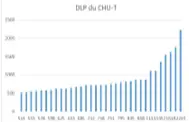
A recent study aimed to establish local diagnostic reference levels (DRLs) for thoraco-abdomino-pelvic (TAP) computed tomography (CT) scans performed for cancer staging at Treichville University Hospital in Abidjan, Côte d'Ivoire. The study, which was conducted over a period of one month, included 35 consecutive patients who underwent TAP CT scans for cancer staging. The dosimetric parameters, including CTDIvol and DLP, were collected for each examination.
The study found that the mean age of the patients was 56.3 years, with a female predominance of 66%. The most common types of cancer were breast cancer (37.1%), prostate cancer (14.3%), and colon cancer (14.3%). The DLP values ranged from 813 to 2,225 mGy.cm, with a 75th percentile of 858 mGy.cm, representing the local DRL. The mean CTDIvol was 16 mGy.
The local DRL of 858 mGy.cm was compared to international and regional references. It was found to be lower than those of Nigeria (1,456 mGy.cm) and Kenya (1,842 mGy.cm), but higher than that of France (750 mGy.cm). Similarly, the mean CTDIvol of 16 mGy was lower than those of Nigeria and Kenya (20 mGy), but higher than that of France (11 mGy).
The study's findings suggest that the DRLs established at Treichville University Hospital for TAP CT scans in cancer staging are acceptable compared to regional references. However, they remain higher than the standards in developed countries. The study's authors recommend optimizing practices by revising protocols, reducing the number of acquisition phases, using dose modulation, and implementing iterative reconstruction.
The study also highlights the importance of continuous staff training in optimizing radiation protection. The use of ionizing radiation in medical imaging is a significant concern, as it can increase the risk of cancer and other health problems. The establishment of DRLs is a crucial step in minimizing radiation exposure while ensuring that patients receive adequate medical care.
The study's results have implications for radiation protection policies in Côte d'Ivoire and other West African countries. The findings can be used to develop guidelines for the use of TAP CT scans in cancer staging and to promote best practices in radiation protection. The study's authors emphasize the need for further research to establish DRLs for other medical imaging modalities.
The study was published in the journal Health Sciences and Diseases, a peer-reviewed journal that focuses on health sciences and disease management in Africa. The study's authors are from Côte d'Ivoire and have expertise in radiology and radiation protection. The study was conducted in accordance with international standards for radiation protection and medical ethics.
Key points
- Local diagnostic reference levels for TAP CT scans in cancer staging have been established in Abidjan, Côte d'Ivoire.
- The established DRLs are acceptable compared to regional references but higher than developed country standards.
- Optimizing practices and continuous staff training are recommended to minimize radiation exposure.