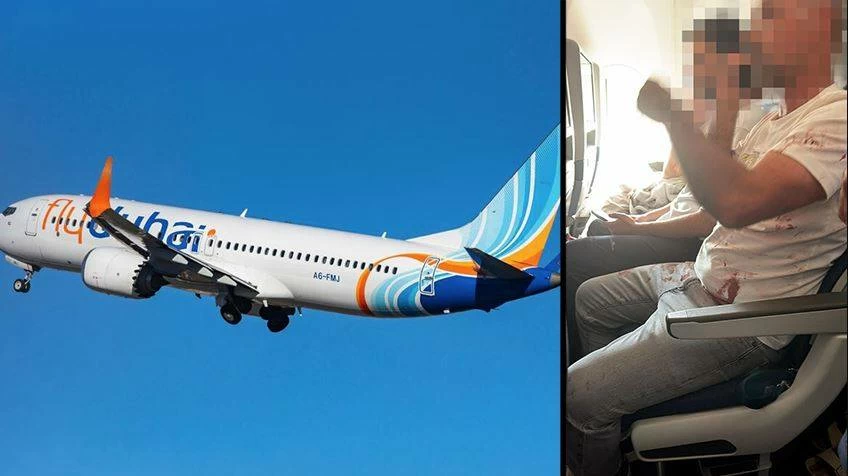
A FlyDubai flight from Dubai to Israel was diverted to Saudi Arabia after the co-pilot, identified as 30-year-old Hamam Al-Hammadi, allegedly attempted to take control of the aircraft using an axe. The incident has been classified as a "terrorist act" by Emirati authorities. Al-Hammadi, born in the UAE to an Omani father and Syrian mother, had previously been flagged by Omani authorities over concerns about his extremist views.
According to reports, Al-Hammadi had been a trainee pilot with Oman Air in 2024 when he was found to be in possession of extremist materials. Although he was allowed to continue working in the aviation industry, he was restricted from flying. He later obtained a license to work with FlyDubai and had been flying to Israel without incident. The airline did not conduct a thorough background check on Al-Hammadi before hiring him.
Investigations have revealed that Al-Hammadi had been subjected to intense and covert ideological brainwashing over the past year. He had spent most of his time outside Oman, including periods in Syria, where his views became increasingly radicalized. Sources close to the investigation believe that Al-Hammadi's actions were motivated by a desire to crash the plane over Israel.
Al-Hammadi's social media profiles have provided insight into his extremist views. On LinkedIn, he had posted two updates on the day of the incident, including videos of planes at Dubai International Airport and images of aircraft operated by Israeli carriers. He had also posted pictures of Ayman al-Zawahiri, the former leader of Al-Qaeda, and Hamam Khalil al-Balawi, a former Al-Qaeda affiliate.
FlyDubai has faced scrutiny over its hiring practices, with questions raised about why the airline did not conduct a thorough background check on Al-Hammadi before employing him. The incident has highlighted concerns about aviation security and the potential for extremist individuals to infiltrate the industry.
The incident has been widely condemned, with authorities in the UAE and Israel cooperating closely to investigate the circumstances surrounding the attempted hijacking. Al-Hammadi is reportedly cooperating with investigators, who are working to determine the extent of his support network and any potential links to extremist groups.
The incident serves as a reminder of the ongoing threat of terrorism in the aviation industry. Authorities have emphasized the importance of vigilance and cooperation in preventing such incidents, and an investigation is ongoing to determine how Al-Hammadi was able to obtain a flying license despite his extremist views.
Key points
- The co-pilot, Hamam Al-Hammadi, was previously flagged by Omani authorities over concerns about his extremist views.
- Al-Hammadi had been a trainee pilot with Oman Air in 2024 when he was found to be in possession of extremist materials.
- The incident has highlighted concerns about aviation security and the potential for extremist individuals to infiltrate the industry.