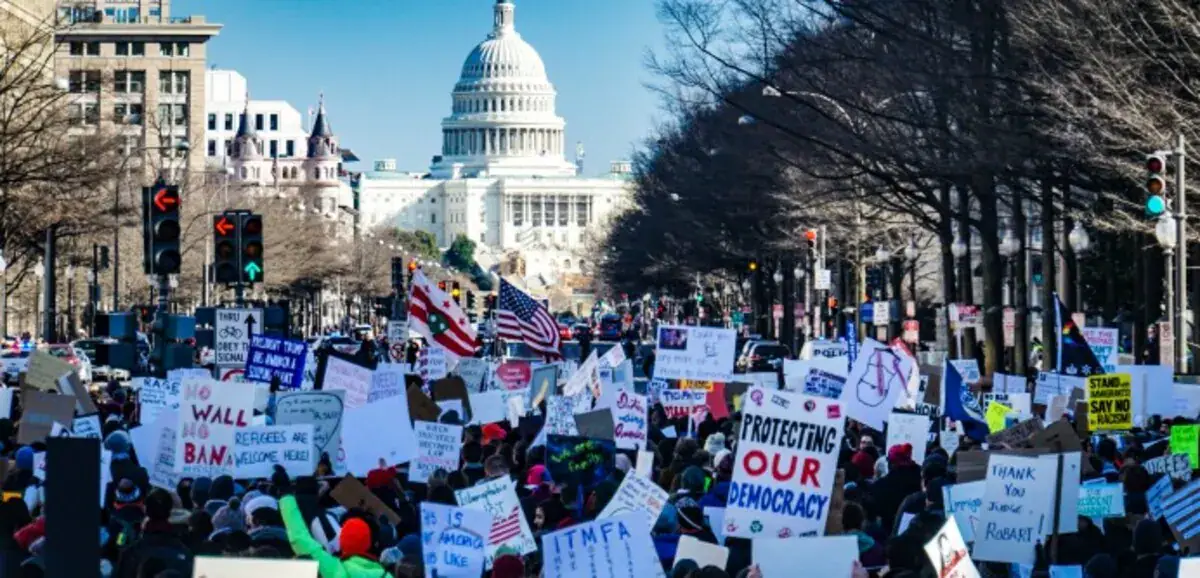
The Democratic Party has secured control of both chambers of the US Congress in the midterm elections, marking a significant defeat for President Donald Trump. According to projections by the Associated Press, Democrats crossed the threshold of 218 seats needed to gain a majority in the House of Representatives on November 4. This victory, combined with their earlier gain of Senate control, gives Democrats control of both chambers, potentially complicating Trump's remaining term and limiting his ability to pass legislation.
The Democratic victory was marked by several notable wins. In Iowa, Josh Turek won a Senate seat, while in Texas, James Talarico successfully flipped a seat held by Republicans, marking a historic win for Democrats in a state they had not won in since 1988. In Georgia, Jon Ossoff retained his seat, and Annie Andrews pulled off an upset in South Carolina, winning a seat from Republicans. These results underscore the extent of the Democratic surge and serve as a serious warning to Trump with two years until the next presidential election.
The elections also saw several historic firsts. Chris Pappas became the first openly gay man elected to the US Senate in New Hampshire. In Georgia, Keisha Lance Bottoms won the gubernatorial election, becoming the first African American woman to hold the office in the state. Additionally, Abdul el-Sayed, a Muslim, won a Senate seat in Michigan with 51.8% of the vote, making him the first Muslim elected to the Senate.
Trump's response to the election results included acknowledging the defeat and suggesting that the war in Iran had contributed "in part" to the outcome. He also praised the Democratic campaign, saying they had "fought well." The shift in control of Congress could have significant implications for Trump's legislative agenda and could lead to increased scrutiny of his administration.
The Democratic victory has been hailed as a major achievement, with many seeing it as a rebuke to Trump's presidency. The party's success can be attributed to various factors, including voter turnout and a strong campaign effort. As the country prepares for the next presidential election, the Democratic win sets the stage for a potentially contentious and closely contested race.
The midterm elections also highlighted the increasing diversity of the US electorate and the growing importance of underrepresented groups in politics. The election of candidates from diverse backgrounds, such as el-Sayed and Bottoms, reflects a changing America and could have long-term implications for the country's politics.
As the US adjusts to the new balance of power in Congress, attention will turn to the legislative agenda and how Democrats will work with Trump's administration. The coming months and years are likely to be marked by intense partisanship and debate as the two sides vie for influence and control.
Key points
- Democrats win control of US Congress, securing a majority in both the House of Representatives and the Senate.
- The election results mark a significant defeat for President Donald Trump and could complicate his legislative agenda.
- The midterm elections saw several historic firsts, including the election of the first openly gay man and the first Muslim to the US Senate.