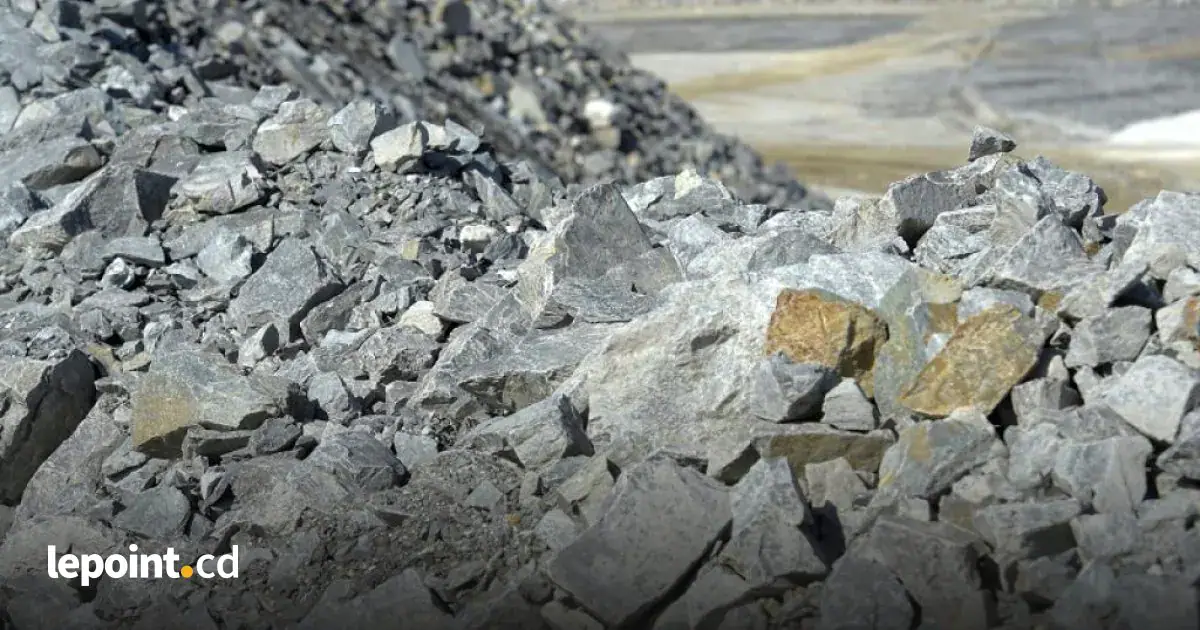
The Democratic Republic of Congo has emerged as a significant player in the global lithium market, with 22 active exploitation permits covering lithium deposits, according to data from the country's Mining Cadastre (CAMI) as of October 24, 2026. These permits were published by Engunda Ikala. Additionally, 36 research permits are in the process of being converted into exploitation permits, pending fulfillment of conditions outlined in the Mining Code, including feasibility studies.
A research permit allows for the exploration of a deposit, while an exploitation permit grants the right to put it into production. However, obtaining an exploitation permit does not guarantee that a mine will be built, as this depends on financing and the profitability of the deposit. The CAMI relies on a study published on October 22, 2026, by Benchmark Mineral Intelligence, which forecasts that global lithium demand will increase from 2.11 million tons of lithium carbonate equivalent (LCE) in 2026 to approximately 7 million tons by 2050.
This represents a 3.3-fold increase in demand, requiring the addition of 134 new mines producing 36,000 tons of LCE per year to meet the expected shortfall of 4.8 million tons. Benchmark estimates that the necessary investment will exceed $100 billion, excluding any contribution from recycling. The lithium carbonate equivalent is a unit that enables comparison of different products, such as spodumene concentrate extracted from rocks, lithium carbonate, or lithium hydroxide, by converting them to their lithium content.
The Democratic Republic of Congo has already begun producing lithium in 2026 at the Manono deposit in Tanganyika, according to the CAMI. The deposit is being exploited by Chinese company Zijin Mining in its northeastern part. This marks a significant milestone for the country, which is no longer just a country with geological potential but has started selling lithium. The challenge now is to secure financing for existing projects and bring new ones to fruition.
However, Benchmark Mineral Intelligence does not cite the Democratic Republic of Congo among the primary sources of future lithium supply, relying instead on projections from Australia, China, and South America. It will be up to the holders of the 22 exploitation permits to convince investors that their deposits can produce lithium at a competitive cost. The country's Mining Cadastre will play a crucial role in facilitating this process.
The surge in global demand for lithium is driven by its increasing use in electric vehicle batteries and renewable energy technologies. As the world transitions to a low-carbon economy, the demand for lithium and other critical minerals is expected to continue growing. The Democratic Republic of Congo's lithium sector is poised to play a significant role in meeting this demand, provided that the necessary investment and infrastructure can be secured.
In conclusion, the Democratic Republic of Congo's lithium sector is experiencing significant growth, driven by rising global demand and the country's emerging status as a major lithium producer. With 22 active exploitation permits and 36 more in the pipeline, the country is well-positioned to capitalize on this trend. However, securing financing and convincing investors of the deposits' competitiveness will be crucial to unlocking the sector's full potential.
Key points
- Global lithium demand is expected to triple by 2050, driven by increasing use in electric vehicle batteries and renewable energy technologies.