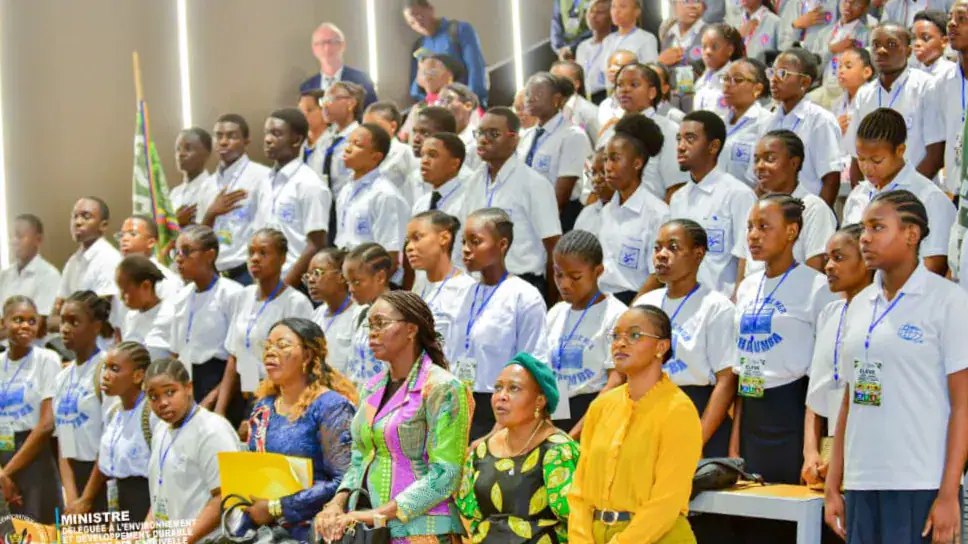
In an effort to promote environmental conservation, Arlette Bahati Tito, the Minister of New Climate Economy in the Democratic Republic of Congo, recently addressed students in Kinshasa on the importance of adopting ecological practices for effective waste management. The minister presented three key principles: reduce, reuse, and recycle, as a way to mitigate the adverse effects of daily human activities on the environment. This initiative was part of a sensitization day focused on waste management and economic valorization, held under the theme "Students Engage for the Climate through Waste Management and Economic Valorization."
The event highlighted the consequences of everyday behaviors on the environment, with the minister explaining that seemingly insignificant actions, such as throwing a bottle into the street, can collectively lead to substantial environmental problems. She cited the accumulation of waste, blocked drains, and impeded rainwater circulation as examples of the repercussions of neglecting proper waste disposal. To counter these issues, Minister Bahati advocated for simple yet effective practices: reducing waste by avoiding unnecessary consumption and taking care of school supplies; reusing items to prolong their lifespan; and recycling by sorting waste for transformation into new products.
Beyond their environmental benefits, these practices also hold economic potential. The minister pointed out that collected waste can be transformed into various useful items such as pavers, plastic granules, school chairs and benches, cardboard, paper, and puzzles. This approach not only helps in preserving the environment but also fosters economic activities. By demonstrating to young people that discarded materials can be repurposed and contribute to economic endeavors, the minister emphasized the significance of rethinking waste management.
Minister Bahati also called upon school administrators and teachers to play a pivotal role in promoting and practicing environmental education. She recommended that schools limit paper waste, encourage the reuse of materials, and organize waste sorting within their premises. According to her, environmental education is no longer optional but a necessity for building a resilient nation. The minister expressed her appreciation for the support of institutional partners and green economy actors who help familiarize young people with professional and economic opportunities related to environmental protection.
The sensitization day was organized with the collaboration of various stakeholders, including schools, teachers, and organizational teams. The minister praised the participation of students, which contributes to making schools spaces for learning about life and preparing for the future. She highlighted that effective waste management and valorization can turn what is considered waste into resources, aligning with the mission of the New Climate Economy to preserve the environment while promoting job creation and new economic perspectives.
To ensure the sustainability of this initiative, Minister Bahati urged school authorities to institutionalize environmental sensitization through regular activities. She proposed that young people be made ambassadors of cleanliness and environmental protection. By doing so, the government aims to create a culture of environmental responsibility among the youth, which can have a lasting impact on the country's ecological and economic well-being.
The initiative in Kinshasa is part of broader efforts in the Democratic Republic of Congo to address environmental challenges and promote sustainable development. By engaging students and integrating environmental education into school practices, the government hopes to cultivate a generation that is aware of the importance of ecological practices and equipped to contribute to the country's environmental and economic resilience.
Key points
- The Democratic Republic of Congo's Minister of New Climate Economy, Arlette Bahati Tito, promotes ecological practices for waste management among Kinshasa students.
- The minister advocates for the principles of reduce, reuse, and recycle to mitigate environmental problems caused by daily human activities.
- The initiative aims to foster a culture of environmental responsibility and promote sustainable development in the country.