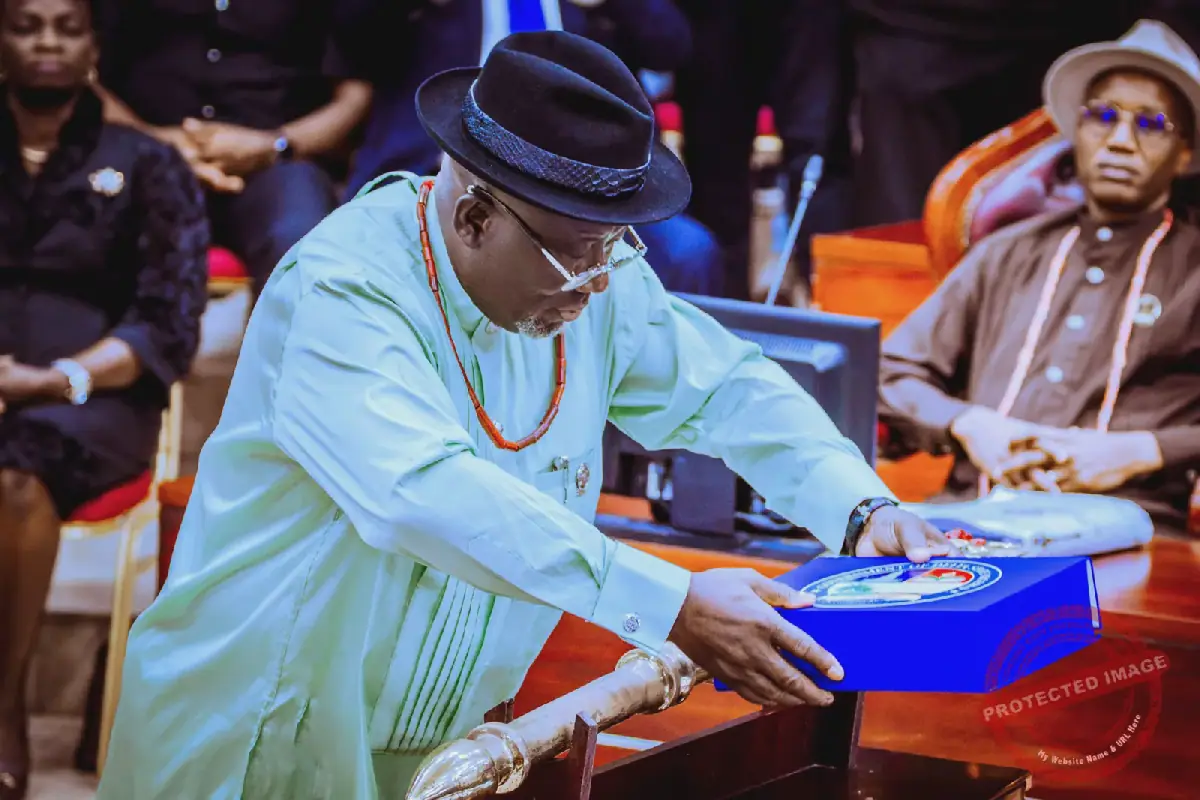
Delta State Governor, Sheriff Oborevwori, has presented a budget proposal of N1.23 trillion for the 2027 fiscal year to the State House of Assembly in Asaba. The budget, tagged "Budget of Sustained Prosperity and Enhanced Growth," allocates 65% to capital projects, totaling N806.8 billion, and N430 billion for recurrent spending. This budget aims to consolidate ongoing projects, stimulate economic growth, and improve living conditions.
The proposed budget for 2027 is N493.01 billion, or 28.5%, lower than the N1.729 trillion approved for 2026. Oborevwori stated that this reduction reflects a deliberate decision to adopt realistic spending projections and strengthen fiscal discipline. The governor's priorities include completing ongoing projects, initiating new investments, consolidating achievements, and expanding social interventions.
Infrastructure development is a key focus, with N320 billion proposed for the Ministries of Works to sustain infrastructure development and complete ongoing projects. Since assuming office, Oborevwori's administration has embarked on 872 road projects and 20 bridges and flyovers, covering 2,348 kilometers of roads and 1,871 kilometers of drainage infrastructure. Community consultations have highlighted roads, bridges, and jetties as pressing demands, particularly in rural and riverine communities.
On revenue generation, Delta State's Internally Generated Revenue has grown from N83 billion in 2023 to a projected N283 billion by December 2026. Oborevwori attributed this improvement to technology-driven collection, an expanded revenue base, and efforts to eliminate leakages without imposing additional tax burdens. Additionally, N400 billion of the N463 billion legacy debt has been repaid, with N63 billion outstanding, which the governor is confident will be cleared by the end of the first quarter of 2027.
The education sector is allocated N74 billion, comprising N10 billion for primary, N12 billion for technical, N12 billion for secondary, and N40 billion for higher education. The government plans to sustain investments in school rehabilitation, teacher development, digital learning, laboratories, and accreditation of academic programs. Furthermore, N10.8 billion has been approved for the rehabilitation and renovation of primary and secondary schools.
The healthcare sector will receive N50 billion, supporting hospital upgrades, medical supplies, recruitment, and welfare of health personnel. Oborevwori highlighted the College of Health Technology, Ovrode, which has enrolled over 800 pioneer students, as part of efforts to address manpower shortages in the health sector. Other allocations include N50 billion for the 25 local government areas, N20 billion for the Delta State Capital Territory Development Agency, and N20 billion for the Warri-Uvwie and Environs Development Agency.
The budget also focuses on economic diversification, with efforts to attract private investment into agriculture, industrialization, entertainment, and small and medium-scale enterprises. The governor cited the $70 million Olam Agri feed mill project at Ogwashi-Uku as an outcome of the 2026 Delta State Economic and Investment Summit, which will create employment opportunities and provide a ready market for locally produced agricultural commodities.
Key points
- The budget proposal focuses on capital projects, allocating 65% of the budget to this sector.
- Infrastructure development, education, and healthcare are key areas of focus in the budget.
- The budget aims to stimulate economic growth, improve living conditions, and consolidate ongoing projects.