At least 129,855 litres of crude oil spilled in nine incidents across Delta, Bayelsa, and Rivers states between August and September 2026. Official oil spill records from the National Oil Spill Detection and Response Agency (NOSDRA) show that seven incidents occurred in Delta State, one in Bayelsa, and another in Rivers. These incidents were attributed to various causes, including sabotage, oil theft, equipment failure, corrosion, and operational or maintenance errors.
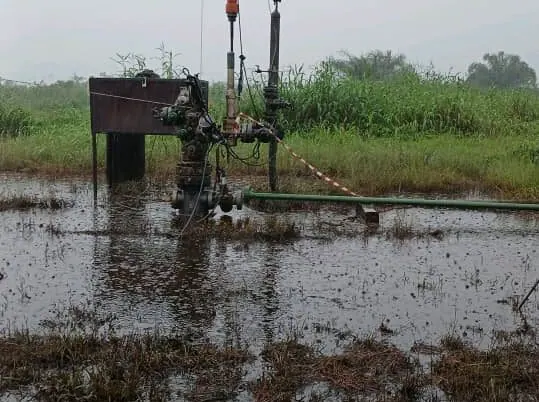
The largest spill involved more than 112,000 litres of crude oil from a wellhead in Ughelli South Local Government Area of Delta. This incident occurred on 26 August at the W14T wellhead in Okpare-Olomu and was attributed to operational or maintenance error. The spill affected soil and vegetation on land within the company’s right of way, with 440.25 barrels (approximately 70,000 litres) recovered, leaving 264.25 barrels (equivalent to 42,000 litres) unaccounted for.
Delta State recorded several other significant spills during the period. On 15 August, a 1,590-litre spill was reported from Renaissance Africa Energy Company Limited’s six-inch North Bank flowline at Obotobo in Burutu Local Government Area. This incident was attributed to sabotage or oil theft and affected vegetation, surface water, and soil. Another incident on 4 August involved an equipment-related spill of 1,110 litres at the Egwa Well 23 Tango in Egwa 2 community, Warri South-West Local Government Area.
The environmental impact of these spills was significant, with several affecting swamps, surface water, and fishing nets. The Egwa incident in Delta was reported to have killed fish and damaged fishing nets, directly threatening the livelihoods of people who depend on the affected waters. In Rivers State, Oando reported a one-litre crude oil spill on 2 August from the 18-inch Ebocha-Ogoda pipeline at Mgbede community in Ogba/Egbema/Ndoni Local Government Area, attributed to sabotage or theft.
Bayelsa State recorded a significant spill, with an estimated 88 barrels (approximately 14,000 litres) released from a 10-inch Diebu Creek-Nun River delivery line at Eniwari in Southern Ijaw Local Government Area. The incident, reported on 23 August, was attributed to sabotage or oil theft and affected an estimated 1.62 million square metres of swamp habitat. Renaissance reported recovering 30 barrels (approximately 4,770 litres) of crude oil, leaving about 58 barrels (equivalent to approximately 9,200 litres) unaccounted for.
The pattern of oil spills in Nigeria continues to raise concerns, with this incident mirroring previous reports. In July 2026, at least 10 spill incidents occurred across Rivers, Delta, Bayelsa, and Imo states, involving sabotage, corrosion, equipment defects, and operational failures. NOSDRA’s records documented more than 9,890 oil spill incidents across Nigeria between 2015 and July 2025, with Rivers State recording the highest number.
The persistence of oil pollution in the Niger Delta remains a significant environmental challenge. The latest records show that the problem is not limited to deliberate interference with oil infrastructure, as equipment failure and corrosion also contribute significantly to the pollution burden. The environmental consequences of these spills are far-reaching, affecting land, vegetation, surface water, fishing grounds, and aquatic life.
Key points
- Nine oil spill incidents occurred in Nigeria's Delta, Bayelsa, and Rivers states between August and September 2026, releasing approximately 129,855 litres of crude oil.
- Delta State accounted for nearly 90 per cent of the total crude oil spilled, with the largest incident involving more than 112,000 litres of crude oil.
- The incidents were attributed to various causes, including sabotage, oil theft, equipment failure, corrosion, and operational or maintenance errors.