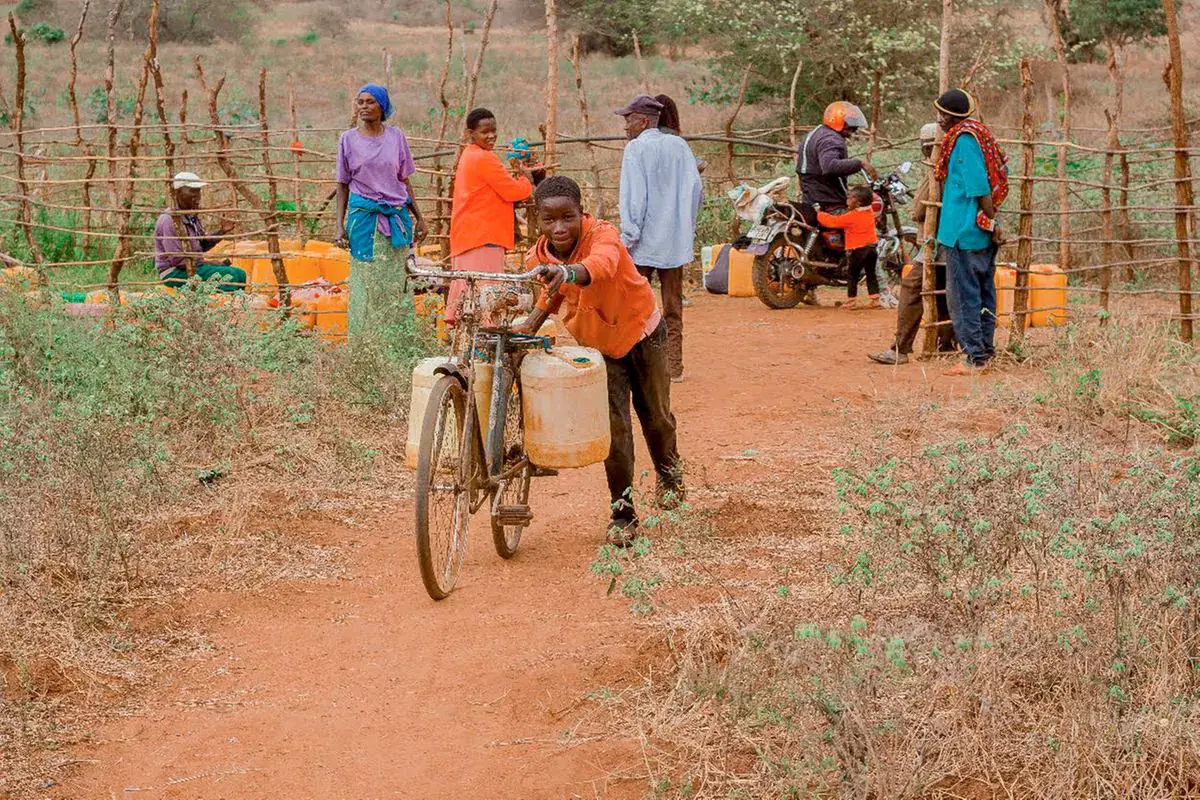
In Ishinde village, Same District, Tanzania, residents in hamlets such as Ishinde Stand, Kigogo, and Kisakeni struggle with accessing reliable piped water. Although the government has installed water infrastructure, some residents go days or weeks without water. Kibaoni Igongo Hamlet is an exception, with reliable access to water. The issue highlights the challenge of delivering water to households that need it most.
A Rotary Club officer in Same, who wished to remain anonymous, shared that the club transformed access to clean and reliable water in Kigogo Hamlet through a Sh250 million project. The project involved drilling a productive borehole, constructing a pump house and storage tank, installing distribution pipes, and training local operators. Initially, water was supplied through public distribution points, which were later replaced by household connections.
The Rotary Club project in Kigogo Hamlet has had a significant impact on the community. Reliable water access has improved hygiene and living conditions, supported household kitchen gardens, and strengthened food security. Water availability for livestock has also improved animal health, while better access to water and sanitation has helped reduce the risk of waterborne and other communicable diseases.
The Same–Mwanga–Korogwe Water Project Engineer, Emmanuel Maghembe, noted that Ishinde Village was not initially part of Phase One of the project. He suggested that communities could explore alternative sources of water, including drilling their own boreholes. Privately drilled wells are already helping communities in parts of Mwanga and Same towns.
A community development officer emphasized the importance of collective effort in addressing water shortages. The officer suggested that community-led investment in a shared borehole could be a practical solution. However, raising enough money for borehole drilling would be difficult for many households in Ishinde, given their economic circumstances.
Tanzania Water Sanitation Network Coordinator, Darius Mhawi, recommended making solar-powered systems more resilient by combining pumping capacity with adequate storage. He cautioned that the appropriate solution depends on various factors, including the borehole's yield, the number of households served, and daily demand.
To address the water shortage in Ishinde, the priority could be to assess what already exists in each hamlet and identify the missing link. This could involve evaluating storage, distribution, household connections, pumping capacity, financing, or management. Closing that gap could turn existing infrastructure into a reliable household water service.
Key points
- The government has installed water infrastructure in Ishinde village, but residents still face challenges accessing reliable piped water.
- A Rotary Club project in Kigogo Hamlet has improved access to clean and reliable water, demonstrating the impact of investment in water infrastructure and local participation.
- Alternative solutions, such as community-led investment in shared boreholes or solar-powered systems with adequate storage, could help address water shortages in Ishinde village.