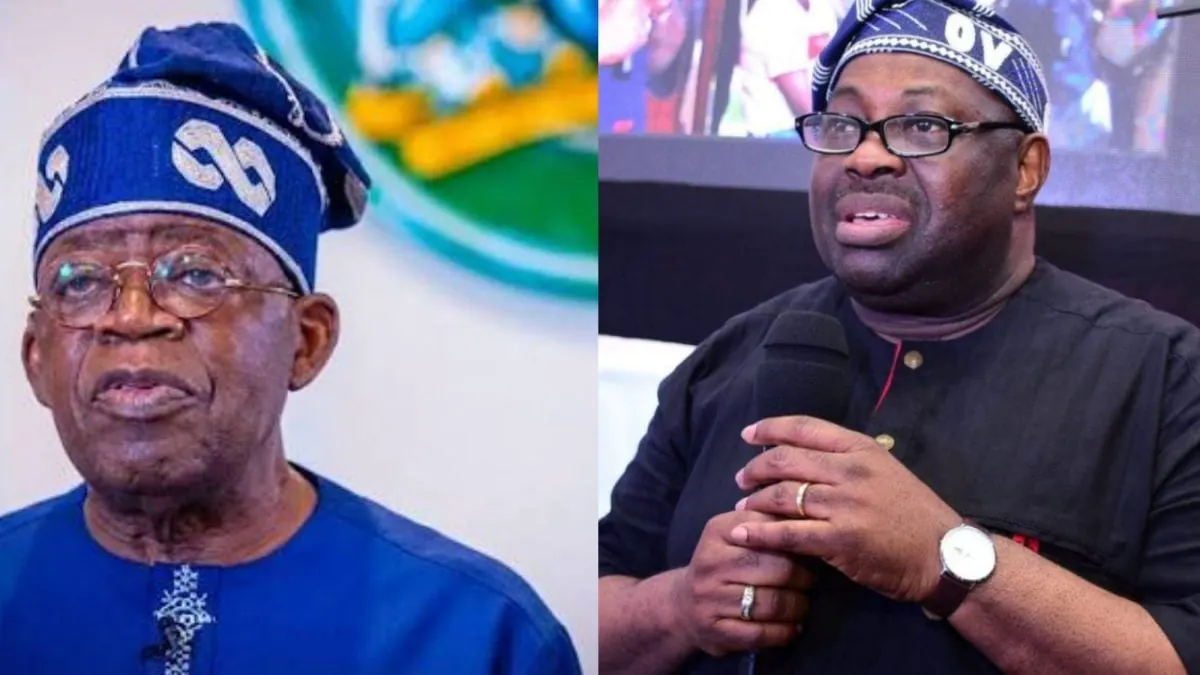
A chieftain of the African Democratic Congress, Dele Momodu, has expressed disappointment and frustration with President Bola Tinubu's Independence Day broadcast. In a post on his verified social media handle, Momodu stated that the president's address, which was meant to be a celebration, turned into a lamentation. He criticized Tinubu's defense of his administration's economic reforms, particularly the removal of petrol subsidy and the unification of the foreign exchange market.
Tinubu's address, themed "From Reform to Prosperity," claimed that Nigeria had moved beyond the most difficult phase of economic reforms and entered an "age of prosperity." He used a cancer analogy to explain the economic challenges inherited by his administration, saying previous governments had relied on subsidies as a temporary solution to mask the country's underlying problems. However, Momodu rejected this analogy, arguing that Tinubu's administration should have stabilized the country rather than worsen its condition.
Momodu criticized Tinubu's handling of the economy, saying his first major policy decisions had inflicted severe hardship on Nigerians. He described the decision to remove petrol subsidy immediately after assuming office as a "misadventure" and accused the administration of failing to properly assess the consequences of its policies before implementing them. According to Momodu, Nigerians expected the administration to stabilize the economy, rather than "destabilize everything in sight."
The ADC chieftain also faulted the government over what he described as worsening insecurity and poverty, despite increased government revenue and borrowing. He stated that Nigeria had made more money, amassed more loans, but insecurity had increased, poverty had escalated, and politicians had remained insensitive. Momodu's criticism came as Tinubu sought to reassure Nigerians that the country's economic trajectory had improved.
Tinubu claimed that Nigeria's economy had grown by more than four percent in 2026, while inflation had fallen substantially from its peak, foreign reserves had been rebuilt, and the foreign exchange market had stabilized. He also mentioned that the country recorded more than $6 billion in non-oil export revenue in 2025, describing the figures as evidence that the reforms were strengthening economic stability and resilience.
However, Momodu said the government's explanations had failed to restore confidence among Nigerians, particularly with the 2027 general elections approaching. He stated that Nigerians had mostly given up on Tinubu's promises and doubted they could endure and accept the endless excuses, barely three months to the next elections. Momodu acknowledged that four years might not be enough to solve all of Nigeria's problems but argued that Nigerians should by now be seeing clearer signs of improvement.
Momodu emphasized that the hope for a better Nigeria should be glaring by now, but instead, Nigerians were experiencing increased hardship and despair. His criticism reflects the growing concerns among Nigerians about the current administration's ability to address the country's economic and social challenges. The 2027 general elections are expected to be a critical test of the administration's popularity and ability to deliver on its promises.
Key points
- Dele Momodu criticizes Tinubu's Independence Day address, saying it turned a celebration into a lamentation.
- Momodu rejects Tinubu's cancer analogy, arguing that the administration should have stabilized the country rather than worsen its condition.
- Nigerians have lost faith in Tinubu's administration's promises, with many experiencing increased hardship and despair.